




Luciana Ftoni
September 4, 2026
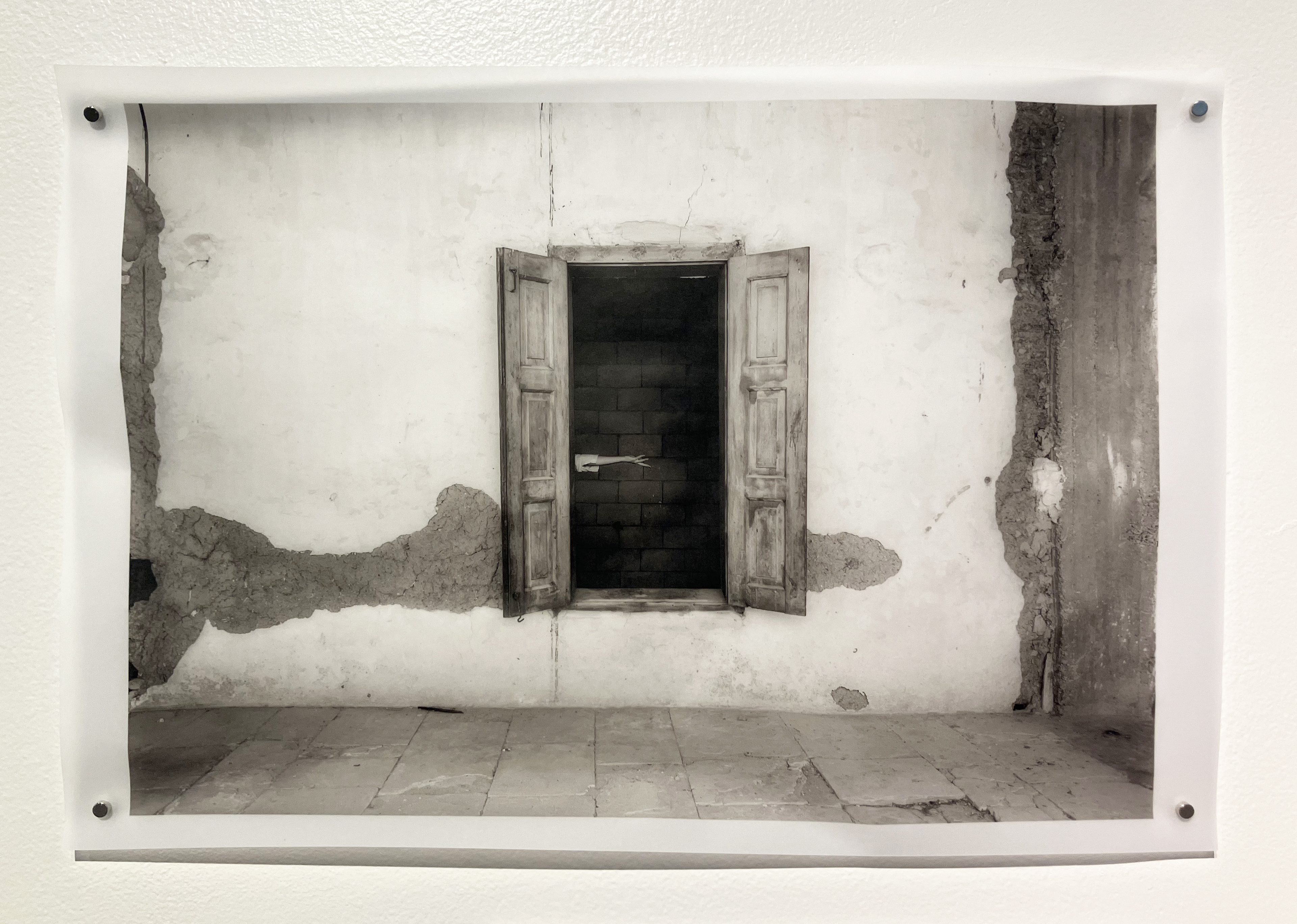
Artist: Andrea Shaker. Photo by Ashley Cook
On June 13, 2026, I attended the opening reception of The Amplification Project: Women Artists of the Arab Diaspora (Detroit) on view at the Detroit Historical Museum. The exhibition further strengthens the museum’s legacy as a space to learn about—and take pride in—Detroit’s rich cultural history, this time, with a spotlight on the traditional and contemporary practices of Arab women. In an immersive exhibition of more than 80 works, The Amplification Project explores the trauma and resilience that comes from experiences of migration and living in the diaspora. Artists of Detroit’s Arab American community unravel the complex experience of forced migration through reflections on the loss of their homeland, and the role of memory and tradition in cultural preservation.
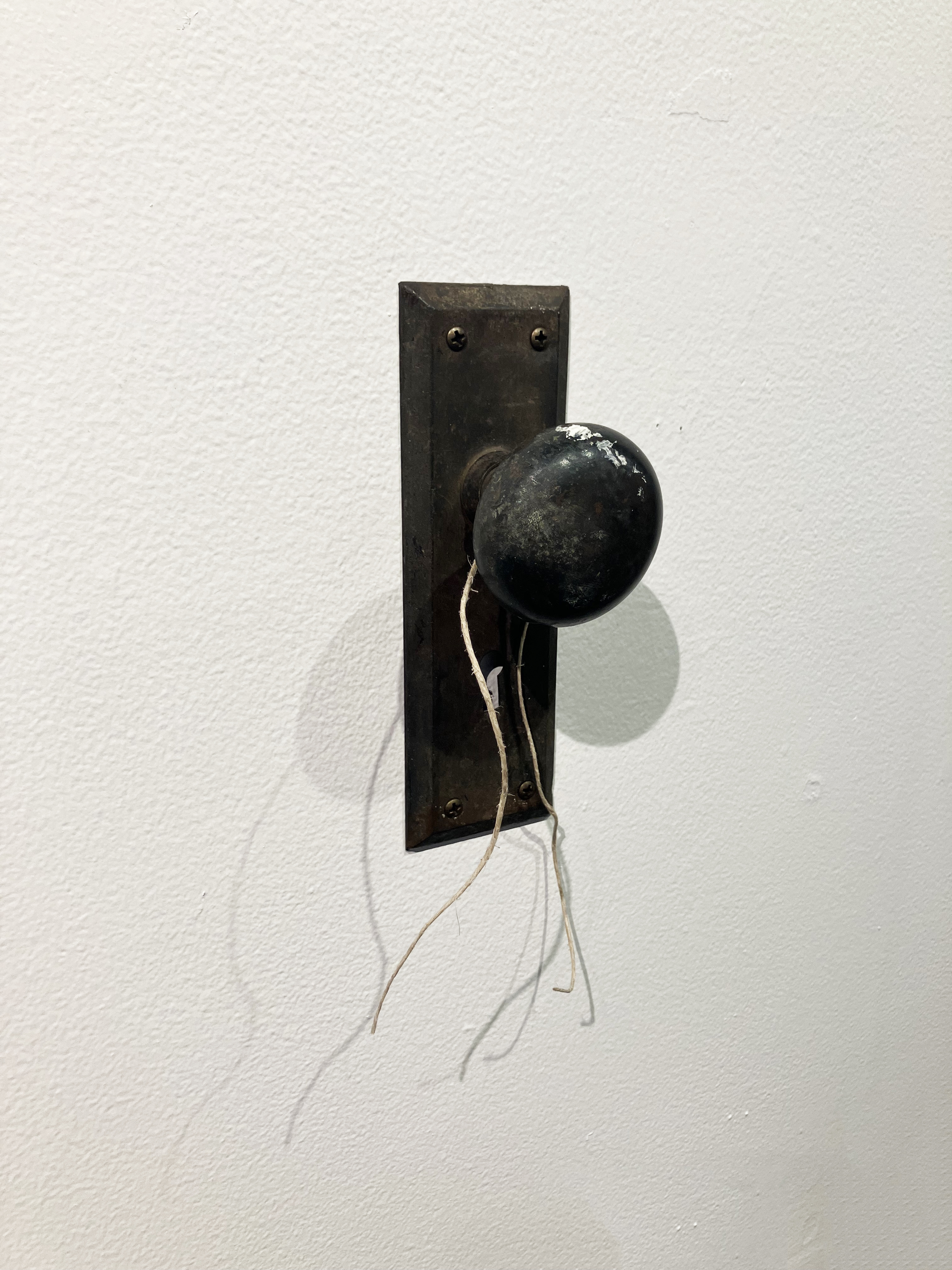
Artist: Andrea Shaker. Photo by Ashley Cook
During the opening reception, I was welcomed in by the staff of the museum and guided up the stairs towards the Robert and Mary Ann Bury community gallery, a space dedicated to exhibition-making by non-profit organizations. The vibrancy of the Arab community is expressed through a variety of media including sculpture, painting, drawing, photography, film, literature, craft, fashion, and personal artifacts. Passing a table of traditional food for guests to enjoy, I entered the show and was met with framed notebook drawings on the wall by Suhail Salem; I had goosebumps as I recognized her expressions as a miniature portrait of her condition, ambition, hope and pain. On the wall to the left of the drawings is a cinematic video on a TV screen by Zina Hakeem. Further into the galley is a hanging poster with an exhibition description, a live band playing Arabic music, and a space filled with friends, family, and some of the featured artists. Unfortunately, not all of the artists were able to make the opening because of challenges with persecution and war.
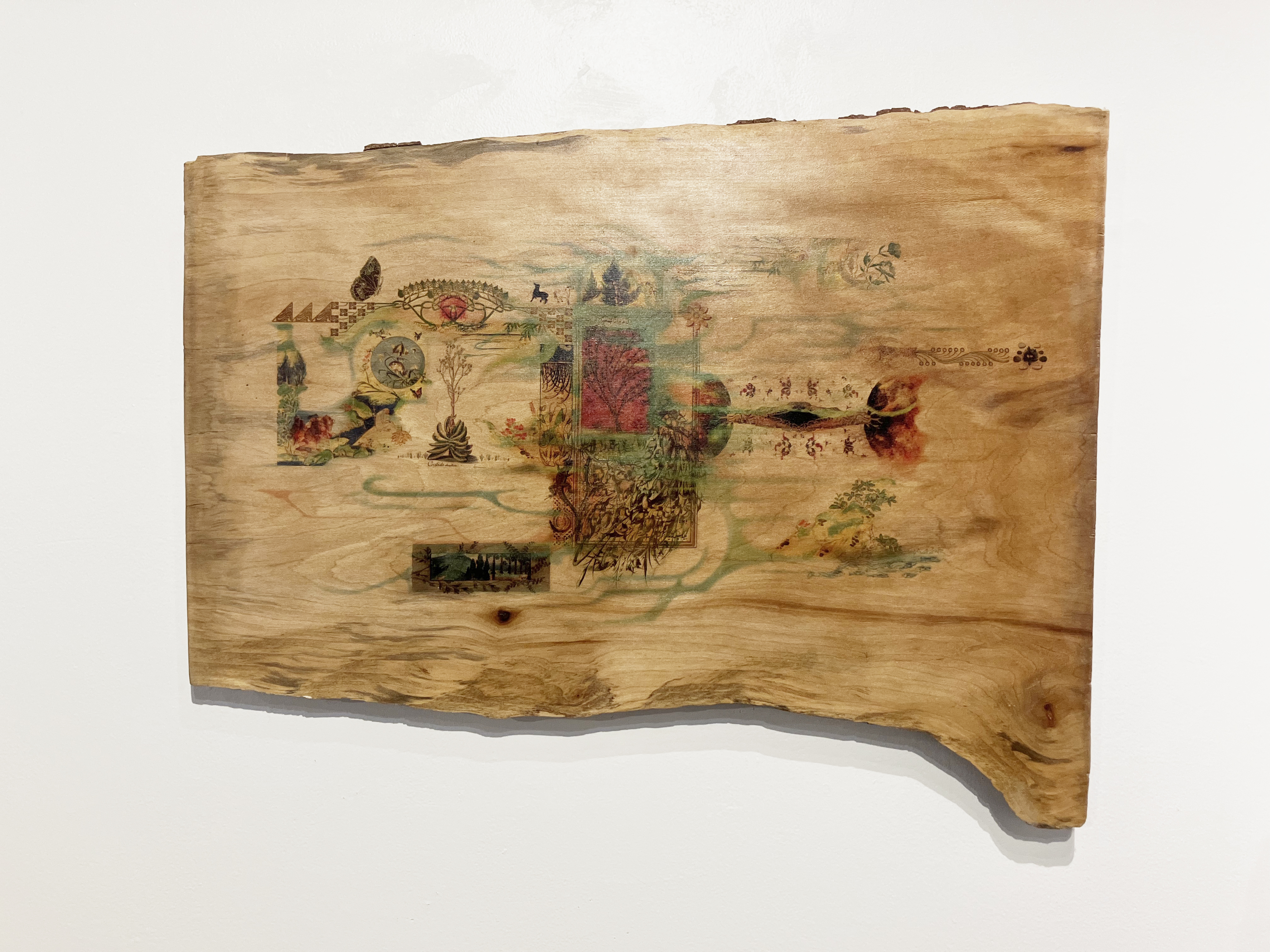
Traveling Mist. Artist: Chloé Hajjar. 2022. Photo by Ashley Cook
A recorded narration—inspired by a centuries-old tradition of Arabic oral storytelling called hakawati—enriched the collection of works on display, like Delicate Remains by the artist Razaan Killawi, who presents a story of resilience and continuity through the grief of longing for her culture. Through her use of family photos, and a focus on materials that are at risk of disappearing due to the Syrian Diaspora, Killawi invites us to ask the questions:
What does it mean to long for people you can barely remember?
To grieve what is lost while clinching to shifting fragments of memory?
How do we process grief that feels deeply personal yet collective?
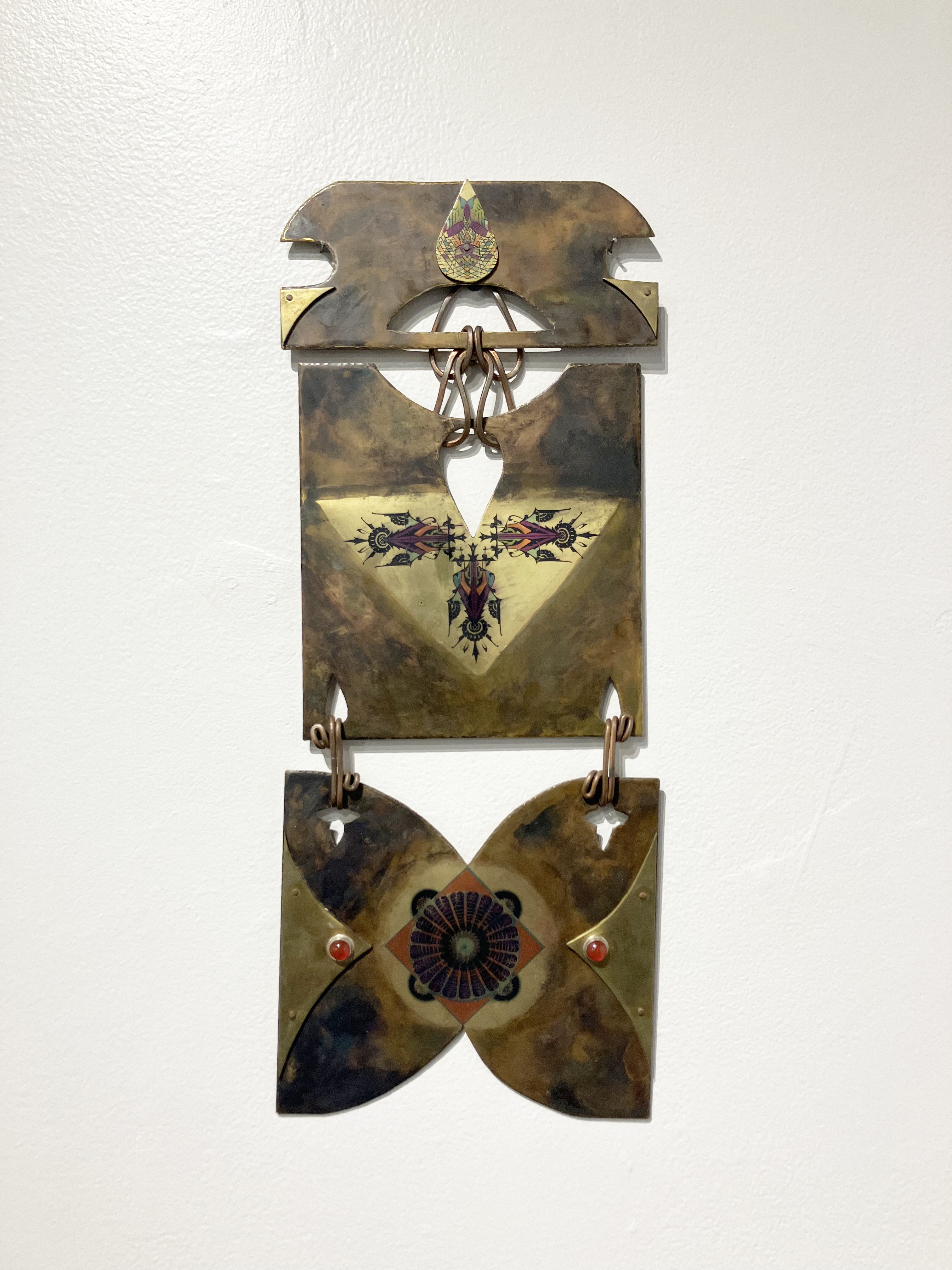
Trinity Chain. Artist: Chloé Hajjar. 2021. Photo by Ashley Cook
The exhibition brought up other questions as well.
How does one decide to move from one land to another?
How do we contribute to the past and present?
How do these old parts of us contribute to a new collective us?
How do we honor our past and live in the present?
Are the artists bringing awareness to the ongoing troubles in their country?
What can we all do to contribute to the peace of the country?
How can we be there for our neighbors?
Four pieces by Chloé Hajjar entitled Allegory of Survival, Still Burning, Systems, and Origins reminds me of the importance of cultural preservation in the wake of the rapid advancements in technology. Hajjar’s detailed artworks explore the natural world in relation to human survival, innovation, and obsolescence. She connects to her roots through an exploration of ancient creative techniques including metalworking, sculpture, printmaking, and digital renderings to create future relics. Metalworking has had ties to Arabic culture since the Bronze age, seen as prestigious when used in hospitality through the production of the Dallah (coffee pot) ewers, basins, and the Saif (sword). Her work gently reminds us of the value of handmade craftsmanship amid rapid technological shifts, honoring tradition in an age of disposability.
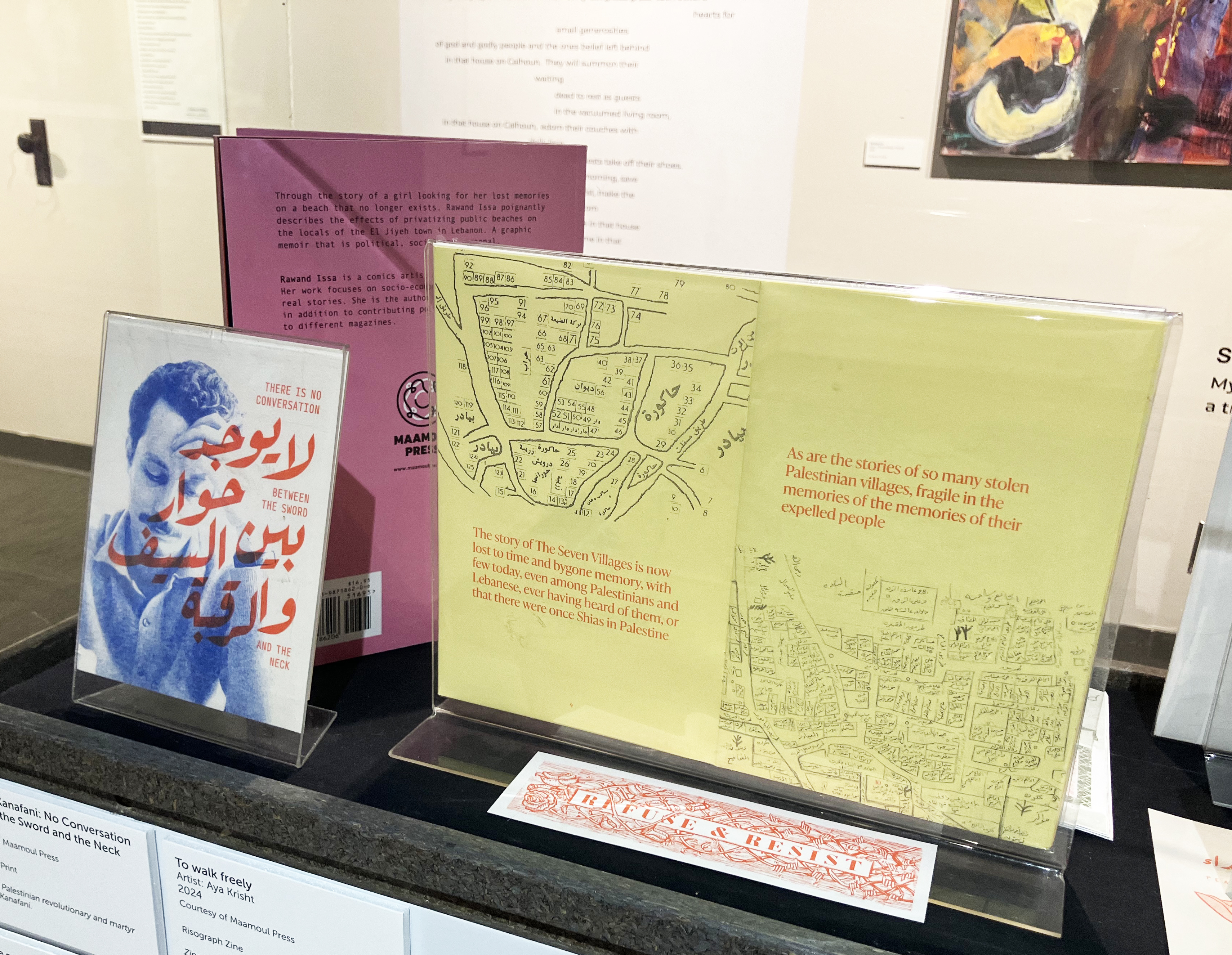
Left: Ghassan Kanafani: No Conversation Between the Sword and the Neck. 2024. Risograph Print.
Right: To Walk Freely. Artist: Aya Knight. Risograph Zine. 2024. Materials Courtesy of Maamoul Press.
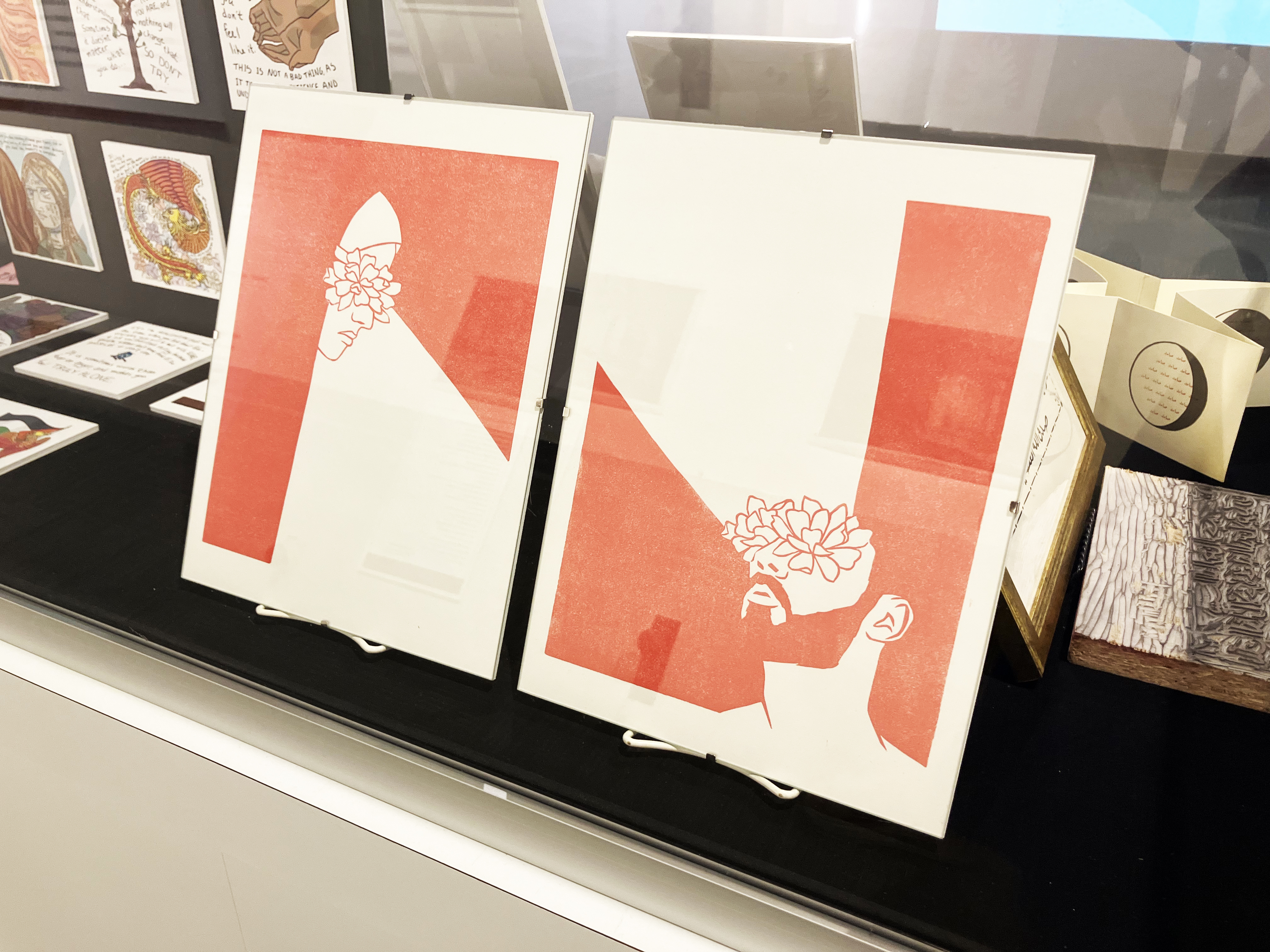
The Others. Artist: Aya Krisht. 2025. Photo by Ashley Cook
The exhibition is an immersive experience for anyone wanting to know more about the current struggles of our neighbors in the diaspora. Although this exhibition touches on Arab culture through women narratives, the men and children also play a role in the work, touching holistically on the struggles of migration and the process of adapting to a culture that they—at one point—knew nothing about. Although I am not from an Arabic background, I am highly familiar with the diaspora. As a child, my family and I were forced to leave our homeland to find a safe place to live. For those living in the Detroit Metropolitan area, whether established here, or new to the country, this exhibition puts into perspective the struggles of migration, encouraging a deeper understanding and empathy towards each other. Like a beautiful tapestry, the collection of work on view here shows us what has been lost, but also what is blooming in Detroit’s community of Arab immigrant women.
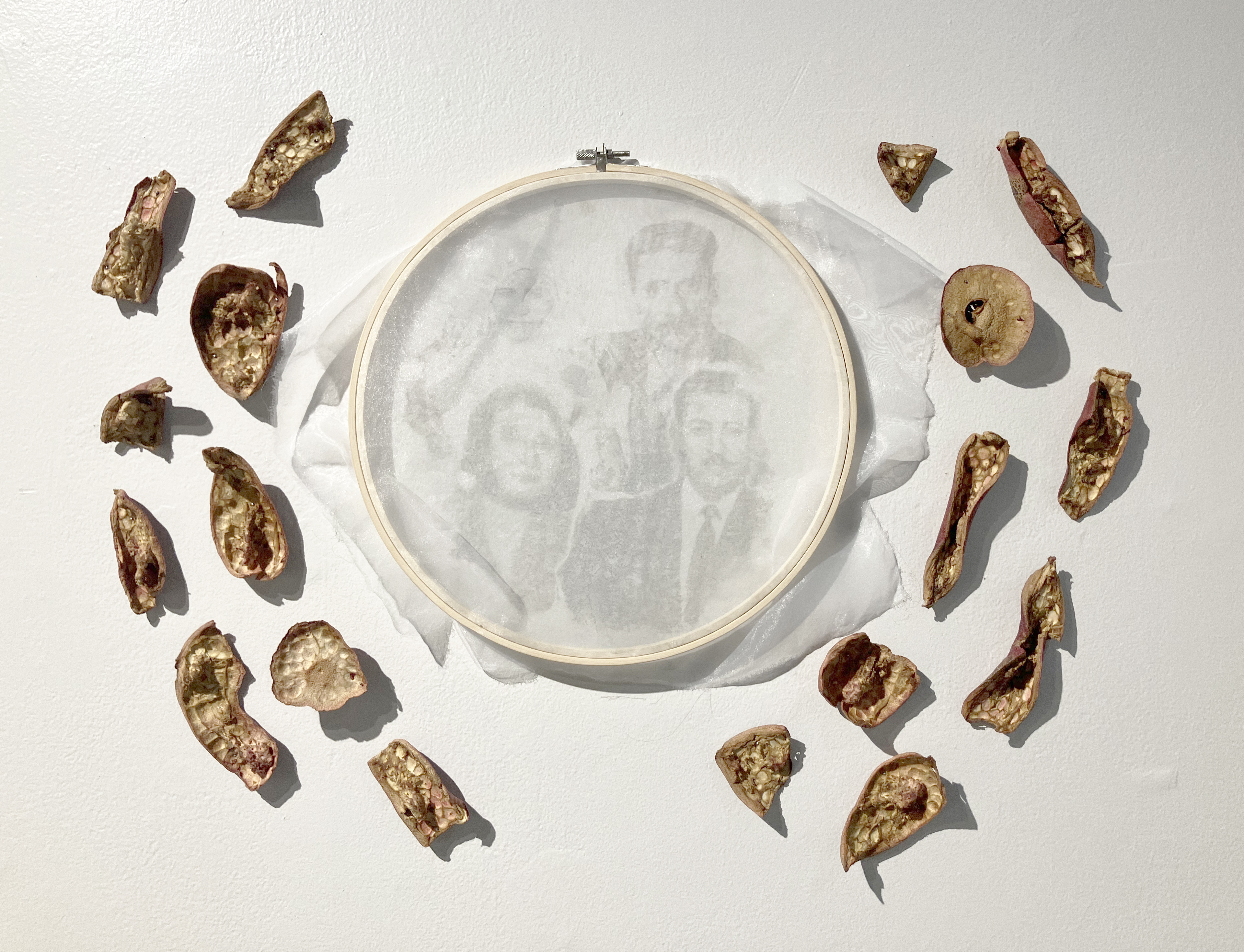
Delicate Remains. Artist: Razaan Killawi. 2025. Photo by Ashley Cook
The Amplification Project: Women Artists of the Arab Diaspora (Detroit) at the Detroit Historical Museum opened on June 13 and will be on view through Sept 13, 2026.
Artists featured in the show include:
Leila Abdelrazaq, Ilham Mahfouz Badderdine, Samoa Chahine, Malak Cherri, Marguerite Dabaie, Cyrah Darla’s, Hannah Fahoome, Chloé Hajjar, Zina Hakeem, Ibaa Ismail, Theresa Basha Jarjoura, Razaan Killawi, Aya Krisht, Maamoul, Press, Zeinab Saab, Andrea Shaker, Biba Sheikh, Sr7aneh (Jenin Yaseen), and Kamelya Omayma Youssef.
Featured guest artists include:
Nabil Abughanima, Marcel Ghosn, Mohamad Harb, Khalil Khaled, Suhail Salem.
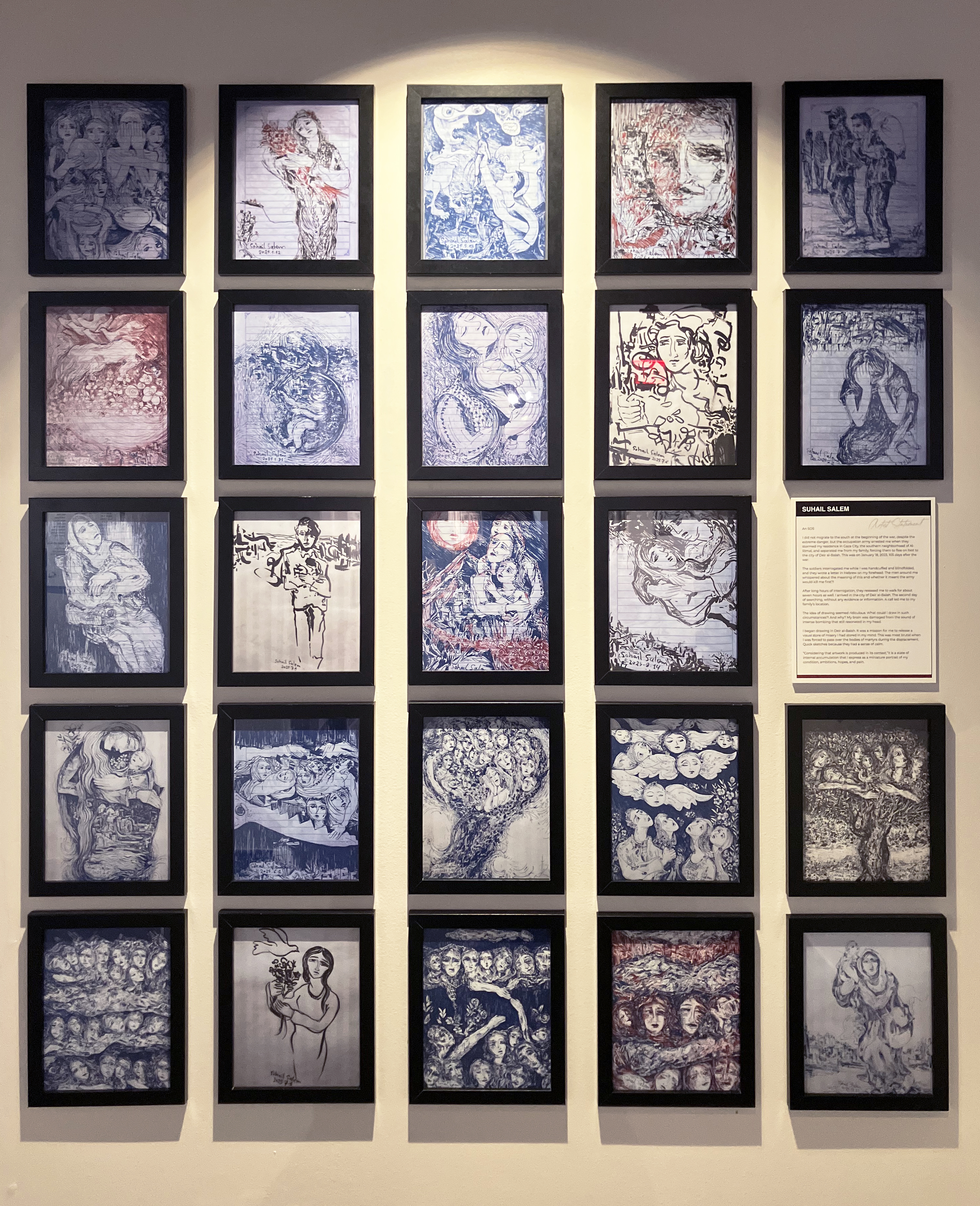
Notebook Drawings from School, Captivity, and Release. Artist: Suhail Salem. 2025, Pen on Paper. Photo by Ashley Cook
The exhibition was curated by Biba Sheikh and Kathy Carbone of The Amplification Project, a Digital Archive for Forced Migration, Contemporary Art, and Action.
You can learn more about the show at detroithistorical.org
To learn more about The Amplification Project, visit theamplificationproject.org