




A Conversation with Samara Furlong
June 1, 2026
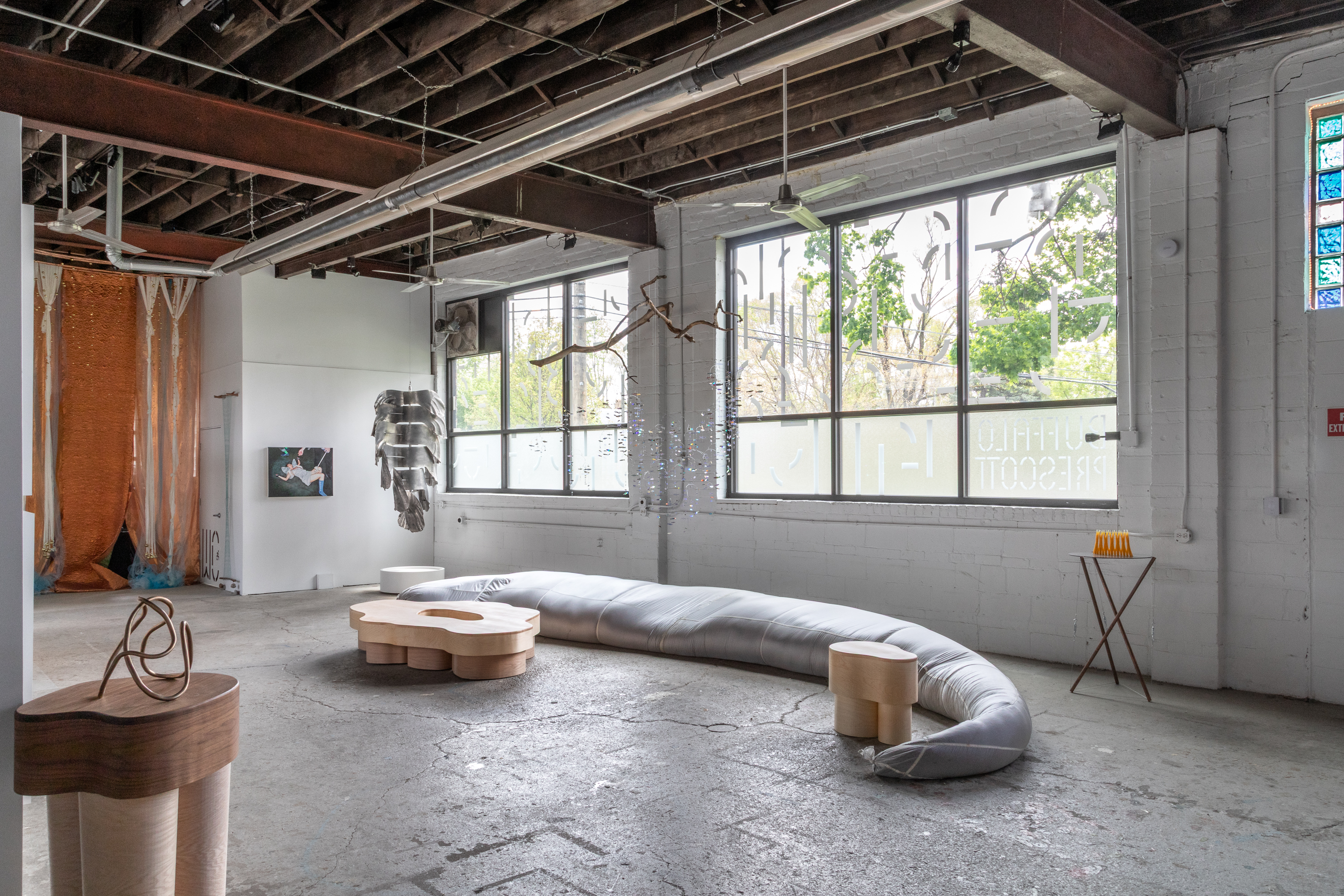
Vernal Exhibition: featuring the work of Molly Gochman, Louise Jones, Cyrah Dardas, Tony Printz, Jessica Wildman Katz, and August Graef
On May 22, 2026, Buffalo Prescott hosted the public opening of their second annual exhibition, Vernal. Curated by the organization’s founder, Samara Furlong, the exhibition brings artists together in a way that prioritizes dialogue around shared themes and collective experience. As an annual exhibition, Vernal reflects this approach. Developed in close collaboration with more than twenty artists from Detroit and around the world, Vernal transforms Buffalo Prescott into an immersive, community-centered environment that welcomes visitors of all ages to engage with the work and the space in an open and accessible way. Samara explores themes of emergence, transformation, and interconnection through this selection of work that spans a range of materials and methodologies, prompting a shared moment of becoming, where new ideas, forms, and relationships are able to take shape.
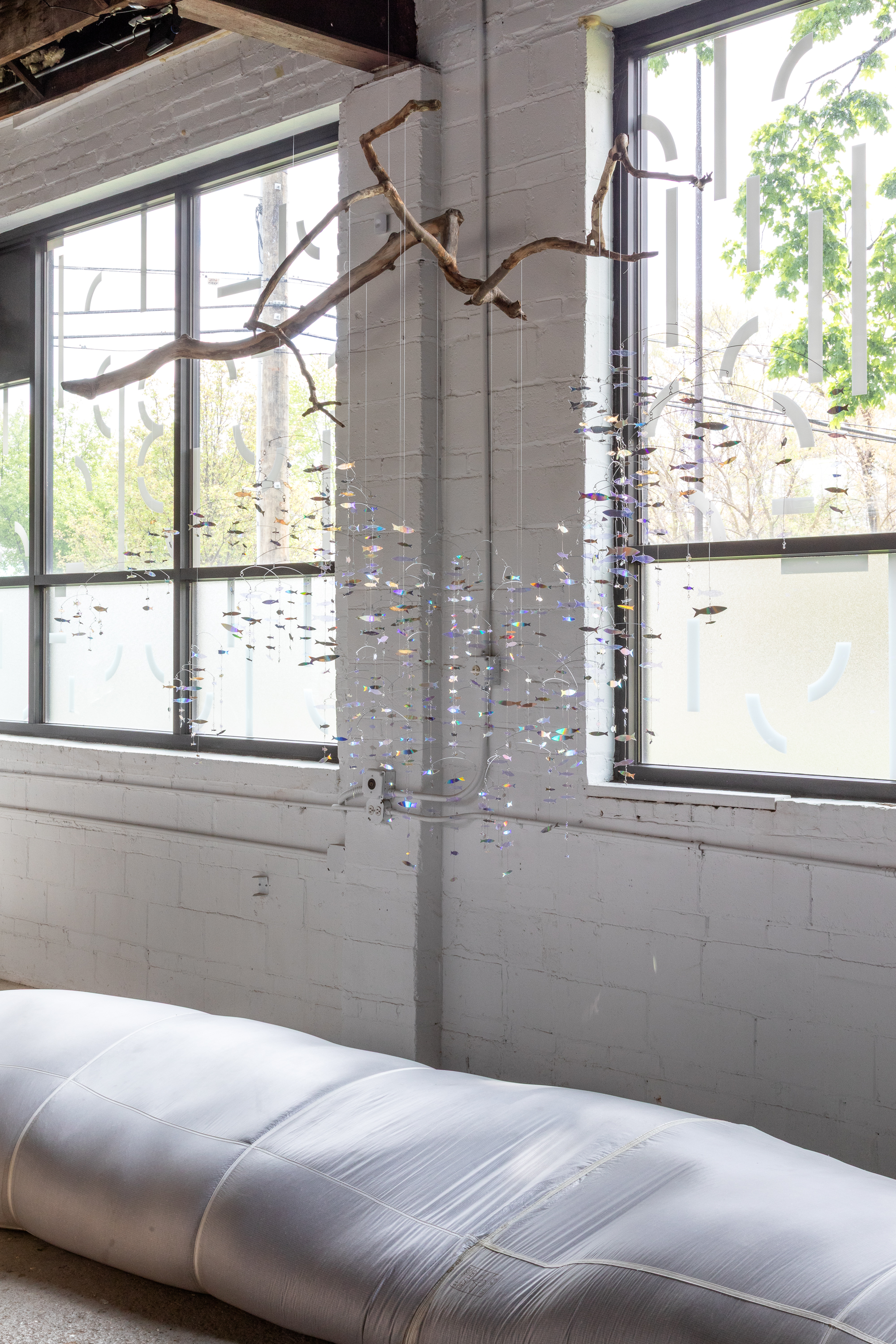
Jessica Wildman Katz and George Vidas, This Place of Potential Series: Soft Return, 2026 with Jessica Wildman Katz, Minnow Disco, 2026
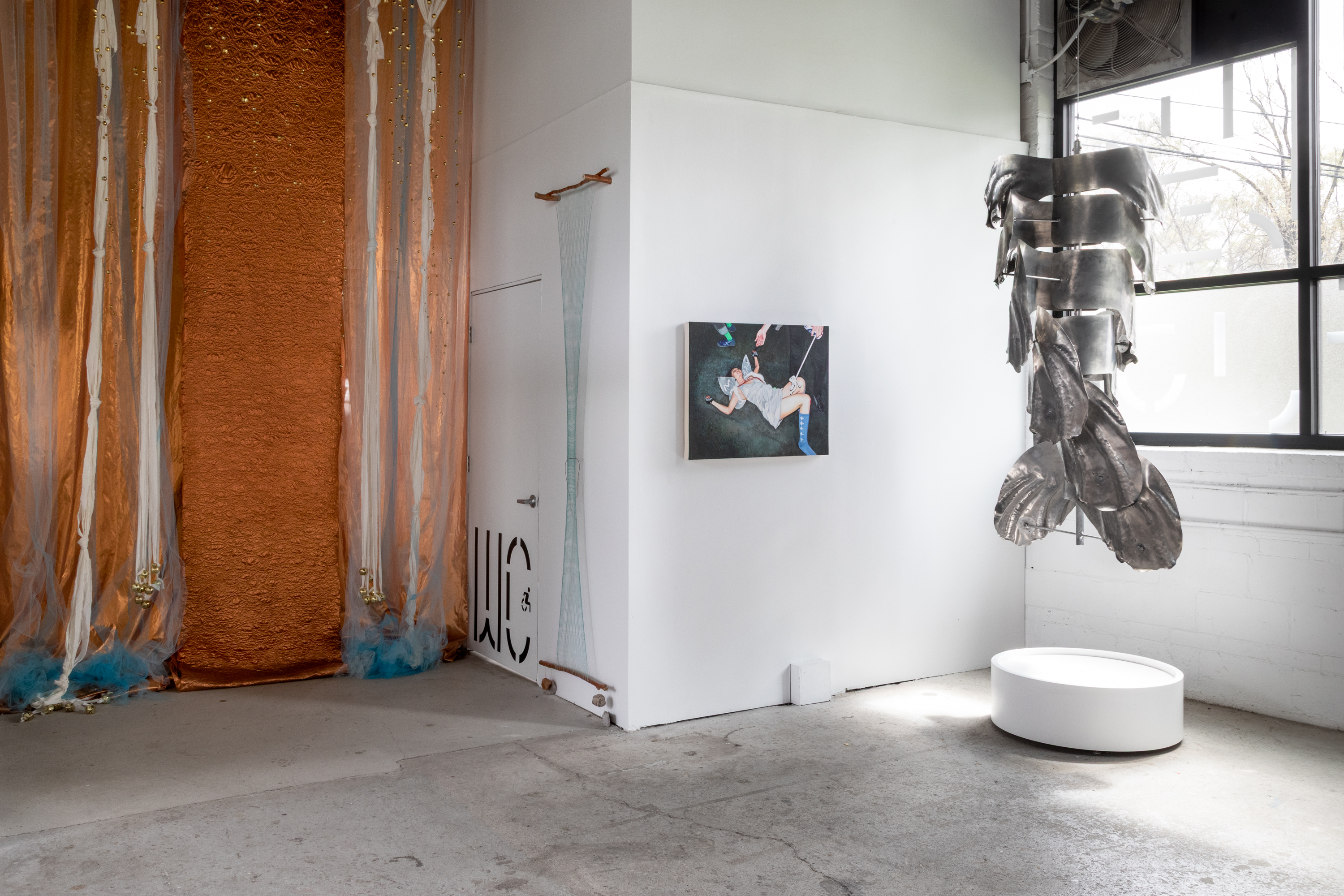
Vernal Exhibition: featuring Jessica Wildman Katz, This Place of Potential Series: Cultivating the Witness and This Place of Potential Series: Signal-To-Noise Tresse’ Antenna, 2026; Louise Jones, Après le Déluge, Moi, 2026; and Cyrah Dardas, Samara II, 2026
Samara is an artist and curator whose work is deeply rooted in building sustainable, community-centered support systems for artists in Detroit. She founded Buffalo Prescott in 2024 in collaboration with Leto Rankine, and together, they have developed a model that combines residency, exhibition, and public programming to meet artists where they are, with particular attention to care, long-term practice, and accessibility.
We had the opportunity to speak with Samara about her experience as a curator, a mother, and the founder of Buffalo Prescott…
Samara Furlong: Three goals of Buffalo Prescott are to support artists that are caregivers, to build a bridge that connects contemporary artists in Detroit with artists and art professionals in different cities, and to create a space for discourse around art and community.
Buffalo Prescott started out as a studio residency. At the culmination of the residency program, we asked our first group what sorts of opportunities they are looking for, and many of them expressed interest in being in an art fair. We have a supportive relationship with the Detroit-based curator, Alison Glenn, and we knew that she was working with Untitled in Miami, so we were able to do a special project there. Katie Pfohl, who is the Associate Curator of Contemporary Art at the Detroit Institute of Arts, is the chair of our board at Buffalo Prescott, and a close friend. She was the 2026 Focus Curator EXPO CHICAGO, so we also had a booth there that featured the work of our artists in residence.
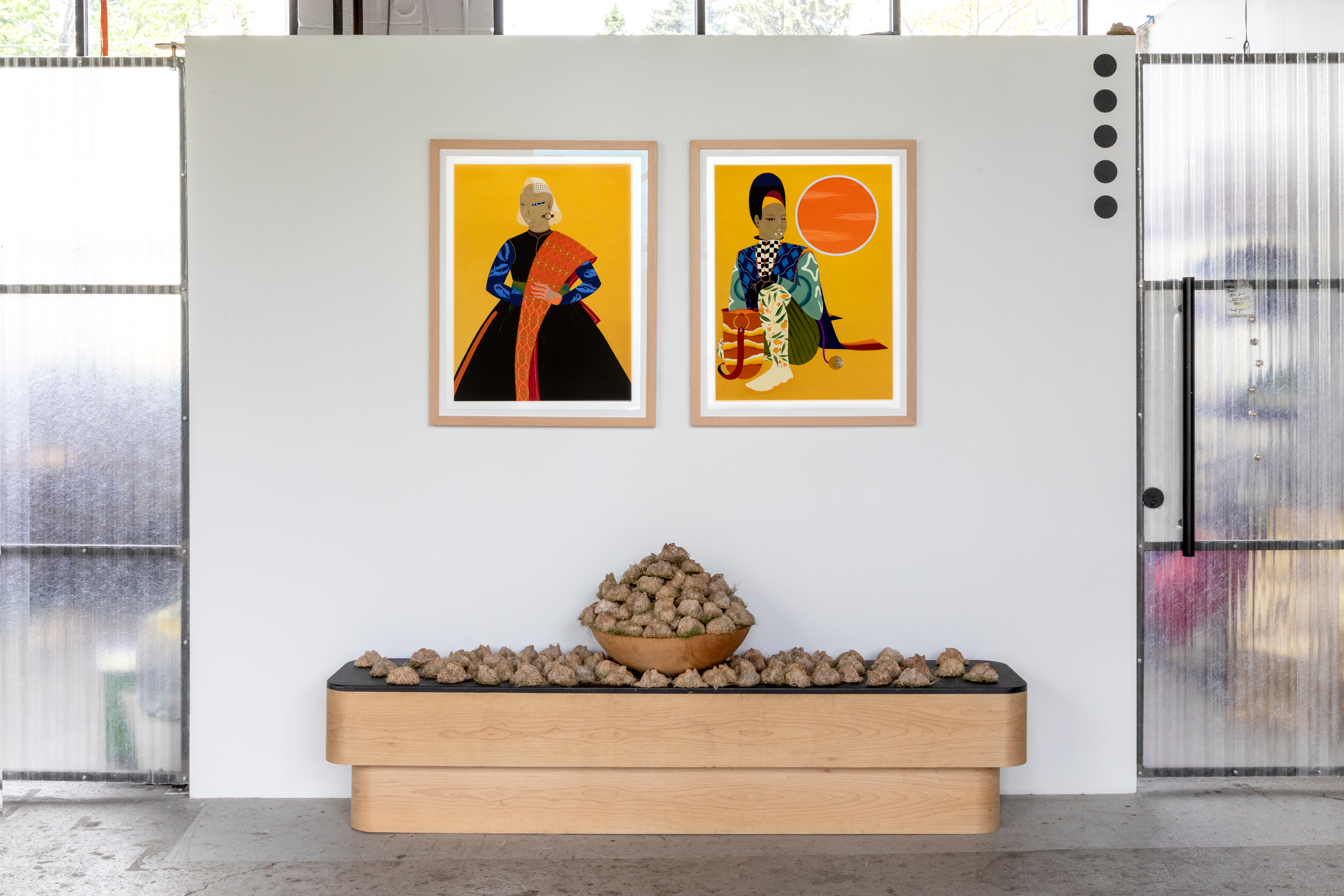
Rajni Perera, Ancestor 1 and Ancestor 2, 2019 and Jessica Wildman Katz, This Place of Potential Series: Kindling I, 2026
runner magazine: It is great that you are offering these opportunities to exhibit their work in different cities in addition to studio space here in Detroit.
SF: Yes, we really want to create a well-rounded experience for the artists, supporting their practice and careers simultaneously. Our booth at EXPO CHICAGO was right next door to Independent Curators International, an organization that we are partnering to bring four curators to Detroit to conduct studio visits with our residents each year.
rm: You mentioned that Katie Pfohl is on the board of Buffalo Prescott. Who else is on the board?
SF: We grew the board from three people to thirteen almost overnight. Our current board members are Eve Biddle, LaKela Brown, Gretchen Gonzales Davidson, Jenna Ferrey, Miah J. Davis Gardner, Secretary, Rajni Perera, Katie Pfohl, Chair, Renaud Proch, Treasurer, Eleanor Rines, Tylonn Sawyer, Chris Schanck, Jessica Silverman, and Caroline Taubman.
rm: So, tell us about your background. You are a mother…?
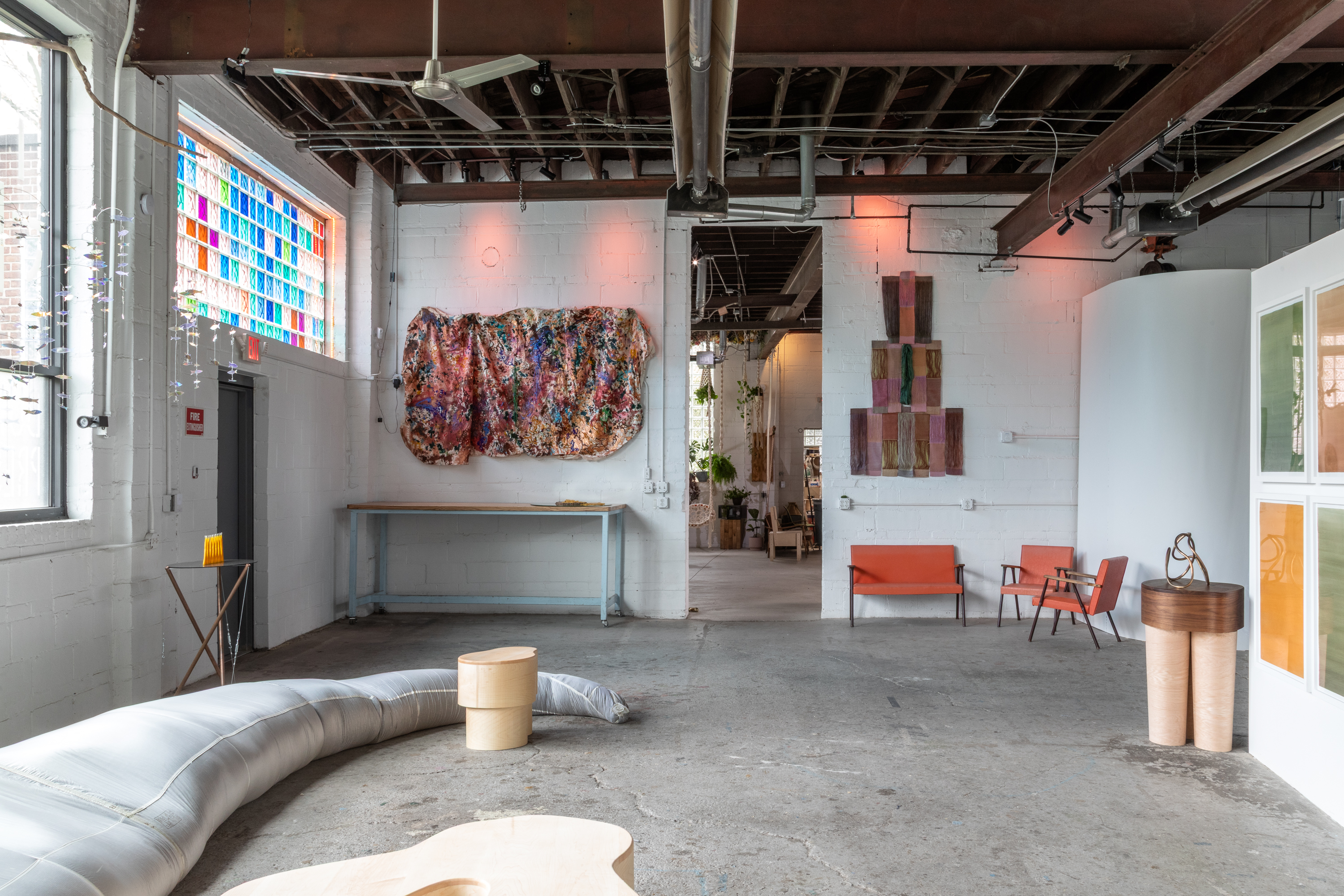
Vernal Exhibition: featuring the work of Jessica Wildman Katz, George Vidas, August Graef, Dessislava Terzieva, Olivia Guterson, Tony Printz, Carolina Jimenez, Molly Gochman, Cyrah Dardas and Halima Afi Cassells (in background)
SF: Yes, being a mother is the role I cherish the most.
As far as my background, I’m from Detroit. For my Bachelor’s program, I jumped around. I studied in Miami, Ohio and California, but I ended up graduating from Michigan State University with a degree in Studio Art.
Early in my career, I worked at the Museum of Contemporary Art Detroit, where I took on a number of different roles. Eventually, I moved to the Detroit Institute of Arts where I was doing curatorial research with Jill Shaw, and I also did some odd jobs for Cranbrook Academy of Art.
After all of those experiences, I decided to move to New York to pursue an MA in contemporary art from Sotheby’s Institute. While studying there, I was given the opportunity to visit Cuba, Venice, and Mexico City. I felt like I was living my dream, and then I found out about the Dia Art Foundation, and felt truly at home. I was so happy to work there during master’s program and continue after graduating. I honestly thought I would work there forever.
rm: So, how did you end up back in Detroit?
SF: In 2020, DIA worked with Carl Craig to produce a sound and light installation, and I think I became a little nostalgic for Detroit because of that experience. It was right when the pandemic started too, you know, and the pandemic brought so many people home. One evening, I was just sitting in a very small apartment and the walls started closing in. I decided to leave for Detroit, not realizing it would end up with me moving back. I do believe that I wouldn’t have my amazing daughter if it weren’t for the decision to fly back to Detroit during the pandemic.
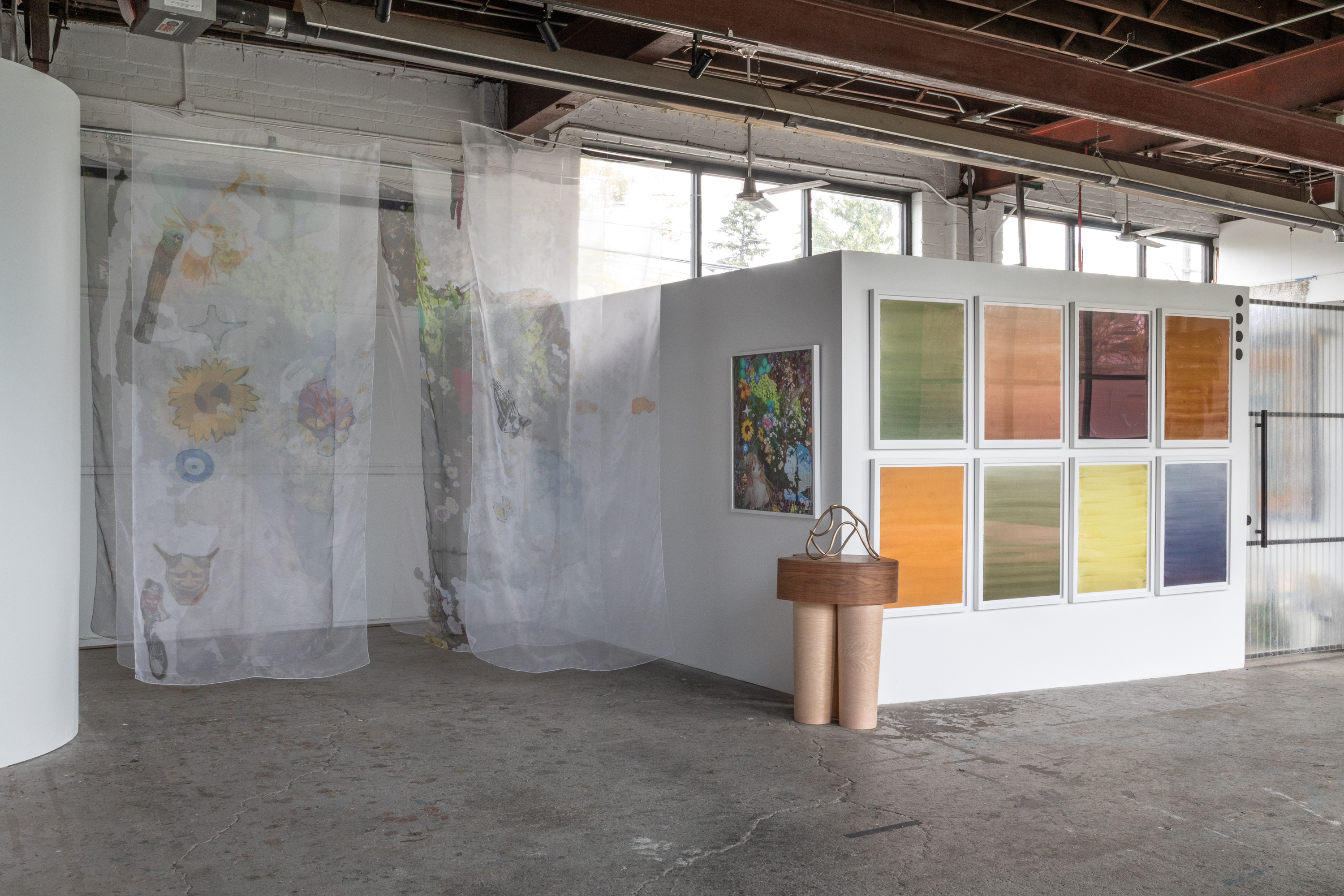
Amelia Burns, Evil Eye, 2026, and Evil Eye Transmuted onto Organza, 2026 ; Molly Gochman, Monuments to Motherhood: Brazil, 2026 ; Tony Printz, Table, 2026; Cyrah Dardas: Local Color Series: Marigold Leaves, Detroit Brick, Carbonized Willow Branch, Iron Fish Hook, Iron, Sumac, Lilly Root, Indigo, 2026.
I was working remotely for DIA throughout the pandemic, and I was also doing research on the Silverman Collection of Fluxus works for the Detroit Institute of Arts. All of that really got me through the pandemic. It was great, I was able to go into the Fluxus warehouse that was downtown. The artwork is not there anymore, but I think there’s a panel on the outside of the building…
Anyways, I was very busy during the Pandemic, and I was also about to become a mother! Around that time, my curatorial mentor told me that because of the pandemic, she was able to see her three-year-old grow up. I think quarantine really put things into perspective for a lot of people, underlining the value of family time. She knew I was pregnant and encouraged me to think carefully about my career and where I place myself.
rm: Why is that?
SF: Many curators travel extensively, going from studio to studio, meeting with donors, going to openings. Today, I am trying to establish Buffalo Prescott as a space where I can grow my career as a curator while still having a schedule that’s flexible enough to spend time with my daughter. I want to provide that opportunity to the artists in residence here as well. It’s a luxury to be able to bring your kid to work, so to have a place where other people can do that is really the dream.
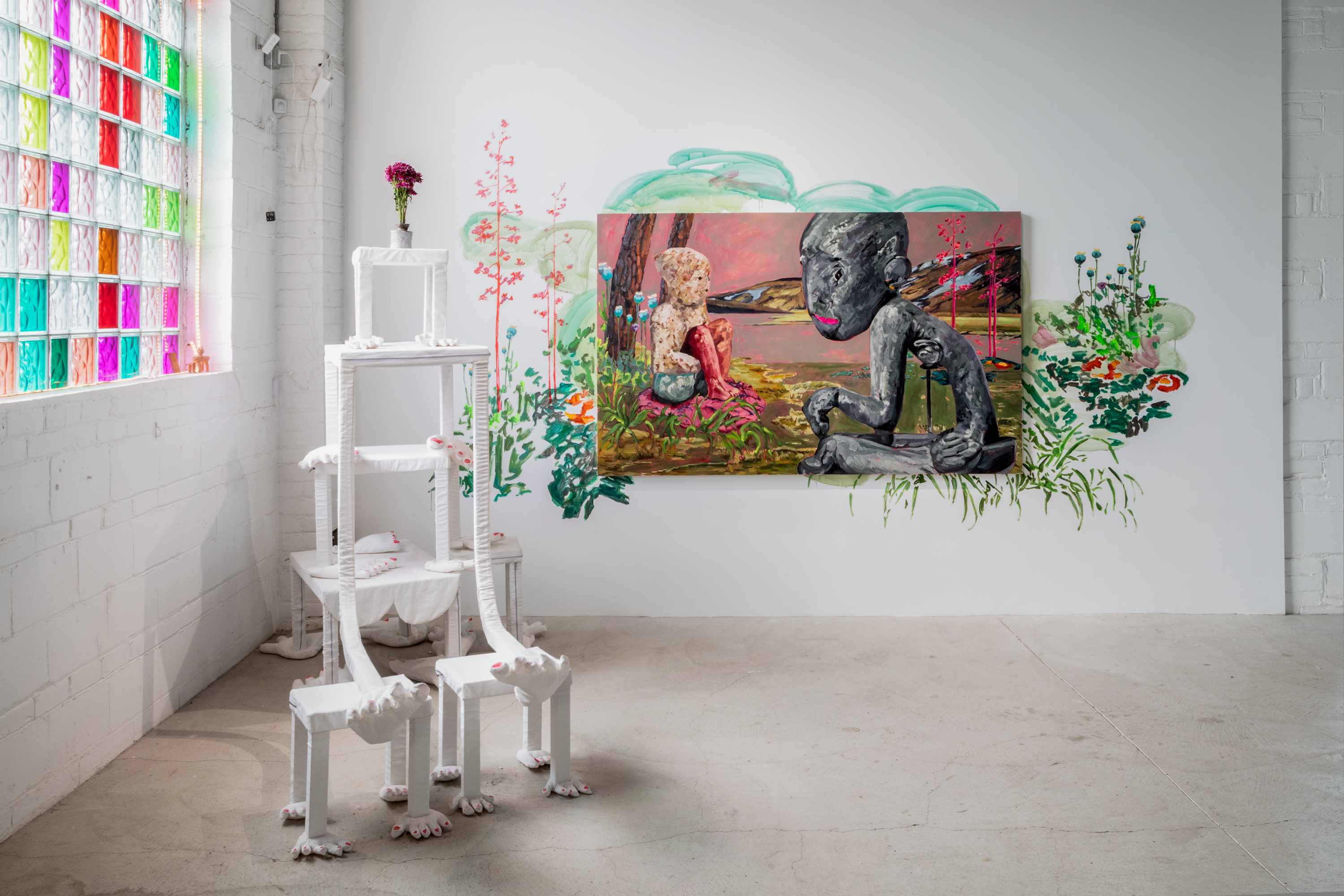
Dessislava Terzieva, Space is Only Noise if You Can See, 2026 ; Cristina Umaña Durán, Mesa de centro, 2026 ; Sara Nickleson, In Waiting (Psychopomps), 2026
One of the artists, Cyrah, was in their studio during the opening of Vernal. They were writing a thank you letter to Buffalo Prescott…
rm: I feel like in a way our society is entering an era now where worlds can coexist. Instead of work being separate from home, and home is separate from our religious practices or social life…
SF: Yes, after the Vernal opening, I was on cloud nine. I will never forget the joy I felt, and the rest of the Buffalo Prescott team and resident artists were expressing pride in their work and how far we have come as an organization.
rm: I want to briefly touch on ways that you offer support to the exhibiting artists of Vernal, and the artists in residence here. I understand that you offer studio space for free to the artists, and you also offered a stipend to the artists in Vernal to produce the work?
SF: For this years Vernal exhibition, we offered material stipends to artists for creating original work–reaching to institutional-level support. Artists used the funds to purchase materials for their work and to hire local fabricators. The idea was that this support would allow them to experiment and expand their practice, and also ripple out into the greater creative community. We also offered childcare stipends so that everyone could be in attendance.
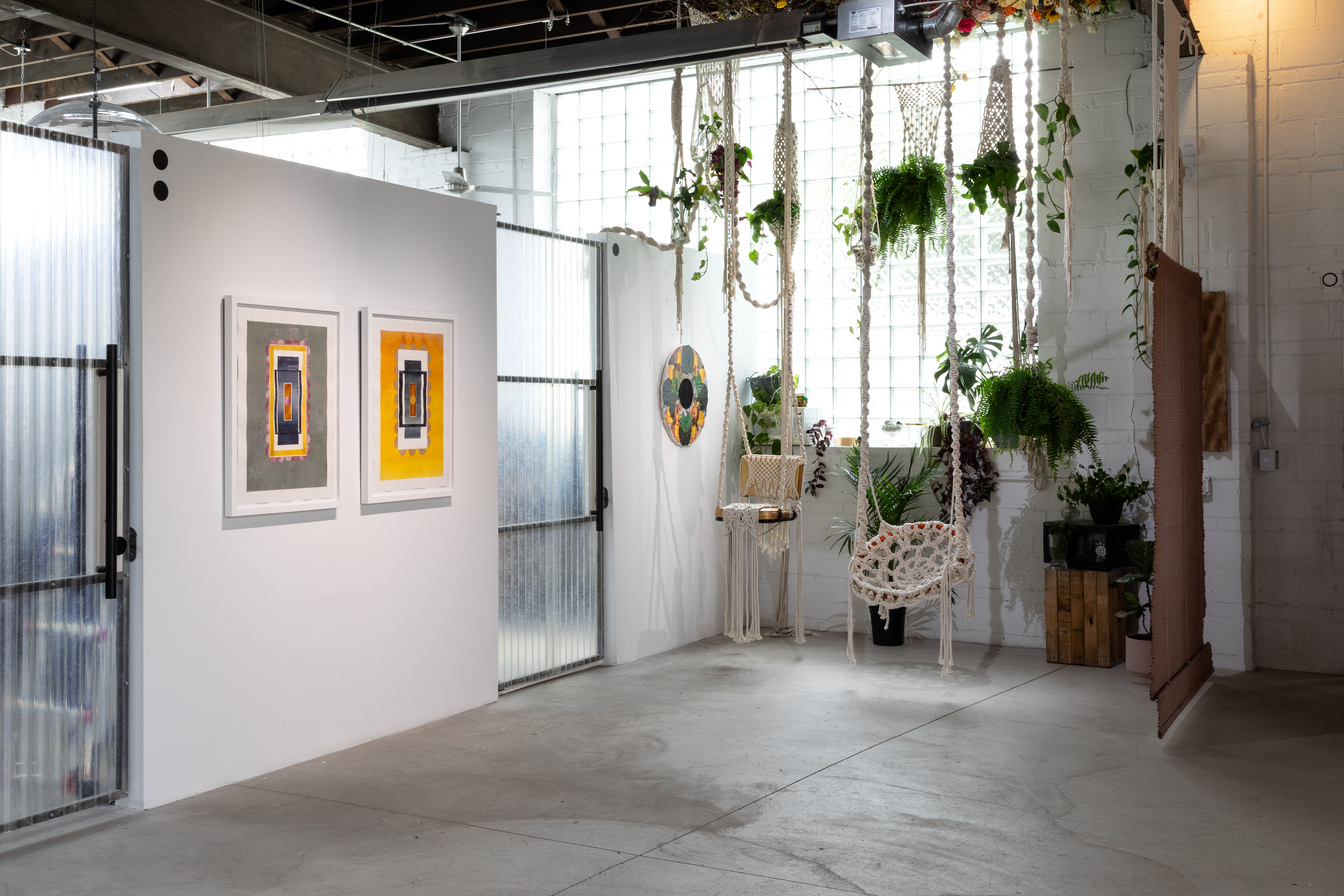
Cyrah Dardas, Portal I and ‘Portal II, 2026 ; Halima Afi Cassells, Singularity #3: Wise as Serpents, 2026, and variable installation, Simulacra Study, 2026
This year I decided to provide each resident with $5,000, including a $1,000 honorarium for Vernal, so that they could really spread their wings and explore a new area of their practice. Halima, for instance, taught herself to macrame, which resulted in her installations.
It would be great to move towards a larger stipend and we move towards sustainability as an institution. To make this happen in addition to childcare and our current programming will require funding and we look forward to finding new partners to make this a reality.
rm: And I understand, from speaking with you, that Buffalo Prescott offers more than financial support, studio space and exhibition opportunities. There is a level of care and community that you bring too.
SF: Exactly, we really want care to be the center of our project. Buffalo Prescott is a place where you don’t have to check yourself at the door. There was a time recently where I was going through a lot of challenges personally. I have appreciated not having to necessarily hide these struggles. I have a child now, so she’s going to consume more than 50% of my mental space. A majority of the artists here are also mothers, so we are able to understand and support each other both professionally and personally in whatever capacity we can.

Casa de la Crema, there are no unsacred geometries, 2026. Orgone Accumulateur. Variable experience of collaborative and energetic materiality by Casa de la Crema, August Graef, and Jessica Wildman Katz, with Halima Afi Cassells, Hailey Urbano, and Fashion Flesh.
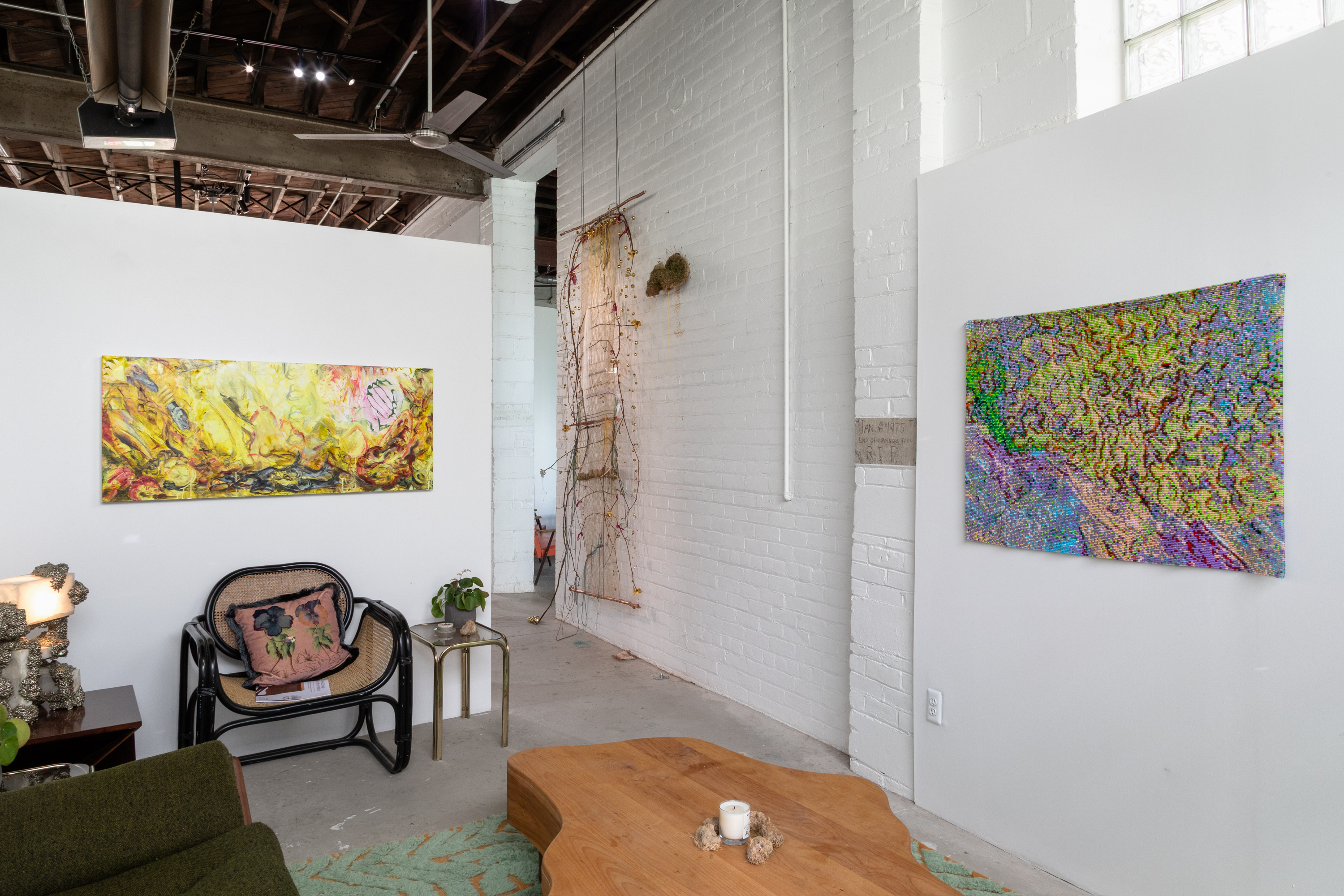
Vernal Exhibition: Featuring work from Jack Craig, Jo Messer, Tony Printz, Jessica Wildman Katz, and Jillian Blackwell
rm: It really changes the game when you are able to see the people you work as professionals, but also as whole people with lives that extend past their careers.
SF: Motherhood is one aspect of life that is definitely underrepresented in the art world. Part of our goal at Buffalo Prescott is to offer fully funded child care and intergenerational programming, so that there’s always some type of new learning or creative projects that the kids can engage with while their mothers are working in the studio.
rm: There’s a very heavy element of healing that happens through the arts, but this is able to happen when other things that are very important in life, like their kids, are taken care of.
SF: I also feel that it is necessary to break down the gatekeeping that happens in the art world, and offer access to the kind of knowledge that one would typically get in graduate school. My associate Leto is an incredible writer. I’ve been encouraging him to offer a workshop for writing poetry or something like that.
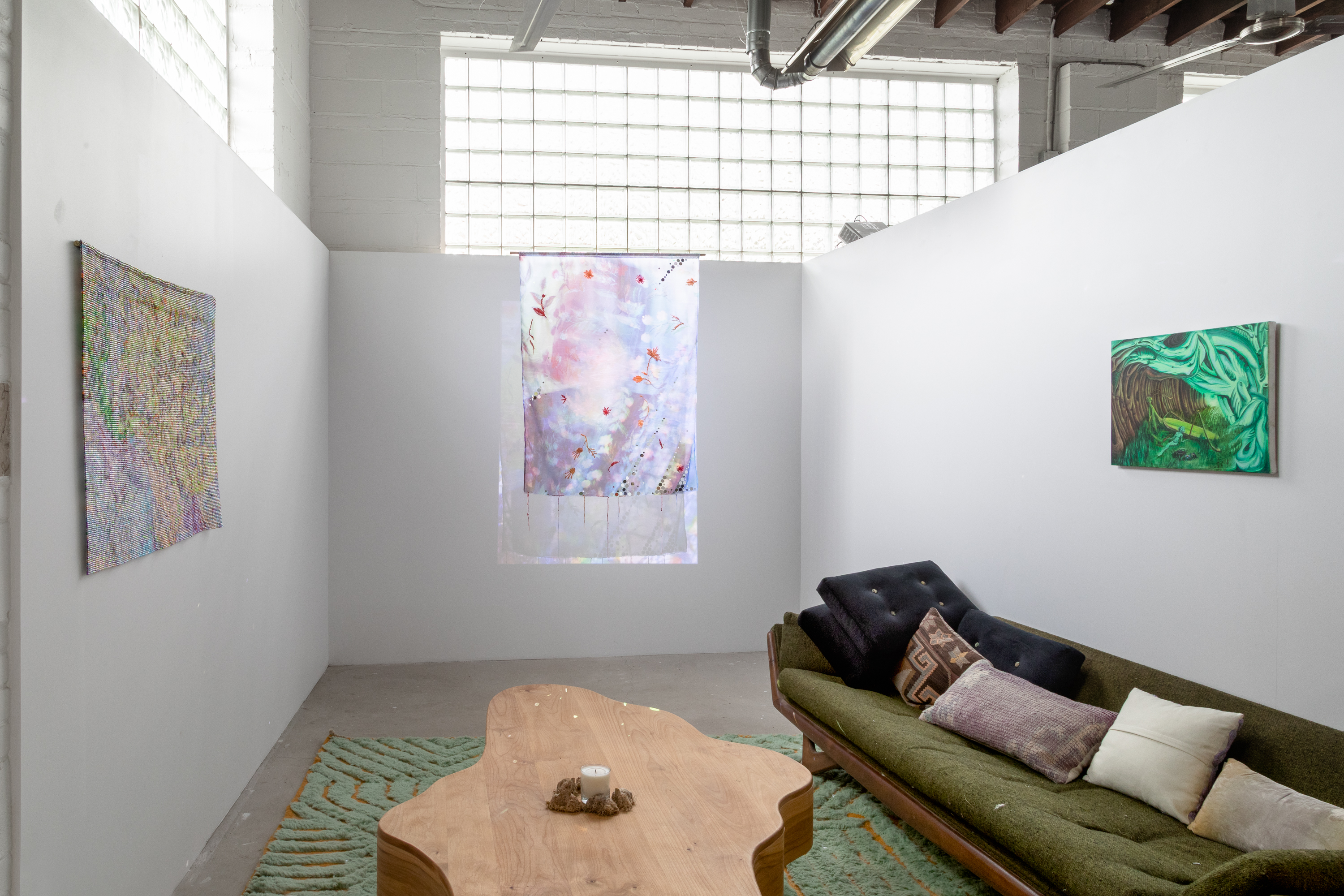
Vernal Exhibition: Featuring Tryst Red, Garden Veil (Embroidered) and Garden Veil, 2026 ; Jillian Blackwell, Seaweed at Magic Island, Sitka, Alaska 3, 2025 ; Madison Warp, Mantis Rider 1, 2025 ; Tony Printz, Ghost Bench, 2025; Jessica Wildman Katz, This Place of Potential Series: Kindling I, 2026
rm: That sounds great, or you could have a reading group where you discuss a text or something. That’s what I did in my master’s program. We would have classes that were six hours long that basically consisted of reading and contemplating a piece of writing. There’d be some coffee there, a little bit of water. It would be a lot of fun to do something like that at Buffalo Prescott.
SF: And that’s the fun thing about this place. We can try out things like this pretty easily because we don’t have a large bureaucratic board or anything that is dictating how we evolve.
rm: You are sort of following your intuition with how Buffalo Prescott should develop, as opposed to establishing a structure like the ones you have worked within throughout your career thus far, which come with the typical institutional constraints…
SF: Exactly. I follow my intuition and look for signs to guide me. In 2024, when I set out to start this project, I started looking at different buildings, but a lot of the spaces I looked at just didn’t seem right for what I wanted to do.
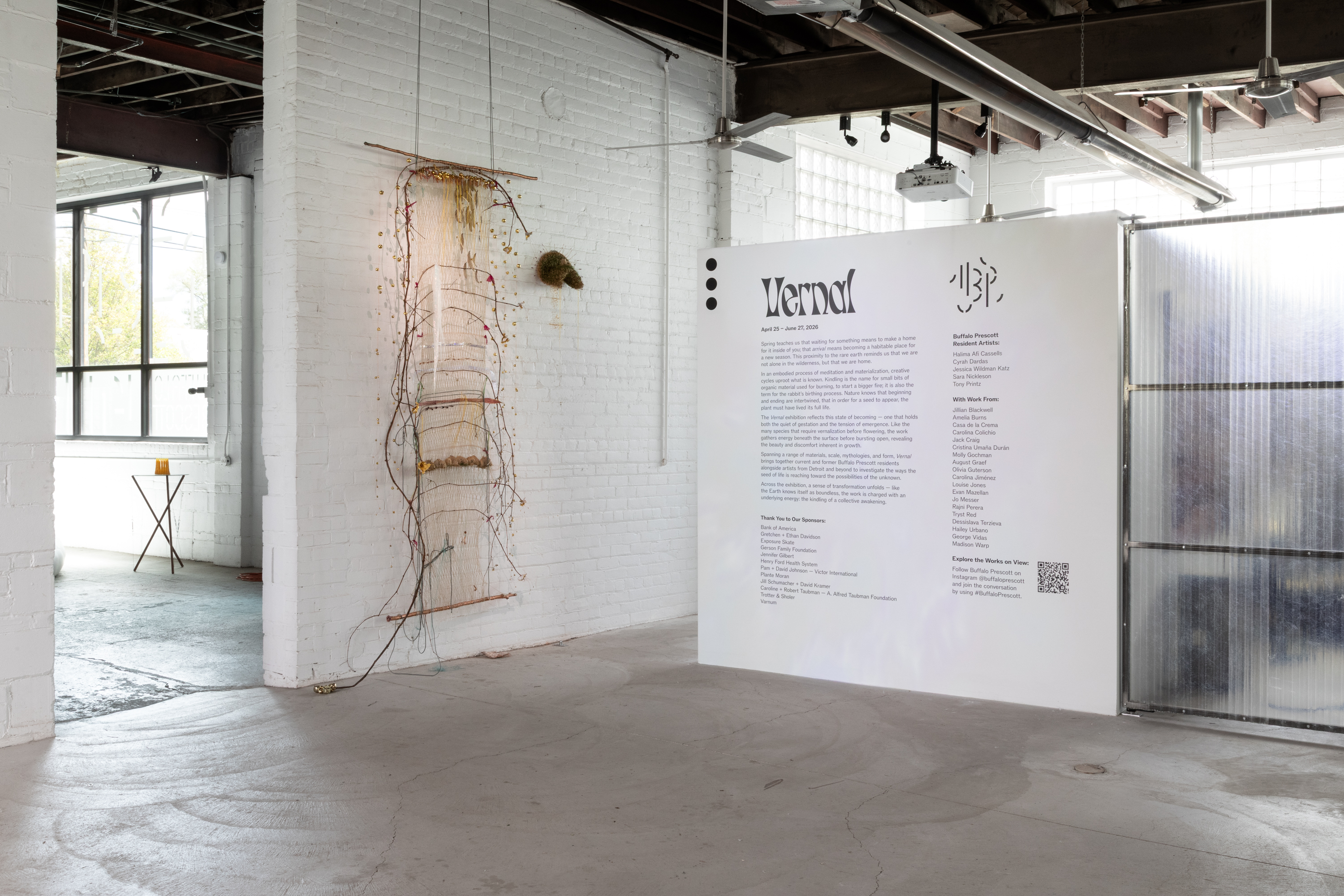
Jessica Wildman Katz, This Place of Potential Series: Johanna’s Gate, 2026, and in background, This Place of Potential Series: Entanglement Drift, 2026 ; Jessica Wildman Katz and August Graef, Tensegrity Table, 2026
Chris Schanck is a good friend of mine and one day we were discussing my thoughts on implementing a non-accredited institution. We were just brainstorming and then he informed me that he was leaving his studio and going to Southeast Asia and that I should move in. I have a background in real estate and that had stopped me from starting an art space in the past. When Chris mentioned his space, I realized that renting in a neighborhood was the ideal way to start this project. It was perfect because the space had already functioned as a creative production studio of his work for years, so it would be a smooth transition for the building and the surrounding community.
From what I understand, this building was once a Swedish tool and die shop, and interestingly, my grandfather came from Sweden and worked in a tool and die shop. Leto also has family members that worked in a tool and die shop, so we sort of have that unexpected connection to the building too.
rm: Sometimes, you just have to jump in without thinking too much…
SF: Buffalo Prescott was started with heavy reliance on my intuition. A lot of it felt like swimming downstream and if I ever felt resistance it meant it was time to reexamine. I saw myself in the future and realized that if I did not seize this opportunity and hit the ground running it might have never happened, and the future I envisioned without taking this step was not good.
The more we can work as a collective and offer financial opportunities to the artists until we have a funded stipend the more flexible their work schedule can be and therefore have more time in the studio. This truly has been a collective experience where we are able to help make each others dreams a reality. I am so proud of what we have achieved in the last two years. It is just the beginning and Buffalo Prescott provides hope for the future at a time when hope and community are vital. Without fully realizing it, I created a lifeline for myself and what makes Buffalo Prescott so special is that, in turn, it creates a lifeline for others.
And like I said earlier, we want to get full child care, fully funded, because what a lot of people don’t realize is having just the space isn’t even enough. It’s a luxury to be able to be a full-time artist and something that people don’t have the ability to do because of other things going on in their life, like raising kids and having to work multiple jobs to sustain their practice.
rm: So you mentioned that you want to offer workshops through Buffalo Prescott?
SF: Yes, at the moment, every artist does one workshop as part of their residency, but they can do additional workshops for income too! Ideally the workshops would be affordable and open to the community. In the past two years we have had more than 50 events. We have already had a number of excellent workshops. In addition to the residents we work with other artists to host workshops. We pride ourselves in creating an accessible and welcoming space allowing multiple skill levels to coexist.
rm: Workshops are a great service to offer to the Detroit community, especially if they are free or offered at an affordable rate.
SF: Yes, I believe we have Nolan Simon on the schedule to teach a series of art history talks as well as a painting class this Fall.
To support the workshops, we plan to build out facilities like metalsmithing benches and a dark room. We’ve really just been dreaming in real time since the beginning. It took two years to get the board together, and hire staff. We were able to build half the studios in the first month we were here, while we shared the space with Chris, and the remaining studios were built before our first pancake brunch in September. We have a pancake brunch each September. This year it will be on the 19th from 11am-2pm.
rm: You were mentioning that Cyrah wrote you a letter during the opening of Vernal…
SF: Thank you for the reminder. Yes, Cyrah wrote this letter stating that since their daughter was earthside, it’s not been the easiest and that if it weren’t for Buffalo Prescott, they would not be making art anymore.
When I read that, I took it as a sign that we are on the right track. We provide people with a child-friendly space to make their art amongst other mothers who are also artists. The environment offers a sense of support that isn’t typically found in the art world.
rm: You guys are actively embracing an aspect of many women’s lives that is generally ignored.
SF: Or hidden. I was at a dinner with a well-known gallerist, and she told me that she was encouraged to completely separate her role as a mother from her position as a gallerist to avoid scrutiny regarding her dedication to her career.
You know, we are moving towards a time where this sort of view of mothers is less likely. It’s such a patriarchal view, but even though being a mother and a professional is more accepted these days, that doesn’t reduce the mental or financial load of living a life like that, no matter the kind of industry. There’s a great group called Artists and Mothers in New York that gives grants to three artists for child care per year. I believe this group did a Mother’s Day thing at the Guggenheim this year, so it’s cool that they’re getting institutional support too.
Ultimately, at Buffalo Prescott, we intend to create a space that offers a variety of different experiences to the community of artists in Detroit, Through the implementation of things like community workshops, free studios and child care to our studio residents, we want to bridge some of the gaps that are affecting people’s ability to move maintain their practice, build on the knowledge they already have, and be part of a community.
This has all been very meaningful to me so far, and I believe it has positively impacted the variety of people and professionals we have worked with so far as well.
You can learn more about the artists in residence, workshop and exhibitions
at Buffalo Prescott online.
Buffalo Prescott
11411 Buffalo St,
Detroit, MI 48212
*Photographs by Tim Johnson