




Ashley Cook
December 15, 2025
True enchantment is a kind of suspension of “knowing” that takes place inside a space of deep fascination with the unfamiliar. Experiences like this can be stumbled upon or sought out, rejected or embraced, but they always—even if only for a moment—evoke a childlike wonder of boundlessness. In the summer of 2025, Detroit-based artists KESSWA and Ian Soloman came together to make an exhibition that meditates on the creative possibilities of opacity as presented by writer and poet Edouard Glissant. As part of his book Poetics of Relation(1990), Glissant proposes an end to reduction and a newfound embodiment of self, unapologetically. He challenges the widely held notion that complete understanding of something different is the only way to accept it. This colonial-minded belief system has been used for centuries to justify the establishment of hierarchies and determine the “legitimacy” of one culture over another. The abolition of mystery has become such a common practice in modern societies that anomalies are picked apart and categorized faster than we can say wow. Edouard Glissant advocates for the potencies of the spirit, the preservation of complexity, and the cultivation of cross-cultural collaborations that are founded on the acceptance of similarities and differences, and an openness to internal and external enigmas.
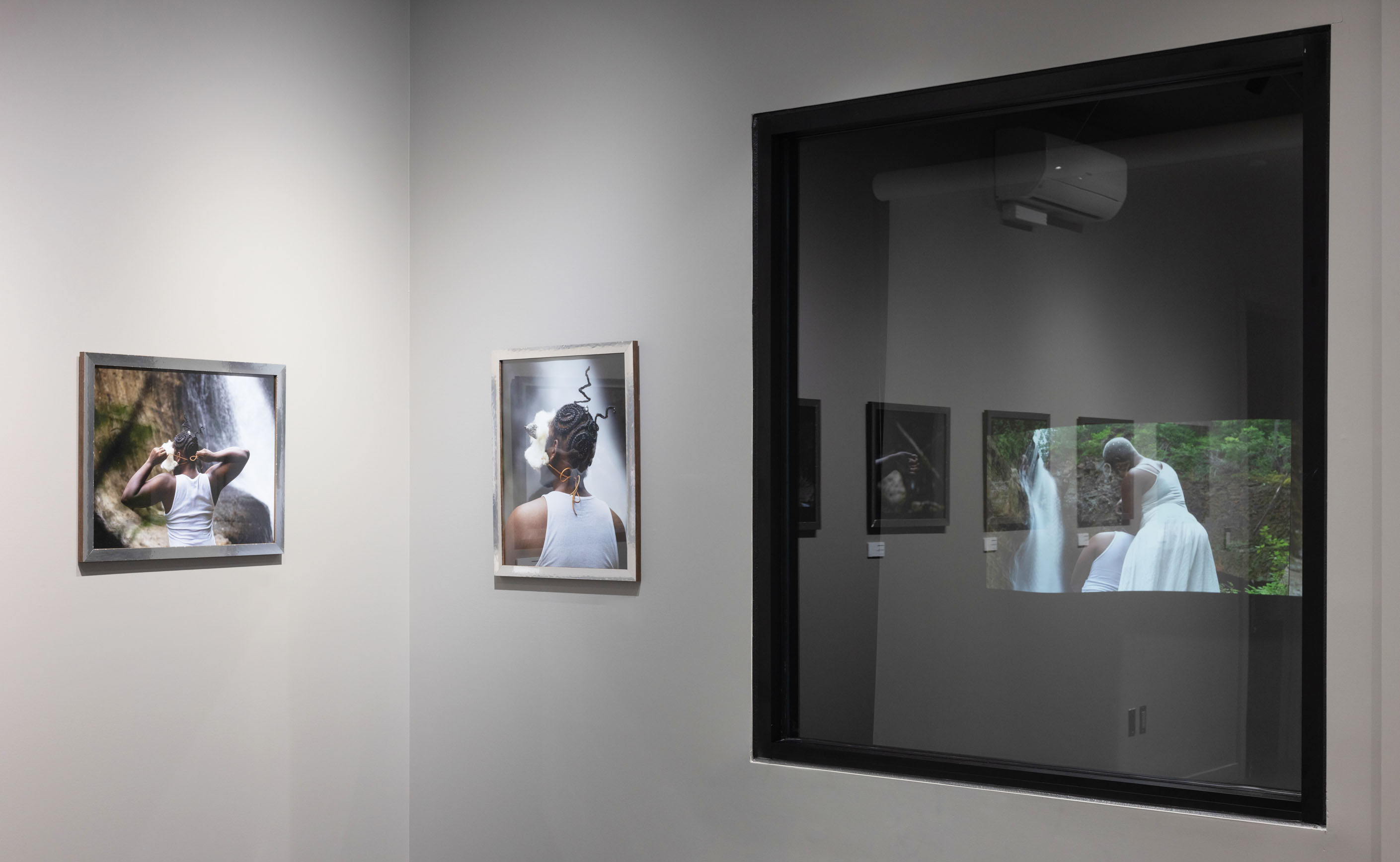
Co Alchemy by KESSWA and Ian Solomon. Video. 2024
In the following interview, KESSWA and Ian Solomon touch on the essential role that opacity has in the preservation of culture, the transformative agencies of collaboration, and technology’s impact on attention in our media-saturated world.
Ashley: KESSWA and Ian, the exhibition text unites the concepts of ritual opacity by Edouard Glissant with Claire Bishop’s thoughts on what she calls “disordered attention”. Claire Bishop reframes our (often disgraced) practice of scrolling and fragmented attention spans in order to discover the creative qualities of the infosphere and our relationships to it. What kind of impact do you see our society’s “disordered attention” having on the future of documentation and archiving?
I think that the impact of “disordered attention”, like Bishop says in the text, is a kind of hybridity in presence. The impulse to consistently document makes all of us performers in a way, even in the most mundane settings. Archiving will become increasingly digital, but I’m hoping we don’t become even more desensitized by others’ most vulnerable and intimate experiences being live-streamed and made viral.
A: “What is lost or gained when intimacy becomes artifact?” How do you see the incessant impulse to observe, document and archive as a challenge to Glissant’s concept of ritual opacity and the preservation of culture in our highly diverse society?
In our current zeitgeist, the impulse to capture, document, and archive moments of intimacy, violence, and the sacred has been amplified with the advance of technology. Those of us with smartphones have the world at our fingertips. We’re able to be in two places at once, both the present moment and online in the digital marketplace. Because of our impulse to experience connection and intimacy through digital interfaces, we spend less and less time in the deep, still, and quiet. It can be difficult to retain a sense of mystery or feel comfortable with the time it takes to truly know and understand one another, a body of work, or an experience; all of which contain depth, nuance, and sometimes contradiction. Maintaining our right to opacity allows us to preserve the unfathomable aspects of ourselves while also creating a capacious space where we can truly respect each other and navigate the tension between the sacred, personal, and our voyeuristic impulses that reduce the “other” to good or bad, interesting or boring.
A: Can you describe the film that was on view along with the photographs and tapestries?
Co-Alchemy is a documentation of a ceremonial braiding performance. In the film, we engage in the intimate act of braiding and adornment, where I, KESSWA braid a spiral motif into Ian’s hair. Through this process, I am exploring a visual representation of sound, specifically rendering a 4-dimensional sine wave (spiral that rotates around a centralized axis). The film, which plays on an endless loop, provided the source material for the photography and tapestries, and that process in and of itself is an act of recursion, which we find in the practice of hair-braiding and weaving.
A: Could you also touch on the significance of the location for the ceremonial hairbraiding performance that took place in the film?
Waterfalls of course represent renewal, abundance, etc. but what connects me deeply to waterfalls of the Great Lakes is knowing all that flows eventually meets me back home in Detroit. Miner’s Falls, 7 hours away, is one of the most prolific falls in Pictured Rocks National Lakeshore.; its dramatic basin shrinks and holds you— it’s awe inspiring, and it’s a place I’ve had a decade of returning to. For me, the act of returning collapses space; the east side and Miners Falls occupy the same corner of my internal compass and I’m always looking to express that spatial experience creatively. Both mine and KESSWA’s practice rests on re-narrativizing or reimagining what ‘Home’ means from the perspective of a Black Detroiter. KESSWA’s braiding practice presents a collaboration far too intimate to consider neutral or public.
It reflects the technology, material and culture of our Home space— I feel it asserts safety, like a shelter to be deployed. So really it became an exploration of “What happens when the basin Miners Falls becomes the salon? What new truths emerge? How do we alchemize landscape, body and performance to ‘become’ some place new and still meet ourselves back home hundreds of miles away?”
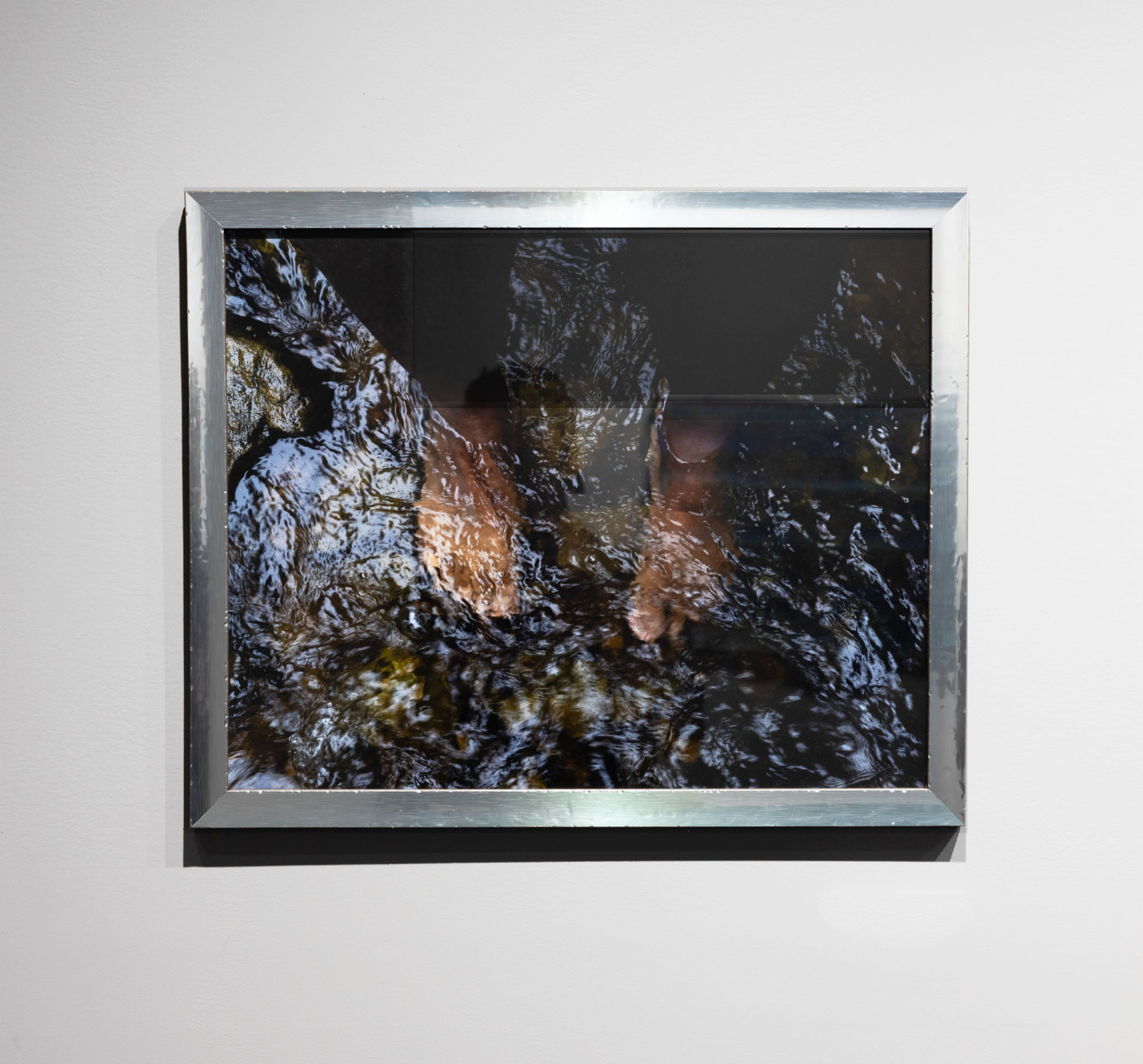
Current by Ian Solomon. Inkjet on enhanced matte. 2024
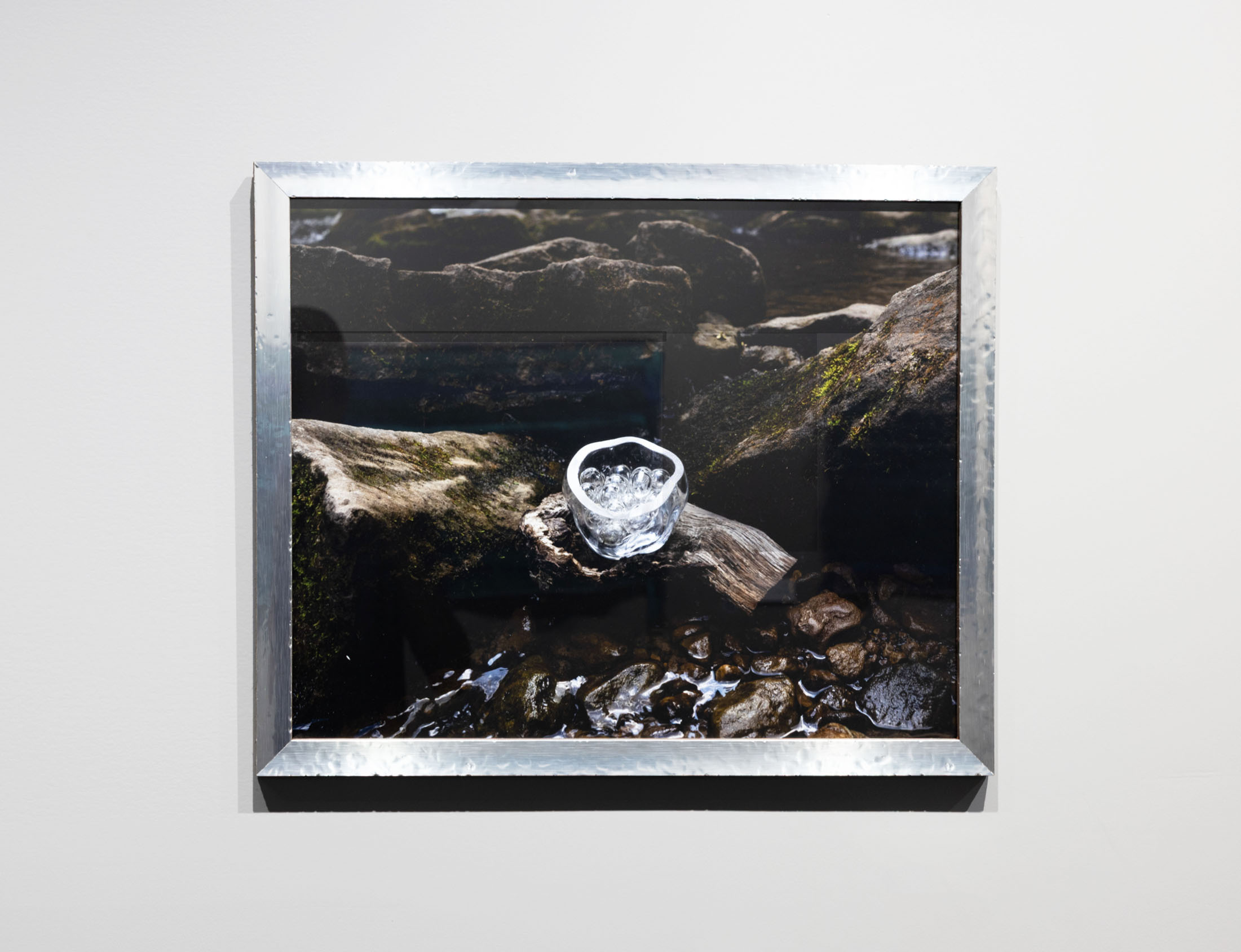
Prayer Well by Ian Solomon. Inkjet on enhanced matte. 2024
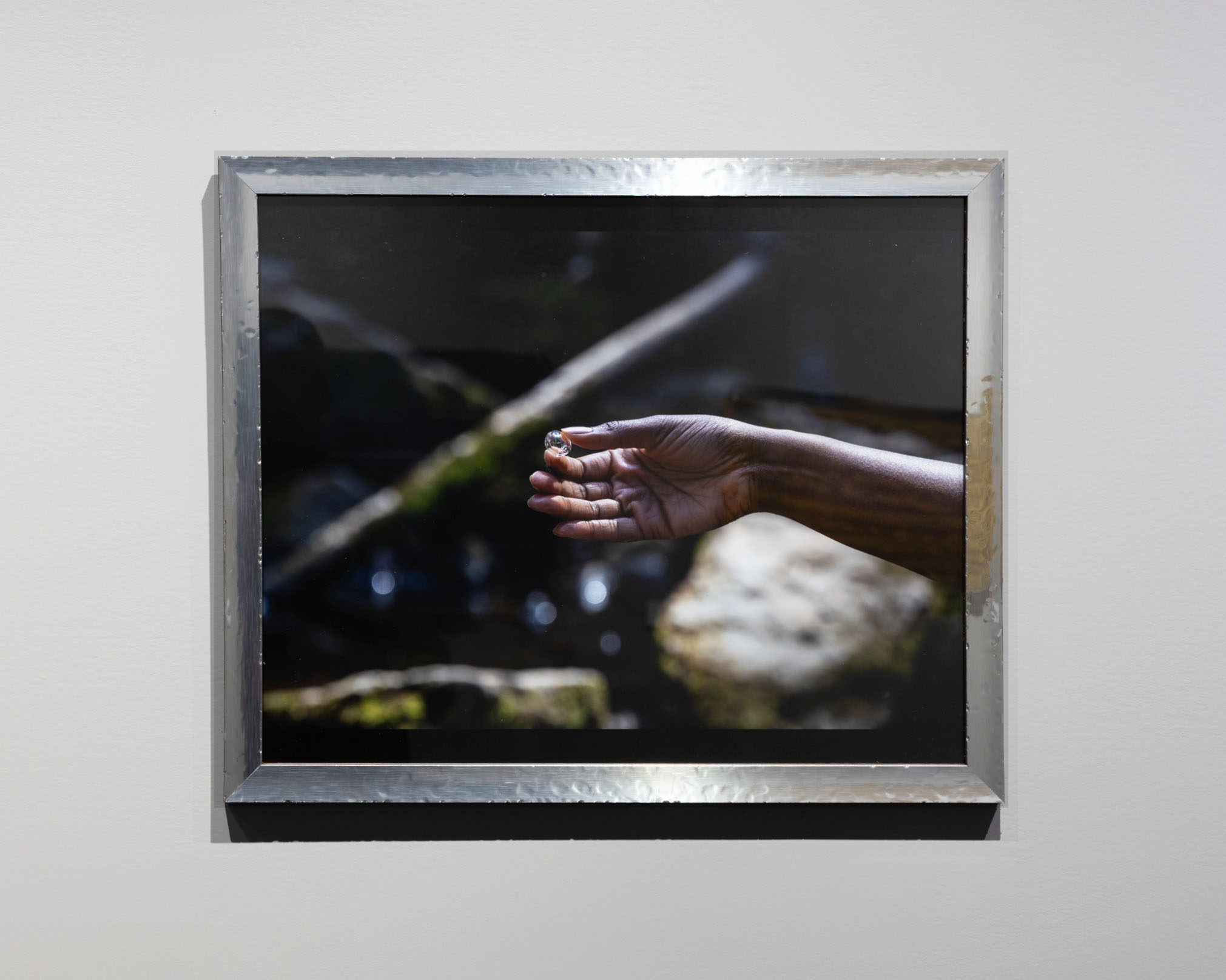
Prayer Piece by Ian Solomon. Inkjet on enhanced matte. 2024
A: The sacred ritual of hairbraiding is deeply ingrained in Black culture around the world, and has functioned as tools for covert communication throughout time, but you also mention this practice as a technological proposition. How so?
By definition, technology is the application of knowledge for practical purposes. In West African culture, braided hairstyles functioned as a tool for communicating one’s social status or societal role. Because of this, we can think about braided hairstyles as a form of media. In Oceane Nyela’s Master’s thesis, she positions hair braiding as technological with reference to Ruha Benjamin’s book “Race after Technology: Abolitionist Tools for the New Jim Crow via the following quote:
“Race itself is a kind of technology – one designed to separate, stratify, and sanctify the many forms of injustice experienced by members of racialized groups, but one that people routinely reimagine and redeploy to their own ends” (Benjamin, 2019, p. 19).
Nyela states that if race is technological, then hairstyles, which are intimately related to race and ethnicity, are technological as well. She then references Ron Eglash’s work on ethnomathematics, in which he invites us to reconsider what constitutes mathematics. His focus on fractals, which in African culture are found in hair braiding, textiles, and culture, further positions the practice of hair braiding as a science.
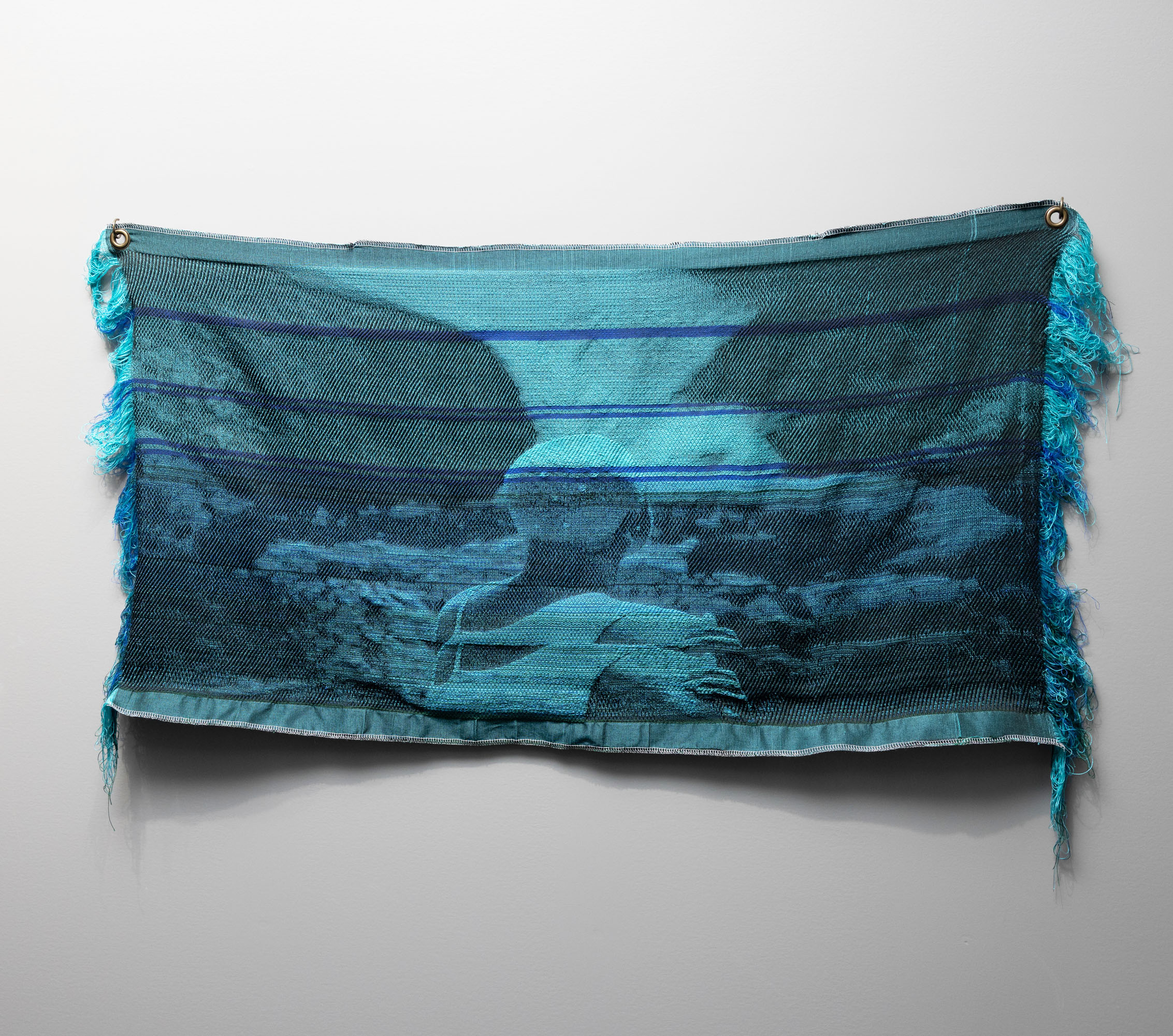
Refusing Your Grasp For My Own, KESSWA Hand Woven TC2 Jacquard 2025
A: This exhibition is layered in terms of materiality. Photographs feature scenes of Solomon inside the same environment where the filmed performance by KESSWA takes place. Images from the photographic series are transcribed into textiles woven with a Jacquard loom. The photographs also feature sculptural elements like the braided hairstyles and hand-blown glass beads that hold their own as aspects of the show. The ambiguous connections happening between these elements serves as a prime example of the concept of ritual opacity. Could you unpack this layered approach to exhibition making as it relates to collaborative alchemy and becoming?
We came to the table with not just different primary mediums, but entire personal histories that inform the way we wield our tools– in general you’re seeing the result of two makers whose work wears their unedited heart on its sleeve. In terms of the studio, the materials utilized represent a lot of what we knew firmly, but also what we were reaching towards– many new explorations informed by long held foundations. Our creative pasts and futures weave in and out of each other throughout the work. Beyond our own lives, the material itself represents ample narratives– the cultural presence of braiding, the etymology of the word ‘bead’ being prayer, the history of jacquard as breakthrough technology and the inspiration of a landscape in constant renewal. These realities and all that we are as makers demanded presence in the work that neither of us wanted to deny. That demand translated to creating duplicated worlds born of the same moment, but with a tweak of perspective through material–it’s a multiverse in that way. What’s most satisfactory is it’s a really honest reflection of how both myself and Kess experience moving through our worlds– very “everything, everywhere all at once”, but grounded in where our feet are planted.
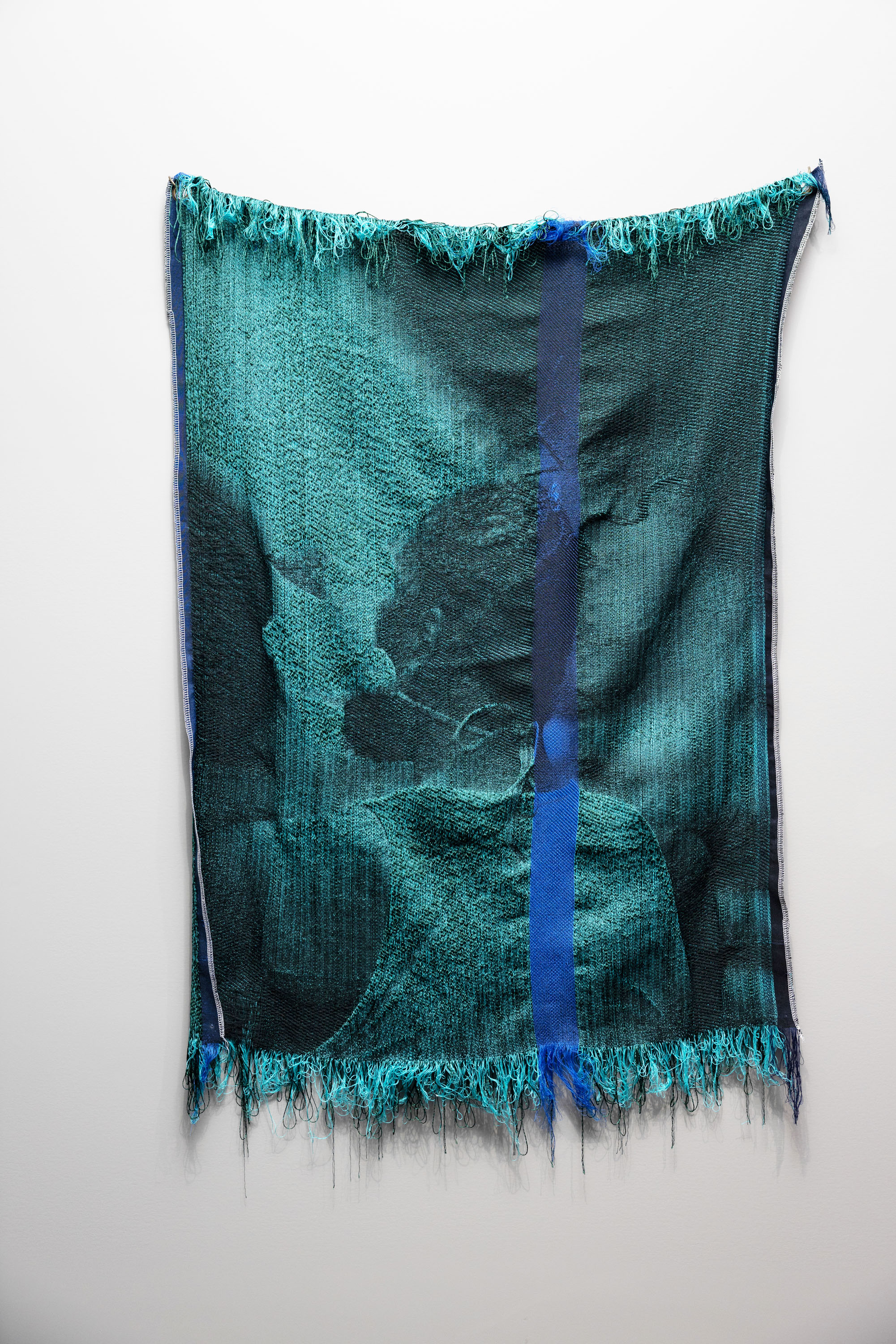
Coexist and Converge by KESSWA. Hand Woven TC2 Jacquard. 2025
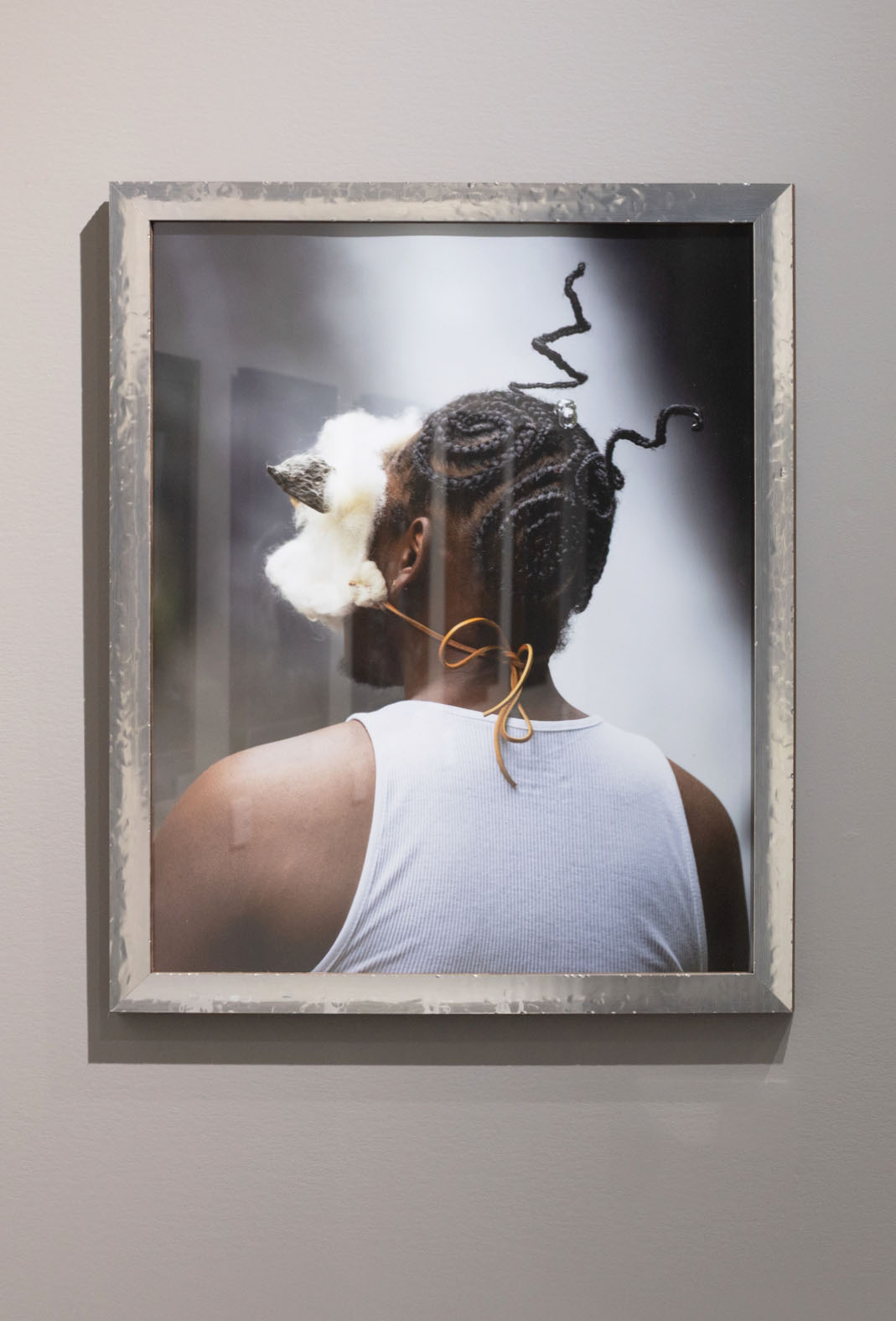
Softened by Ian Solomon. Inkjet on enhanced matte. 2024
A: The archetype of the fool in tarot represents the risks and benefits inherent in the process of transformation; it is a metaphor often used to incite curiosity and bravery as one journeys into the unknown. Tarot is another cultural tool that is rich with mystery; how do you feel that tools like this could offer spiritual guidance and healing, especially in our current political and social climate?
There’s a demonstrable pattern within moments like these that show the masses reaching for answers in anything other than what’s tangible, or to put it simply, faith. What I think more personal vehicles of faith like tarot offer in this moment is the opportunity to reach towards an intangible that still maintains the self as a source of power. Right now we need to believe in ourselves, our abilities, our sovereignty– sometimes that gets murky within more traditional religious institutions, but personal practices like tarot assert that the answers we need are always within our personal reach and on our terms. And while these modalities certainly offer us personal healing and guidance the real task is to alchemize the spiritual offering with community, organizing, and makings we can touch. There’s something very bottom-up ‘power to the people’ about it– in times like this we must maintain our personal power to integrate it with all those who are doing the work for the greater good.
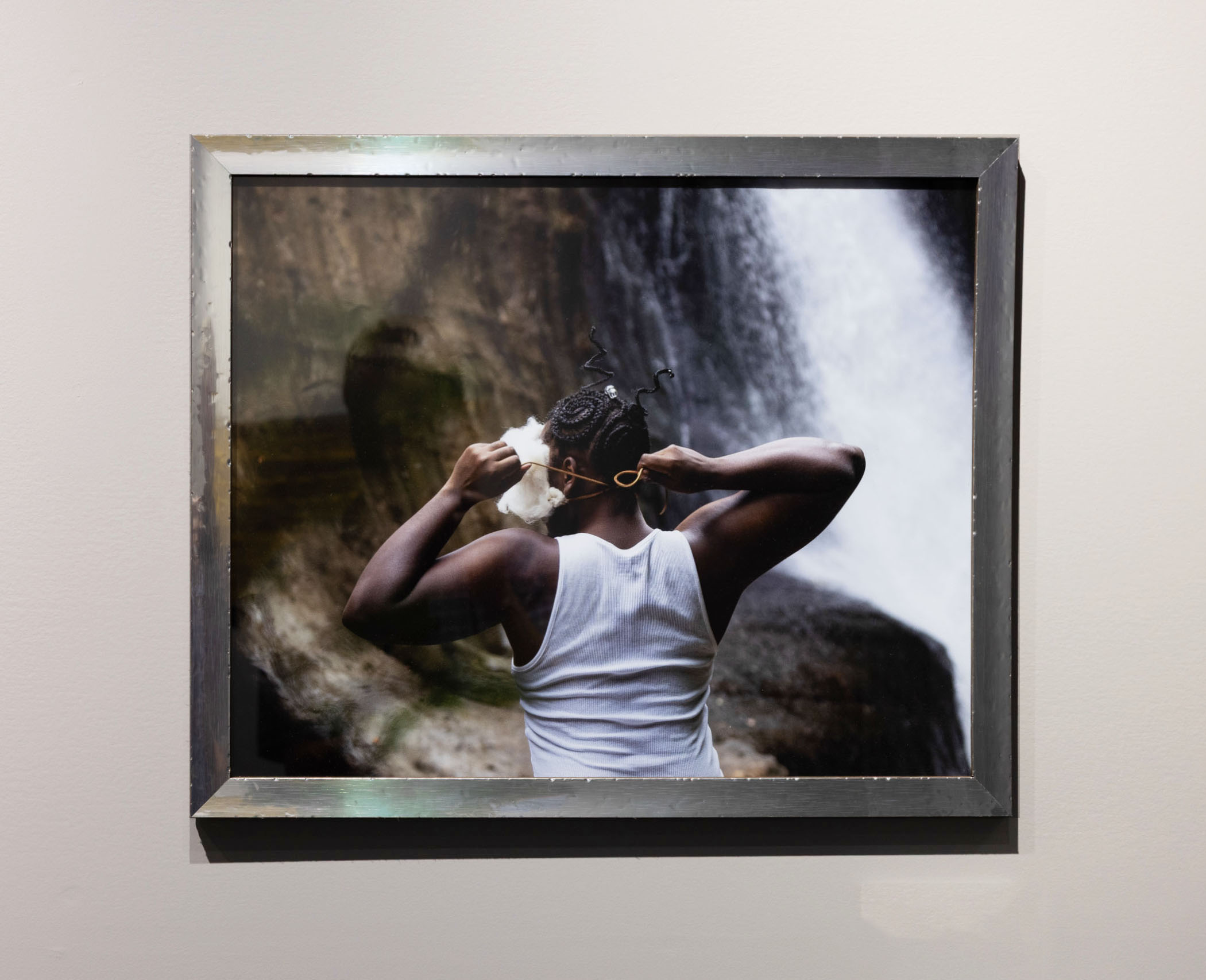
Becoming by Ian Solomon. Inkjet on enhanced matte. 2024
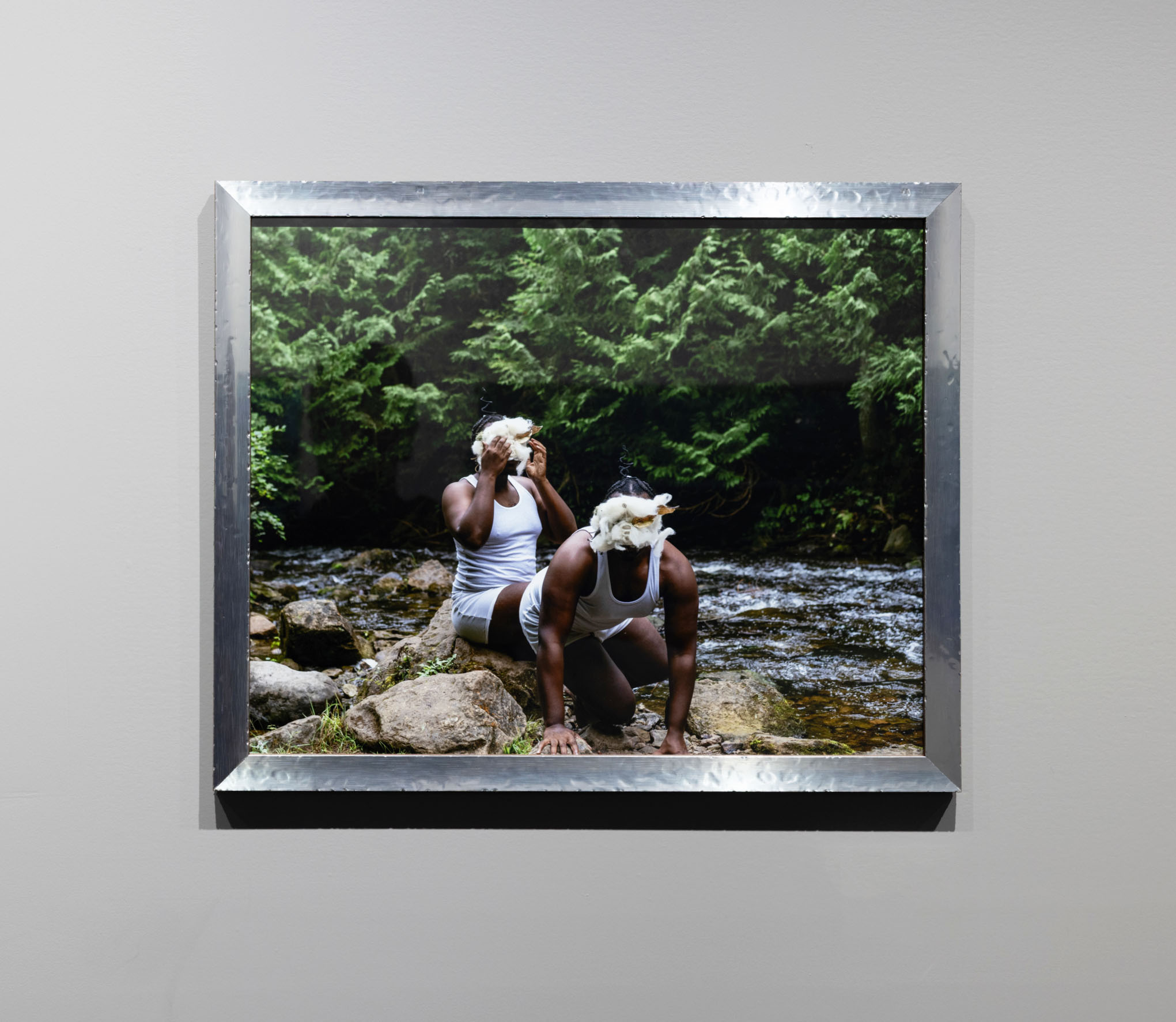
Conscious Awareness by Ian Solomon. Inkjet on enhanced matte. 2024
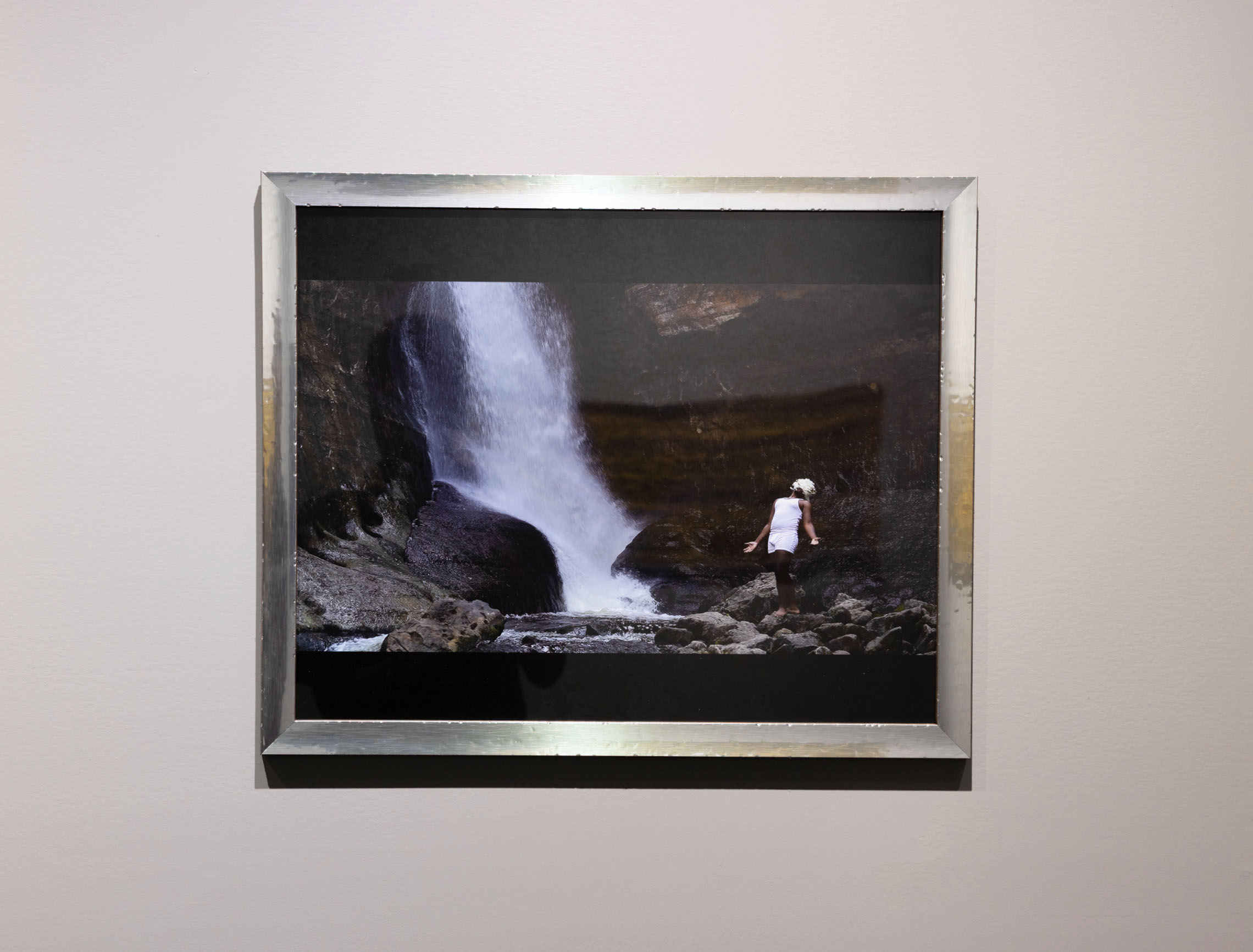
The Fool by Ian Solomon. Inkjet on enhanced matte. 2024
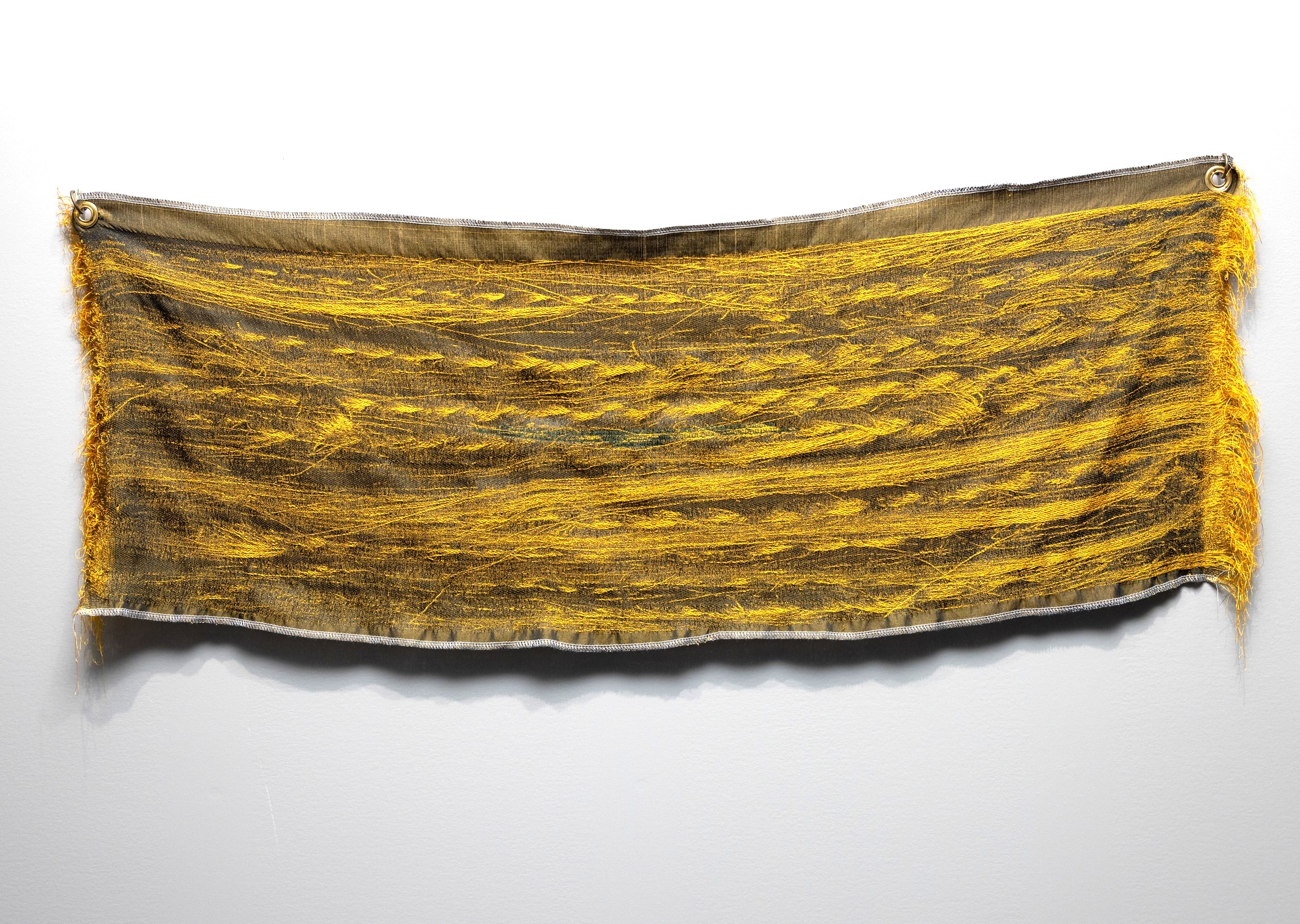
Opacity for Everyone by KESSWA. Hand Woven TC2 Jacquard. 2025
CO-ALCHEMY: Collaborative exhibition between KESSWA and Ian Solomon. Through an interdisciplinary body of work, they conjure a ritual of becoming. Drawing from Edouard Glissant’s philosophy of opacity-which resists total legibility- this exhibition presents a ceremonial hair-braiding performance as both sacred act and technological proposition. Through spiraled weavings, handcrafted artifacts, and layered documentation, the artists interrogate how we preserve (and distort) ephemeral acts of renewal. At its core is a refusal: the braiding ritual, though meticulously documented via Jacquard tapestry, video, and field recordings, maintains its mystery. Claire Bishop’s questions about technologically mediated performance linger-what is lost or gained when intimacy becomes artifact? The Fool (tarot’s archetype of beginnings) appears throughout, embodied in Solomon’s self-portraits and KESSWA’s helical weavings, suggesting that transformation requires both risk and unknowing.
Saturday, July 19, 2025 at Cure Nailhouse
Kesiena Wanogho, aka KESSWA, is an award winning transdisciplinary artist from Detroit, Michigan. As a performance artist, producer, and social practice artist, her work weaves pedagogy, fiber, video, music, interactive technology and spoken word to function as a resource for healing. She has received a BA in Sociology from Wayne State University and an MFA from Cranbrook Academy of Art in 4D Design.
Ian John Solomon (1997) is an interdisciplinary artist from Detroit, Michigan. After receiving his B.A. in broadcast journalism from Walter Cronkite School and a stint as a congressional reporter in D.C., he found his love for community activism and storytelling required a more expansive modality. Ian’s interdisciplinary lens based practice explores themes of self, queer identity, ancestry, community and ecology. Deeply motivated by environment, Ian uses land as foundation and guidance for artistic expression and questioning.