




Ashley Cook
February 16, 2026
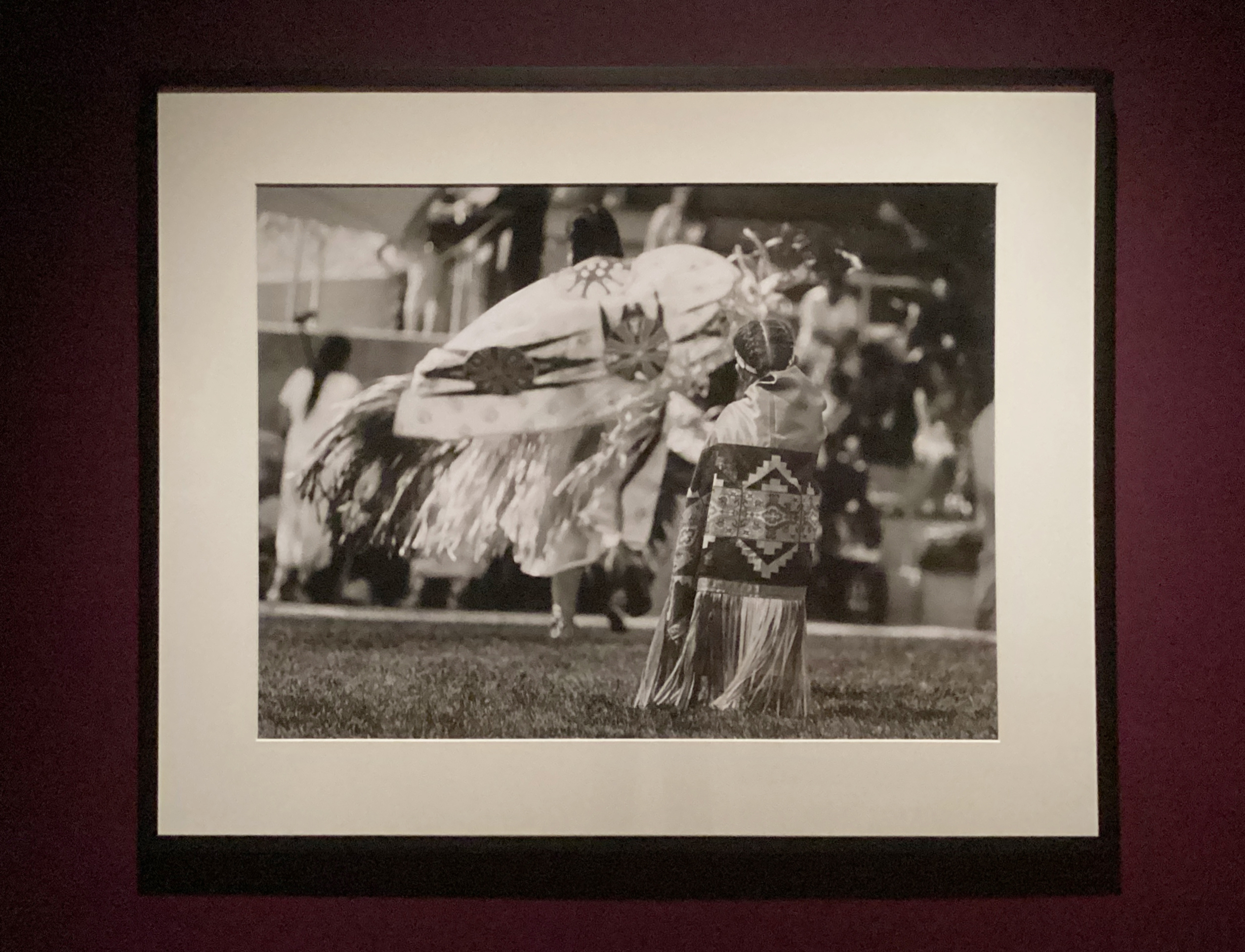
Before colonization, the territory known today as Detroit City was a rich and biodiverse landscape of dense forests, marshy wetlands, and open meadows.1 It was given the name Waawiyatanong—meaning “where the river bends”—by the Anishinaabe people, who had been deeply embedded in this space for thousands of years even before the French settlers arrived in 1701.2 This large indigenous group comprises the Ojibwe, Odawa and Potawatomi—three culturally and linguistically related nations who collectively migrated from the Atlantic Coast to the Great Lakes region over many generations, guided here by the prophecy to find “food that grows on water”.3 The alliance between these three groups became official around 796 AD with the founding of the Council of Three Fires.4 Their essential role as stewards of the land and water—which they regard as sacred, living entities—is characterized by their honor and protection of the natural environment through the use of traditional knowledge, modern conservation techniques and defense against contemporary environmental threats like pollution, climate change and pipelines. Efforts to sustain their culture, language and sovereignty is a multifaceted and persistent practice that involves both the natives and their allies. On Indigenous Peoples’ Day in 2019, Detroit passed a resolution recognizing the city as a place that is both deeply rooted in indigenous history and invested in indigenous perpetuity.5 It is common to also find statements of land acknowledgment made by Detroit-based institutions, organizations and individuals, who, to varying degrees, are committed to transparency, accountability and advocacy. Respectful, collaborative relationships with the people of other cultures—especially when engaging in anthropological studies—has become an expectation across the globe since the onset of a growing movement called New Animism.6 This can be seen here in Detroit through the close collaboration between the curators of the DIA and an advisory council of contemporary Ojibwe, Odawa and Potawatomi artists working across the Great Lakes Region.7
Contemporary Anishinaabe Art: A Continuation opened on September 28, 2025 and holds the status as the one of the largest presentations of Native American art in the Midwest, and the first major Native American exhibition at the Detroit Institute of Arts in 30 years. The DIA has a long and complicated history of handling Native American artifacts. In 1989, there was a discovery of human remains and cultural items that were removed without consent with additional items located in 2021. The museum is still in the process of returning stolen inventory in accordance with the Native American Graves Protection and Repatriation Act (NAGPRA).8 Their "Indigenous Americas" collection contains nearly 4,000 works, all of which are accessible to view on the DIA website,9 with the exception of artifacts that have a questionable history of acquisition.
Two major representations of Native American culture precede the one currently on view. Art of The American Indian Frontier (1992) was organized in association with the Buffalo Bill Historical Center, featuring over 150 works of art from the Chandler-Pohrt Collection that were made by Native Americans living in the woodlands, prairie and plains,10 and Dance of the Forest Spirits(2001) focused on the potlatch ceremonies and masks of the Kwakwaka’wakw Native Americans living on the Northwest Coast.11 While each of these exhibitions worked to acknowledge the culture of indigenous tribes and promote awareness of their customs and beliefs, Contemporary Anishinaabe Art: A Continuation, on view through April 5, 2026, shows our home, the Great Lakes, through the eyes of an animist population whose occupation here traces back to the Paleoindian era.12
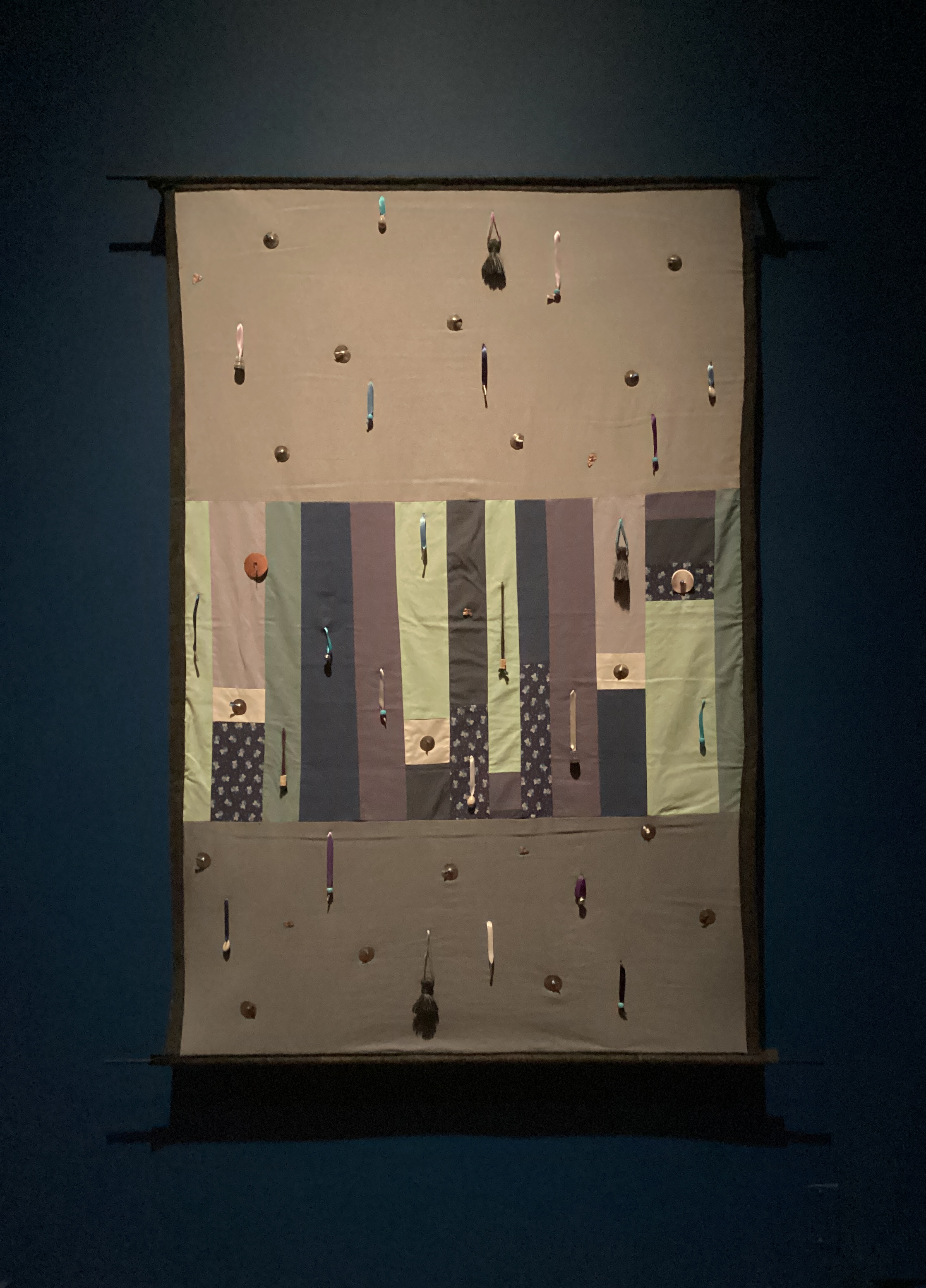
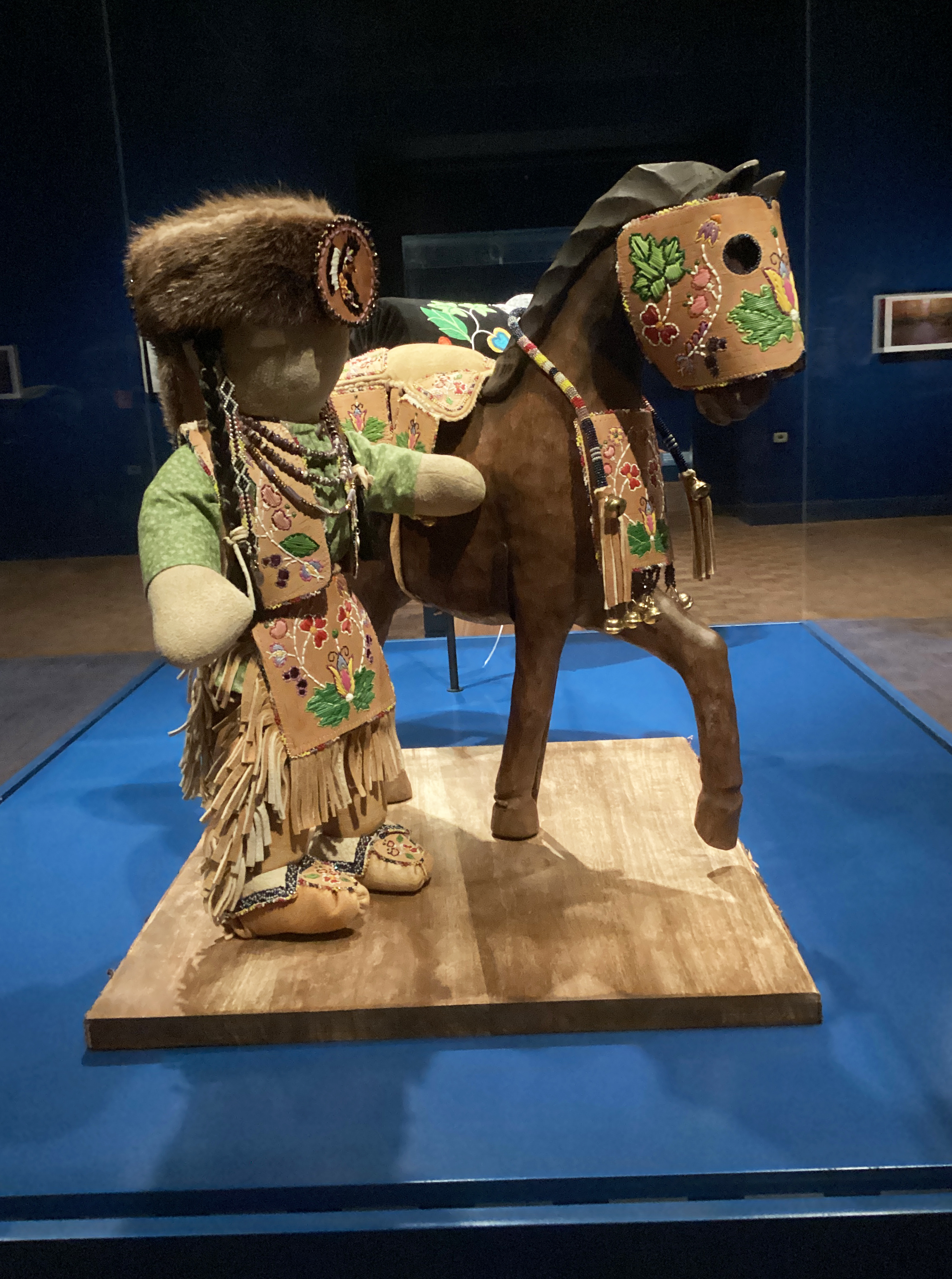
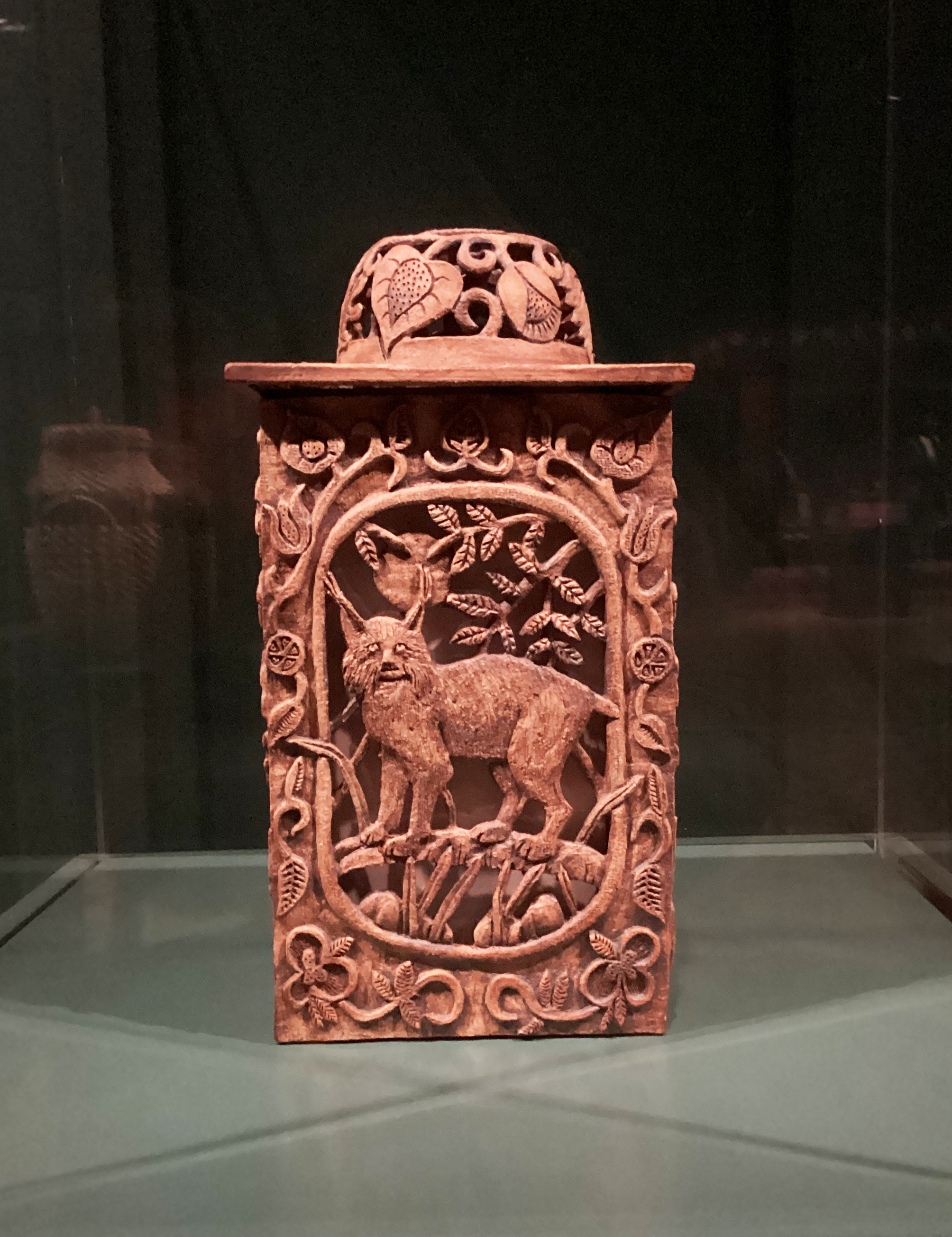
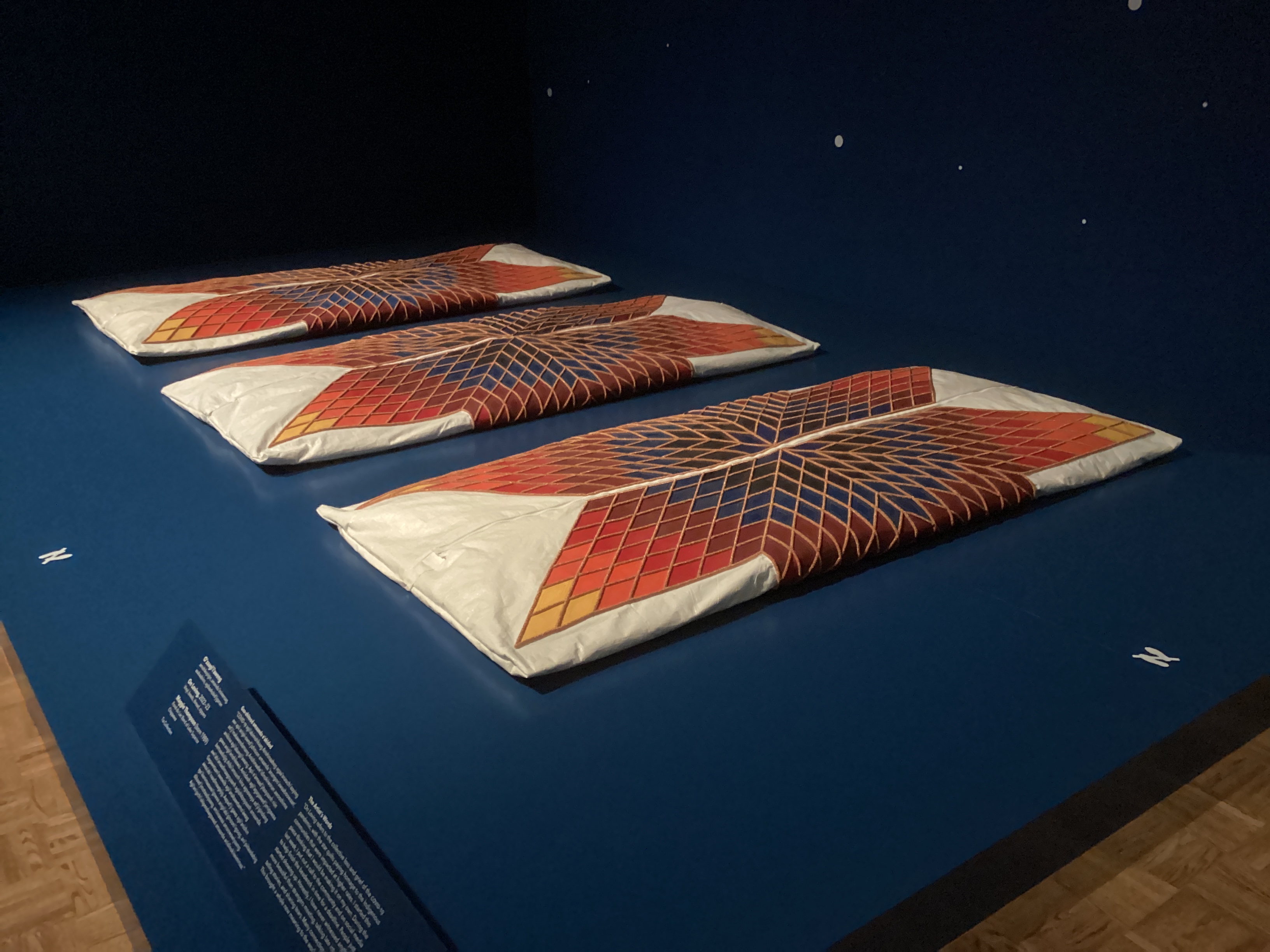
Walking through the exhibition, guests are immersed in an array of more than 90 works ranging from graphic design to painting, drawing and photography, basket weaving, jewelry making and beadwork, fashion, furniture making, pottery and film. This carefully synchronized collection demonstrates both a shared value system amongst the Ojibwe, Odawa and Potawatomi nations as well as the unique contribution of each to Anishinaabe culture. The woodlands are a central feature in both a practical and spiritual sense. Natural elements like birch bark and animal hides become materials for the production of goods, with their surfaces embellished with native symbolism using beads made of seeds, shells and porcupine quills.
The Odawa are known as the “Keepers of the Trade”, functioning as skilled managers of commerce like furs, food, and tobacco between tribes, and later with the French.13 They are known for their floral beadwork, birch bark baskets, porcupine quillwork and storytelling through art. The Potawatomi are the “Keepers of the Fire”, responsible for maintaining the central council fire and community home.14 Like the Odawa, the Potawatomi also practice beadwork, quillwork and storytelling through art and ornament, with geometrics patterns and symbols of forest plants and animals applied to woven sashes, rush mats and bags. The Ojibwe are the “Keepers of the Faith”,15 dedicated to protecting and passing down their language, culture, ceremonies, and beliefs. They are known for their copper work as well as their efforts to record history, write songs and share medicinal knowledge through writing and pictographs on birch bark.
Like the highly integrated qualities of the natural world, a blurring of boundaries between life and art is deeply ingrained in the culture of the Anishinaabe people. Visitors have the opportunity to dive into these complexities of their heritage and how that is represented. They will find consistent messages that illustrate their enchantment with the natural world, paying homage to the biodiversity of the Great Lakes region through expressions of reverence for animals like the bear, the horse, the bobcat and the thunderbird. They embrace their inherited duty to protect the land, leaving things better than they found them through their practice of the “7 Generations Principle” which asserts that decisions made today should consider the impact on seven generations in the future.16 They embed messages of hope, self acceptance and appreciation for tradition into their work, and even pay tribute to other native american nations including the Wampanoag people of the East Coast, who are the traditional "Keepers of the shell".
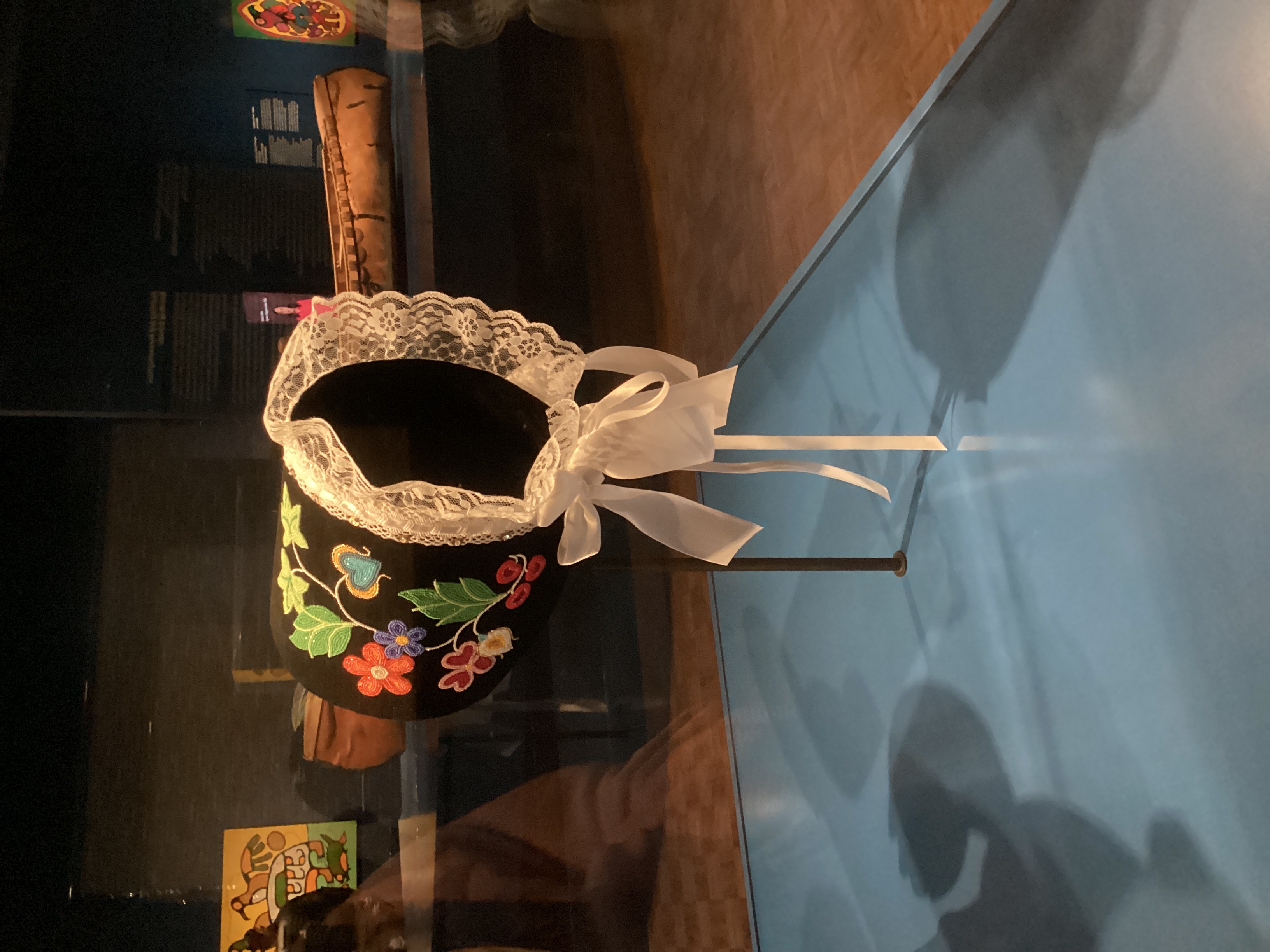
It is clear that spirituality is the life-force of the Anishinaabe, informing their worldview and creative decision making. This can be viewed here through their images of ceremonies, the presentation of ceremonial garbs and instruments, and depictions of the afterlife, deities, spirits, and altered states of consciousness. Pride, wisdom and strength is carried from one generation to the next through storytelling. Some of the artists in the exhibition tell difficult truths to confront the injustices that their people have experienced. Others share their history through more playful approaches, or engage in a retelling of ancient tales through their work. The elders and ancestors who carry these traditions from the past to the present are also honored.
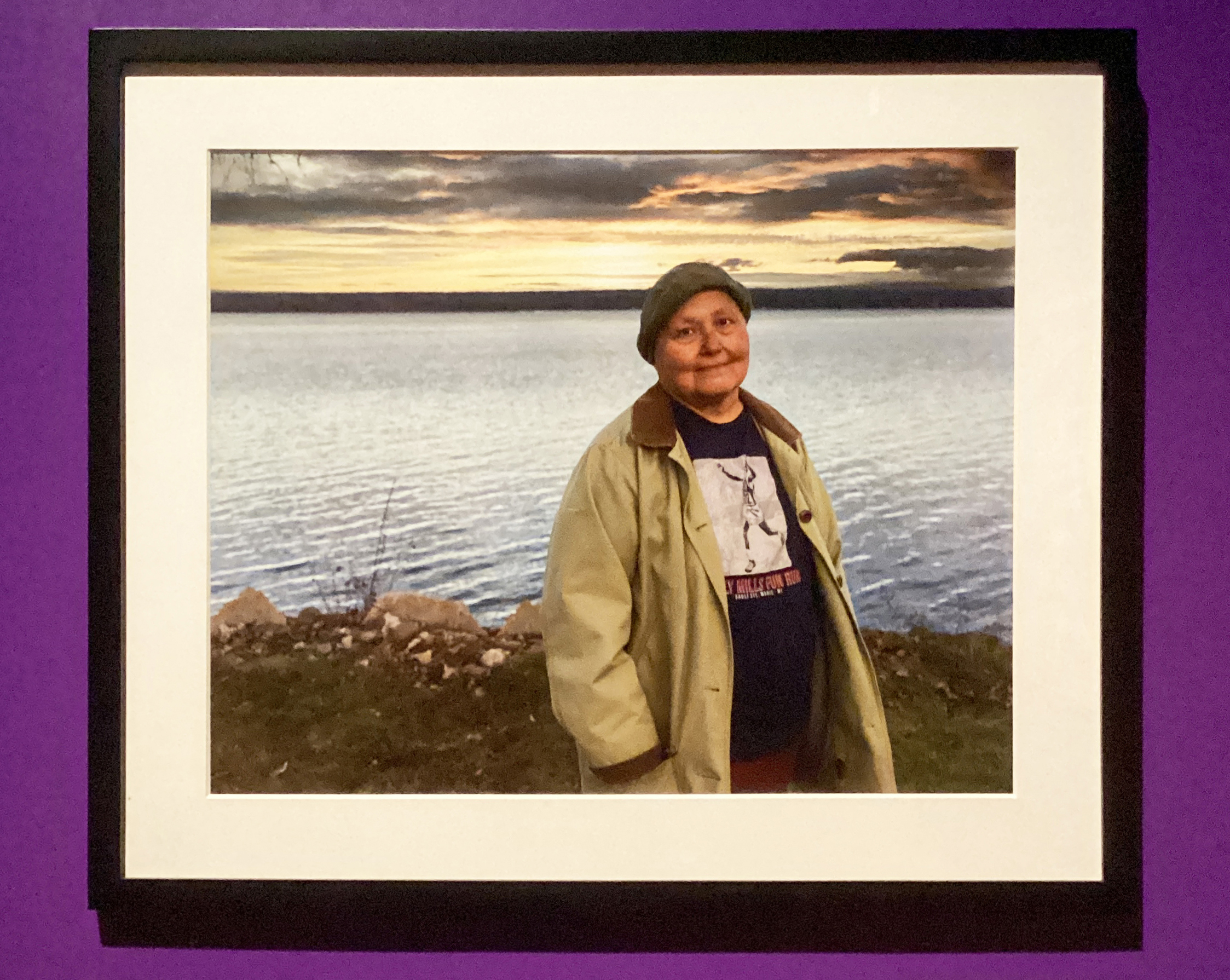
Many contemporary Anishinaabe artists challenge stereotypes through a broadening of the scope of material and subject matter of their work. Some practices utilize modern technology. Others work to highlight their contribution to urbanization and capitalism through the production of maple sugar, or demonstrate a fondness for elements of non-native society. The impact that colonization has had on the Anishinaabe people since the land was ceded in the 1807 Treaty of Detroit has created deep rooted trauma that continues into the present day. For more than 200 years, there has been a consistent suppression of language, spiritual practices and cultural expression. Early on, the natives were forced to relocate and send their children to boarding school with the intention of assimilating them into non-native lifestyles, removing them from the land and starving them of resources. The American Indian Movement17 was successful in creating laws to protect indigenous nations from such policies, including the Indian Education Act (1972),18 Indian Child Welfare Act (1978),19 American Indian Religious Freedom Act (1978)20 and the Native American Languages Act (1990/92).21 There have also been efforts to protect water, land and communities through recent initiatives like the No Dakota Access Pipeline (NoDAPL),22 and Missing and Murdered Women, Relatives and Two-Spirits.23 All of the artists in the show have been impacted by US policies, and their experiences are communicated through work about grief and loss. They pay homage to the deceased, honor the living, and promote a revival of lost languages as part of their cultural preservation. Guests have the opportunity to witness this first hand, as all of the exhibition’s gallery labels have Anishinaabemowin translations (an original language of the Great Lakes region and North America).
Today, over 240,000 Native Americans and Alaska Natives reside in Michigan, with Anishinaabe being the largest Indigenous group. 24 The Anishinaabe members who collaborated with the curators of the DIA to provide insight into their rich history and evolving cultural practices include:
Kelly Church of the Match-E-Be-Nash-She-Wish Band of Pottawatomi; Grand Traverse Band of Ottawa and Chippewa Indians (Descent)
Jason Quigno of the Saginaw Chippewa Indian Tribe
Monica Rickert-Bolter of the Prairie Band Potawatomi Nation
Jonathan Thunder of the Red Lake Nation
and Jodi Webster of the Ho-Chunk Nation; Prairie Band Potawatomi Nation.
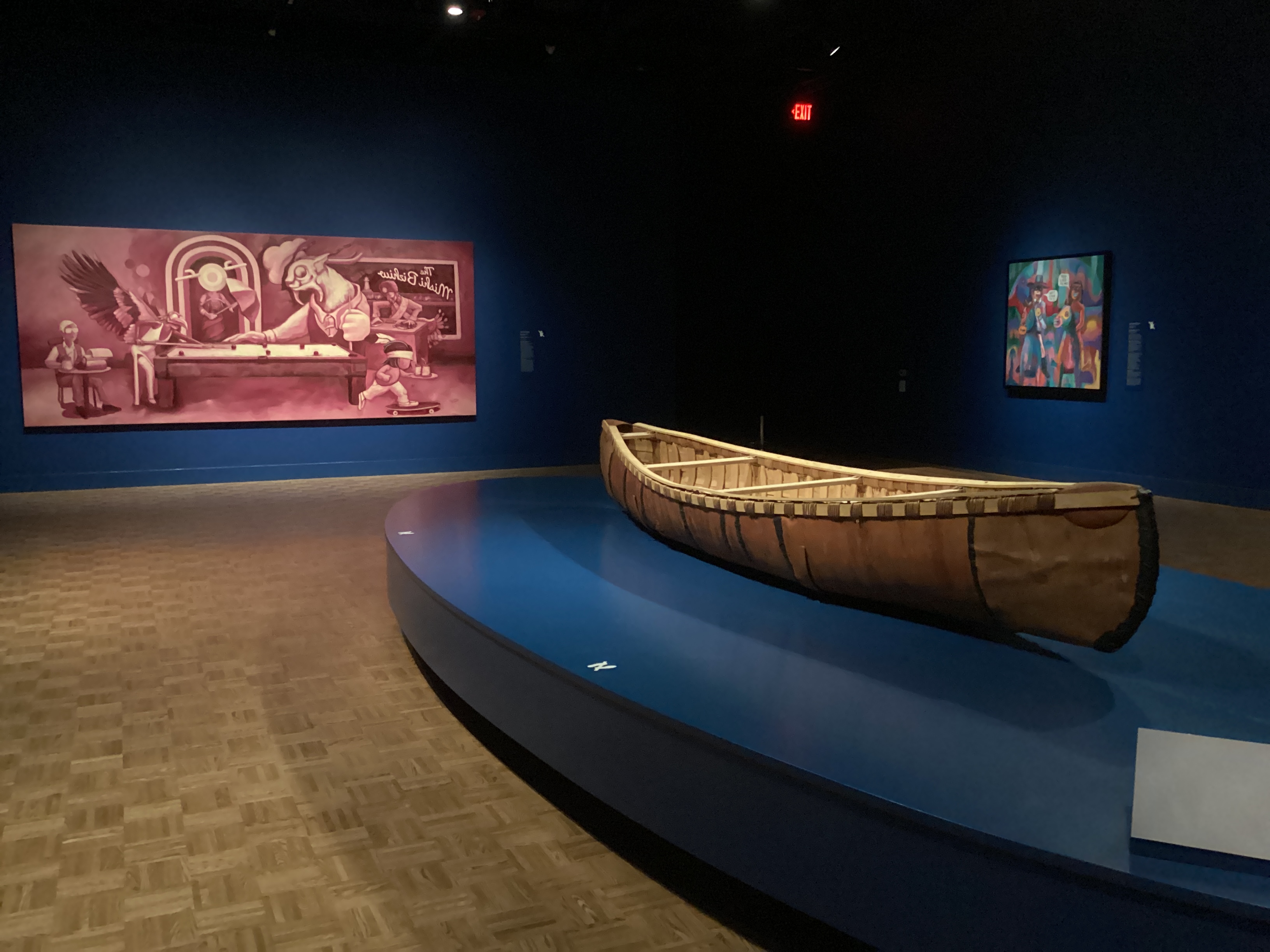
The exhibition was supported by the Ford Foundation, the Teiger Foundation, Jennifer Adderley and the Henry Luce Foundation. The Detroit Institute of Arts has also received support from DTE Foundation, Richard Sonenklar and Gregory Haynes, Andra Rush and the Rush Group of Companies, Carlene and Rob Van Voorheis, and Peggy and Dave Meador.
Contemporary Anishinaabe Art: A Continuation opened on September 28, 2025 and will be on view through April 5, 2026.
1. Allnutt, Brian. “What Metro Detroiters Should Know about Wetlands.” Planet Detroit, September 17, 2024. Link.
2. Cleland, Charles E. Rites of conquest: The history and culture of Michigan’s Native Americans. Southfield, Mich: Readings for the Blind, 2001.
3. “Grand Traverse Band of Ottawa and Chippewa Indians.” - Grand Traverse Band of Ottawa and Chippewa Indians. Accessed February 15, 2026. Link.
4.Taniam. “796 – Westward Migration of Anishinabe: Formation of the Council of Three Fires.” NHBP. Accessed February 15, 2026. Link.
5.“2019-09-26: Resolution Renaming Detroit to Original Name on Indigenous People’s Day.” City of Detroit. Accessed February 15, 2026. Link.
6. Josh Boughton University of Queensland 5 6 new animism: Relational. Accessed February 15, 2026. Link.
7.“Contemporary Anishinaabe Art: A Continuation.” Detroit Institute of Art. Accessed February 15, 2026. Link.
8. Green, Randiah Camille. “Detroit Institute of Arts Works to Return Indigenous Remains and Sacred Objects amid Federal Law Updates.” Detroit Metro Times, August 9, 2025. Link.
9.“The Dia Collection.” Detroit Institute of Art. Accessed February 15, 2026. Link.
10. Penney. “Art of the American Indian Frontier : The Chandler-Pohrt Collection : Penney, David W : Free Download, Borrow, and Streaming.” Internet Archive, January 1, 1992. Link.
11. absolutearts.com, World Wide Arts Resources. Dance of the forest spirits: A set of Native American masks - detroit institute of art - absolutearts.com. Accessed February 15, 2026. Link.
12. “Who Lived Here?” Bayfield Historical Society. Accessed February 15, 2026. Link.
13. Three fires council – CPN cultural heritage center. Accessed February 15, 2026. Link.
15. CPN cultural heritage center, Three Fires Council
15. CPN cultural heritage center, Three Fires Council
16. A world fit for the next seven generations: Upholding Indigenous rights for the foundation of a sustainable future | request PDF. Accessed February 16, 2026. Link.
17. “American Indian Movement (AIM).” History.com, November 3, 2025. Link.
18.“Indian Education Acts: Education: Research Starters: EBSCO Research.” EBSCO. Accessed February 15, 2026. Link.
19.“Indian Child Welfare Act (ICWA).” State of California - Department of Justice - Office of the Attorney General, October 7, 2022. Link.
20. “American Indian Religious Freedom Act of 1978 as Amended in 1994 (1994).” The Free Speech Center, July 2, 2024. Link.
21. S.2167 - 101st Congress (1989-1990): Native American languages act | congress.gov | library of Congress. Accessed February 15, 2026. Link.
22. The fight for standing rock — if not US then who? Accessed February 15, 2026. Link.
23. “Missing and Murdered Indigenous Women and Relatives (MMIWR).” NIWRC. Accessed February 15, 2026. Link.
24. Prestininzi, Jenna. “These Michigan Places Have Native American Names. How They Got Them.” Detroit Free Press, July 7, 2025.Link.