




Ashley Cook
May 27, 2026
It’s only Wednesday. My torso shrugs and falls forward into my lap, my hands land on the ground and I notice my veins inflate with blood. Becoming mesmerized by the pulsations that somehow sync with birdsong, my imagination wanders and I forget that I’m human. I melt into this unraveling for as long as I can, perceiving my aging skin as bark on a tree, my knuckles as mountains. I close my eyes and M-10 is a river, roaring like a migrating herd. I dig my fingers into the cold spring soil and wait to become rooted forever. Exhaustion and loneliness have prepared me for this surrender into a biodegradable form whose breath is its sole contribution.
There is an Italian theorist named Franco Berardi who explores the relevance of these kinds of moments, in which, through collapse, a seed of disentanglement is sown. He has devoted his career to studying the unique characteristics—and consequences—of advanced capitalism, and identifies several conditions of the digital age that compromise our ability to imagine a future. Age-old systems of the Western world continue to promote values that are founded on exploitation of the land, animals, and the laborer. But today, the yield for our sweat is barren. We produce twice as much for half the pay while witnessing natural resources and human rights diminish. We are expected to navigate a labyrinth of algorithms and automation that is minimizing space for human input, and all of this is happening at a rate that is exceeding our physical and psychological ability to adapt—or even participate—any further.
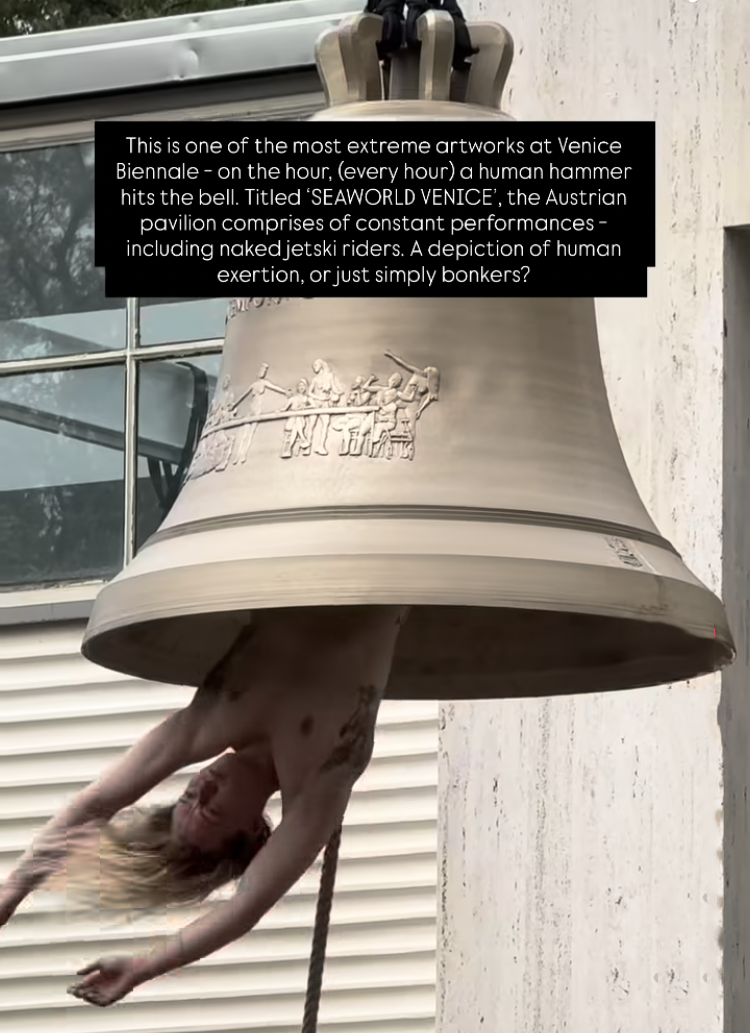
My familial roots in Detroit date back to the early 1900s, when my ancestors immigrated here from Europe, attracted by the city’s renowned status as a global industrial powerhouse. By 1920, Detroit had become the ideal city of the Modernist Future, bolstered by an explosion in wealth, a growing population, and a state-of-the-art urban landscape. New technology promised the world a future of prosperity and abundance, and much of that innovation was coming from Detroit. It’s extraordinary that within a period of just four generations, this metropolis of such stature could fall into a vast landscape of post-industrial decay. Many people came to Detroit to earn a living wage working in automotive manufacturing. The number of middle-class workers reached just over 750,000 by the 1950s,1 but this “golden age” of living-wage jobs began to erode with the debut of automation. The local manufacturing workforce began to lose their jobs to machines,2 which, combined with competition from foreign automakers3 and the fuel crisis of the 1970s,4 led to mass plant closures and a staggering rate of unemployment.5 This decline of the need for hands-on, physical work was followed by a mass exodus—often referred to as the “White Flight”—that wiped out the tax base of the city, resulting in the closure of cultural institutions and essential social programs.6
From that point on, Detroit was most commonly regarded as dysfunctional and dangerous place. While precarity became a defining aspect of the city, residents were also granted the opportunity—by default—to witness a revival of native plant life, wildlife, and a quietness that allowed for rest. Time slowed down and space became abundant, fostering lifestyles and modes of expression that radically deviated from the typical hyper-capitalist script. Once a symbol of industrial power, then of catastrophe, Detroit now demonstrates how life can continue after collapse. The very conditions many regarded as hopeless created space for new forms of living, thinking, and making to emerge. I founded runner magazine in 2020 as a platform to document and archive contemporary culture in the city, and link it to the historical movements and figures whose innovations have shaped life in the Motor City throughout this turbulent timeline.
Its clear to me that a majority of the modern Western world is built on a framework that draws influence directly from the Futurist Manifesto.7 This text was written in 1909 by Italian poet, editor, and art theorist Filippo Tommaso Marinetti. Its premiere marked the dawn of a social movement devoted to speed, restlessness and an attitude of aggression that would pull the world out of the “tired past” and into a future of industrial progress. In writing and practice, the Futurists celebrated man’s audacious and unregulated domination over the natural world, they prioritized a scorn for women, and emphasized the glorification of militarism as society’s only purifying force. Their unyielding urge to challenge the limits of tradition set them on a journey to destroy libraries and museums, and build a new world independent of humanistic values. They viewed empathy as a barrier to modern advancement, and nourished a perspective of violent individualism that ceded power to the recklessness of impulse. But the ferocious spirit of mankind was not necessarily a new phenomenon; by the time this manifesto entered circulation, the world had already lived through several eras of tyranny. René Descarte’s dualist philosophy—first appearing in his 1637 work Discourse on Method with the phrase “I think, therefore I am”—theoretically separated the mind from the body, and described the human subject in mechanistic terms.8 This stance helped shape subsequent practices of control over the material world, and although these customs of dominance extend beyond Descartes himself, Cartesian thought influenced characteristics of modern science and industry that are considered deeply problematic today. While Descartes mechanistic, dualistic human differed from Futurism’s cyborg of universal dynamism, both traditions contributed to modern frameworks that increasingly treated bodies and environments as systems to be managed, optimized and exploited.

The progression of the Futurist framework as a primary influence on modern society can be observed today through our eager submission to the will and demands of “big tech”.9 As an Autonomist Marxist and media theorist, Franco Berardi examines the social dynamics and labor conditions that lead to class struggle in the digital age. Naturally, he emphasizes the role that automation has had on the security of the working class, but he also points out its influence on language and human cognition. Berardi asserts that in our post-industrial, digital economy—which he calls “semiocapitalism”—the production and circulation of signs, information and media have become the main drivers of profit. Instead of physical labor, the “cognitariat”10 now sells their intellectual labor, knowledge and mental capacities to the infosphere, and to survive, they must contribute relentlessly. Members of today’s working class rarely have ownership over their labor or their time. The job market has morphed into a sea of unregulated industries and unstable “gig” work that expects constant availability.
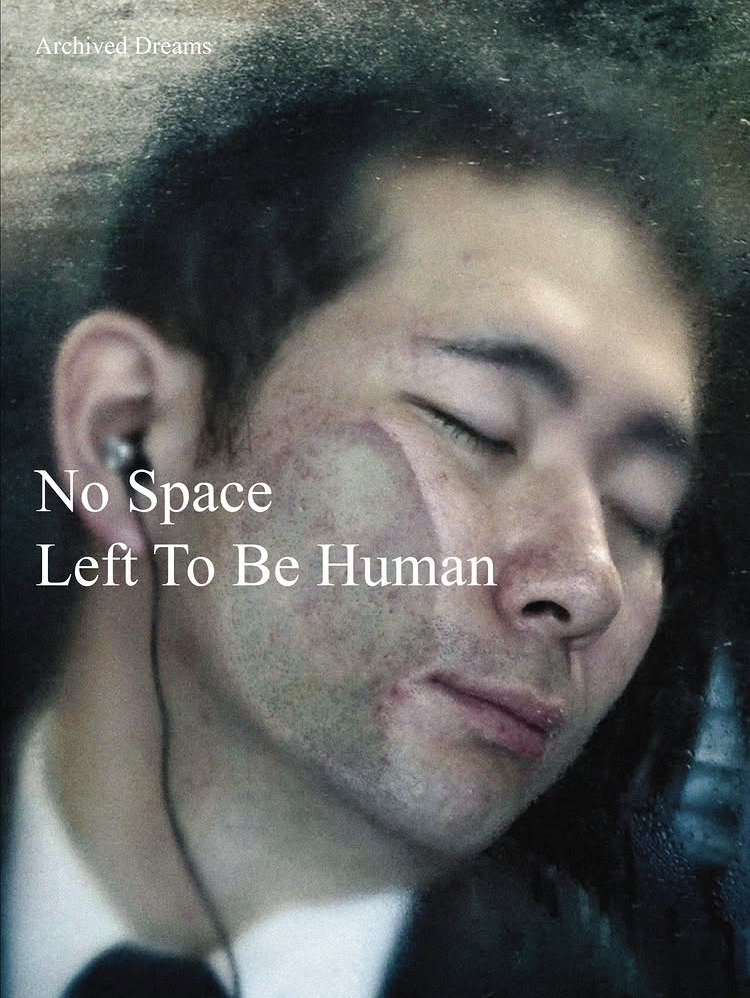

This pandemonium of ungovernable acceleration is compressing language into rapid automated responses, causing depression and psychological chaos.11 Attention spans are shattering from overstimulation as we continue to free fall into the Gordian Knot12 of digital-age neoliberalism.13 Techno-optimism promised widespread abundance and liberation through innovation, but instead produced conditions of uncertainty, exhaustion and debt. Experiences of perpetual stress and injustice have rendered humanity unable to collectively envision a future beyond extreme inequality and complex bureaucratic failures.

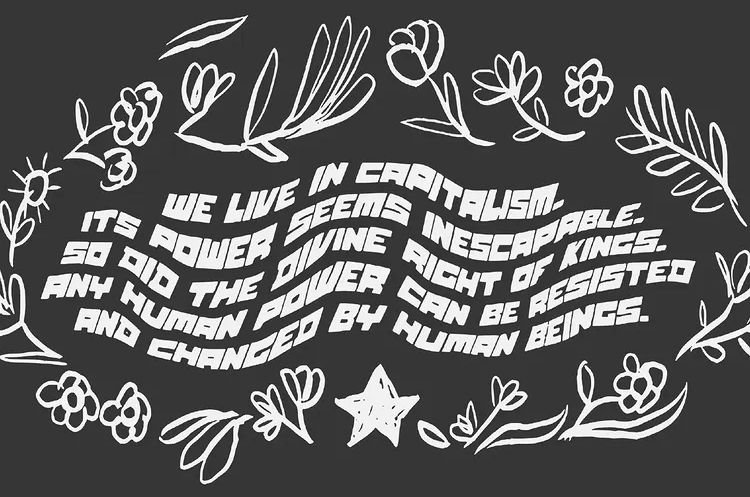
Berardi’s Post-Futurist Manifesto14 was published in 2009 as a call to retire our obsession with speed and hyper-productivity. The text functions as a continuation of his ongoing critique of semiocapitalism, but also contributes to a broader philosophical trend that reinstates the human as a conscious, sentient being who is intimately connected with the world around them. While the Futurists tout ambitions of permanence through tenacity and control of their environment, the Post-Futurist human embraces interdependence, transience, softness, and rest. Serving as both a protest and a blueprint, the manifesto critiques the breathlessness of life in contemporary modern society through a demand for, and proposal of, alternative options. Berardi illustrates a Post-Futurist world in list-form, where poetry becomes a tool to break away from the cold logic of automatism, and art becomes a method to reclaim human meaning in our post-human world. He delineates a lifestyle of joy, tenderness, slowness, and sleep. He celebrates ecstasy, femininity, and collective intelligence, and imagines an economy that is free from the exploitation of wage labor.

As far-fetched as it sounds, Post-Futurist values are becoming a common characteristic of younger generations, as well as anyone who has become completely depleted by the frenzy of the modern world. People are “digital detoxing,”15 “forest bathing,”16 and “nonna maxxing”17 to restore their nervous systems. They’re practicing embodiment18 to consciously experience physical sensations, and mindfulness19 to tune-in to emotions. “Sleep tourism”20 is a rapidly growing wellness travel trend where the primary purpose of a trip is to improve sleep quality and rest. “Space Out Competitions”21 challenge competitors to remain in a perfectly calm, blank-minded state for 90 minutes straight.
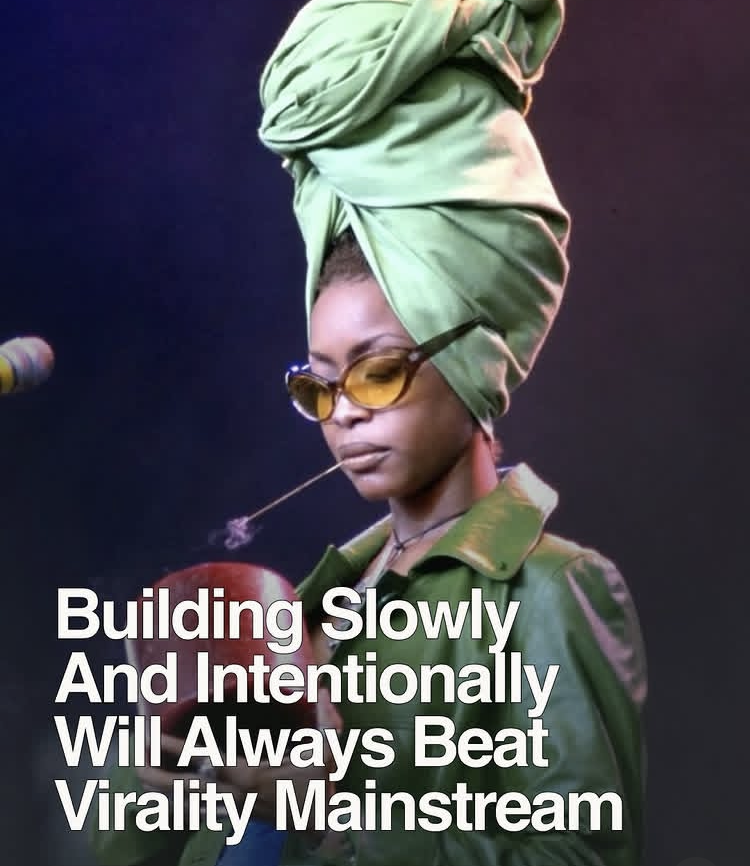
Since Marinetti’s 1909 manifesto, there has been a steady push to abandon humanism in order to become more like machines. Post-Futurism is a push to become rehumanized. The overexertion and critical lack of fulfillment felt by individuals across modern society have ushered in an era of withdrawal. Crashouts lead to bed rotting, and the process required to recover from a breakdown reminds us of the value of tranquility. The “infinite present”22 is a slow, conscious, and embodied approach to living in the “now” defined by pleasure, compassion and autonomy. Experiences of poetic immersion23 are abundant in this infinite present, and the embrace of enchantment24 is becoming both a spiritual and political act that makes way for the malleability of meaning and an appreciation for the unfolding moment.

runner is a grassroots arts and culture magazine shaped by many of the conditions explored throughout this essay. The publication was founded in Detroit, a place where improvisation, and interdependence have become a part of everyday life. The magazine is named after the horizontal, above-ground, propagating stems of the strawberry plant, and functions as an evolving archive connecting artists, organizers, writers, designers, thinkers and other cultural workers who have formed meaningful relationships with Detroit. Over the past six years, the magazine has attracted national and international interest, and has prompted new collaborations and partnerships around the world.
To further explore Detroit’s role within a broader context, runner has prompted collaborations with people and communities throughout the Industrial Midwest whose practices have also been shaped by collapse and adaptation. Our editorial approach is grounded in the belief that places typically marked as peripheral or “post-industrial” cultivate forms of experimentation and mutual reliance that would resonate far beyond their unique cultural ecosystems. Rather than searching for the future’s next “utopia,” we are interested in discovering ways that people build meaningful lives from the conditions that already exist around them.
1. “1950 US Census: Detroit, MI.” Washington D.C. , n.d. Accessed 2026. Link.
2. “Jobs and Unemployment - the North.” Detroit, February 16, 2023. https://riseupdetroit.org/chapters/chapter-2/part-1/jobs-and-unemployment/. Link.
3. Ezell, Stephen, and Meghan Ostertag. “Assessing the Evolving Global Competitiveness of the US Auto Industry.” RSS, May 11, 2026. Link.
4. “1970s Oil Crisis: 8 Ways Americans Felt the Pinch.” History.com, March 20, 2026. Link.
5. Anatomy of Detroit’s decline - interactive feature - nytimes.com. Accessed May 12, 2026. Link.
6. Detroit’s bankruptcy reflects a history of racism. Accessed May 12, 2026. Link.
7. The futurist manifesto Filippo Tommaso marinetti. Accessed May 12, 2026. Link.
8. Thibaut, Florence. “The Mind-Body Cartesian Dualism and Psychiatry.” Dialogues in clinical neuroscience, March 2018. Link.
9. Brave Software. “Big Tech Meaning & Definition.” Brave, March 13, 2023. Link.
10. Franco Berardi, what does Cognitariat mean? work, desire and Depression - philpapers. Accessed May 12, 2026. Link.
11. Semiotext(e) foreign agents series © 2009 by Semiotext(e) and Franco Berardi. Accessed May 12, 2026. Link.
12. “Gordian Knot.” Wikipedia, April 3, 2026. Link.
13. “Attention Spans in the Age of Technology.” NAMI, September 17, 2025. Link.
14. Bifo Franco Berardi + EE + AB www.generation-online.org. The Post-Futurist Manifesto. Accessed May 12, 2026. Link.
15. “What Is a Digital Detox?” WebMD. Accessed May 12, 2026. Link.
16. “Why Forest Therapy Can Be Good for Your Body and Mind.” Cleveland Clinic. Accessed May 12, 2026. Link.
17. Gravalese, Stephanie. “What Is ‘Nonna Maxxing’? Why Gen Z Is Returning to Slow Cooking.” Forbes, April 20, 2026. Link.
18. “Embodiment.” Mind & Life Institute, July 26, 2024. Link.
19. “Mindfulness Exercises.” Mayo Clinic. Accessed May 12, 2026. Link.
20. “What Is Sleep Tourism and Why Is It on the Rise?” Travel. Accessed May 12, 2026. Link.
21. Jeong, Sophie. “South Koreans Compete to See Who’s Best at Doing Absolutely Nothing.” CNN, May 17, 2024. Link.
22. “‘tech/Know/Future/ from Slang to Structure’ Exhibition.” “Tech/Know/Future/ From Slang to Structure” Exhibition - University Calendar - Montclair State University. Accessed May 12, 2026. Link.
23. The lost art of poetic immersion. fun and meaning in a time of… | by Luca Rade | medium. Accessed May 12, 2026. Link.
24. “Enchantment (Social Sciences).” Wikipedia, April 20, 2026. Link.