




Ashley Cook
December 2, 2025
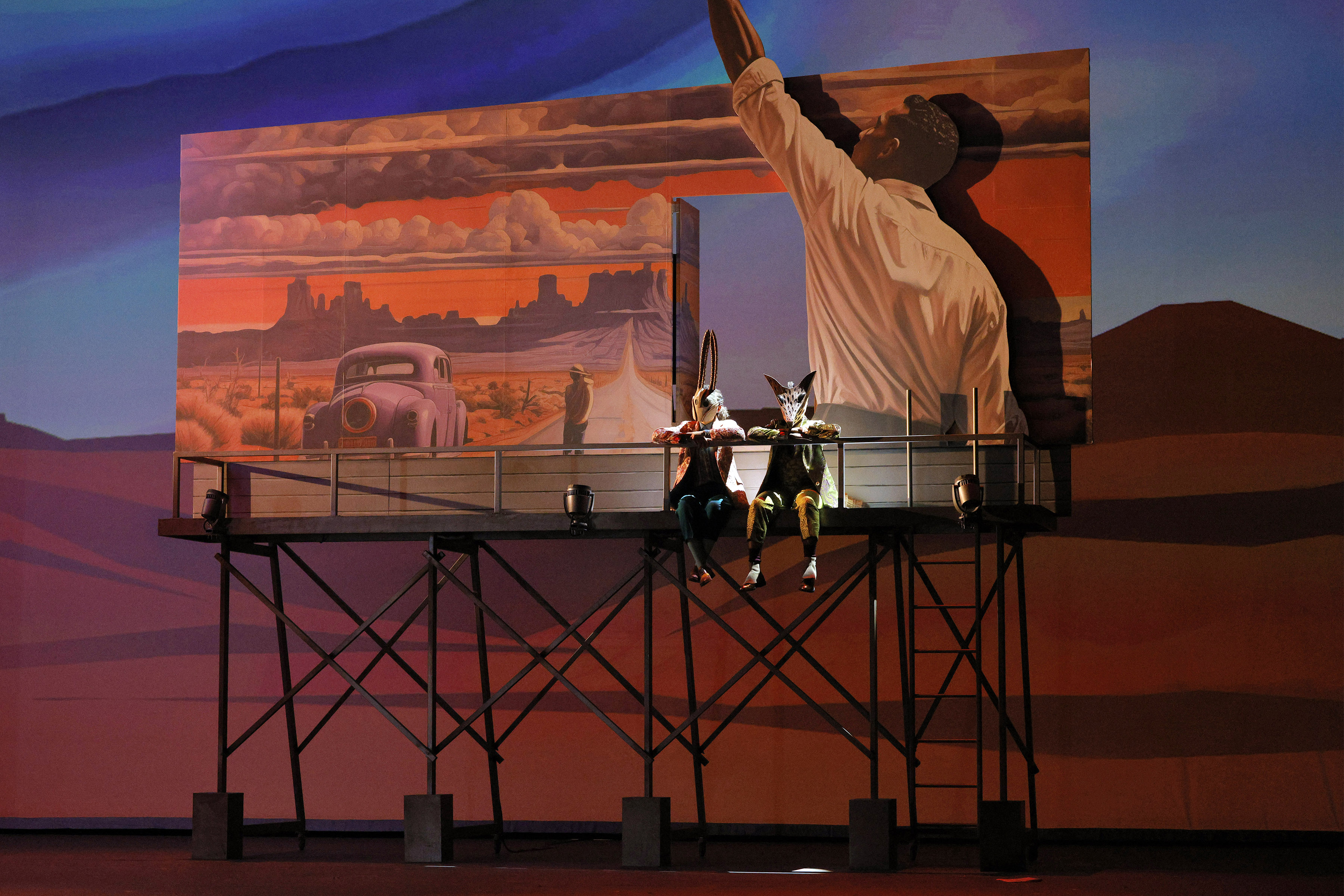
The trickster figures of Br’er Rabbit and Br’er Fox (shown here seated on billboard platform) appear throughout director Kaneza Schaal’s production of William Grant Still’s opera Highway 1, USA at LA Opera. Photo: Cory Weaver / LA Opera
On Sunday, December 7th, Detroit Opera will inaugurate their 25/26 season with the premiere of Highways and Valleys: Two American Love Stories. This production brings two one-act operas into a conversation that explores life on the margins of mid-century America. Highway 1 USA, written in 1941 by the “dean of African American composers” William Grant Still, and Down in the Valley, written in 1945 by German-American Jewish immigrant Kurt Weill, use the medium of the love story as a vehicle to showcase the lifestyles and aesthetics of Americana within the world of mainstream opera. Each composer, through careful attention to language as well as set design, costume and sound, underscored the multi-cultural quality of American identity. Detroit Opera’s pairing of the two stories serves as their first event of many that will place America center stage in a season-long celebration of the country’s 250th anniversary.
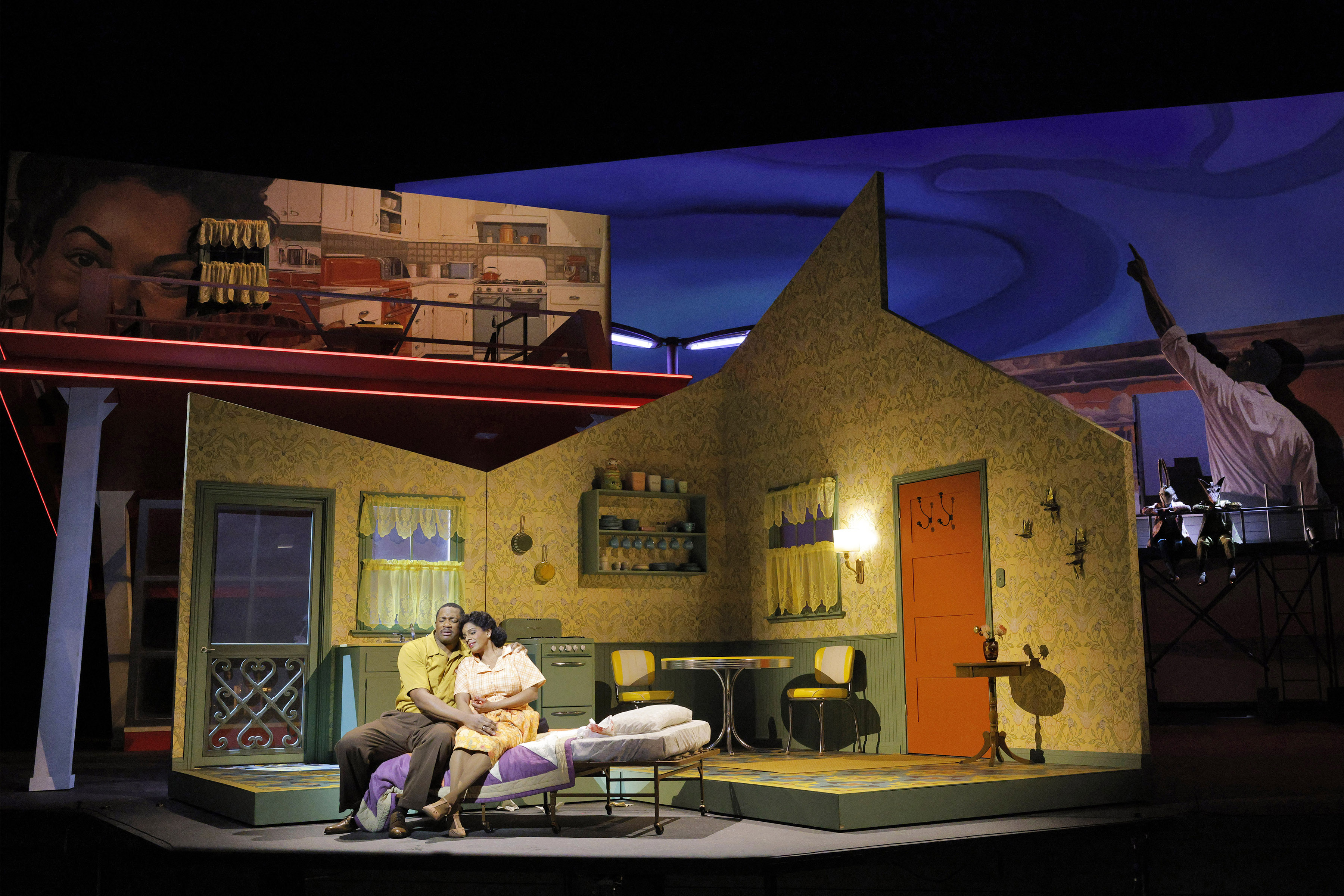
Norman Garrett (left, as Bob) and Nicole Heaston (right, as Mary) in Kaneza Schaal’s 2024 production of Highway 1, USA at LA Opera. Nicole Heaston returns to sing the role of Mary at Detroit Opera on December 7, 11, and 13. Photo: Cory Weaver / LA Opera
The American Dream that defined the spirit of the United States in the 1940s promised a life of prosperity through hard work. The hope generated from this ideology fueled working class Americans like the married couple in Highway 1 USA, who owned a gasoline filling station along this historic highway. Unique characteristics of America’s open road set the stage for their story of devotion burdened by the sacrifices of a familial duty. Born in Mississippi and raised in Arkansas, William Grant Still’s southern roots have influenced his repertoire of nearly two-hundred works. Like other prominent African American literary figures of the Harlem Renaissance, Still used storytelling woven with jazz music and the blues to represent his own point of view and highlight the impact that Black culture has had on American life. Similar to Highway 1 USA, American music is a dominant component in Kurt Weill’s opera Down in the Valley. Weill emigrated to the United States in 1935 after fleeing Europe during World War II to escape Nazi persecution. He settled in New York City, but had developed an affinity for rural America, recognizing folk music to be the most genuine expression of the American soul. Weill drew influence directly from a song of the same name, as well as other traditional folk songs which he fused with original music to tell the story of a teenage boy in an Alabama prison who committed murder out of love. Through this intimate act of engagement with the music of his adopted homeland, Weill reflects the search for belonging that is prevalent in many immigrant communities.
These composers have been regarded as pioneers for their efforts to place the spotlight on marginalized communities. New generations of directors, set designers and costume designers have kept productions like Highway 1 USA and Down in the Valley fresh since their debut decades ago. Kaneza Schaal, the director of Highways and Valleys at Detroit Opera, is teaming up with two of her frequent collaborators, artist and set-designer Christopher Myers and custom designer Charlese Antoinette, to present a contemporary take on these two classic American operas…
Left to right: Mezzo-soprano Rehanna Thelwell, director Kaneza Schaal, soprano Nicole Heaston, and bass-baritone Davóne Tines during a recent rehearsal for Detroit Opera’s Highways and Valleys. Photos courtesy of Detroit Opera / Austin T. Richey
In conversation with Kaneza Schaal:
AC: I was recently speaking with Jennifer Melick of Detroit Opera about ways that opera as a genre of performance could become more accessible to the mainstream public. I feel like these two operas are working to do that through their effort to incorporate working class people into the storyline…
KS: Most definitely. We are in a very interesting period in the history of the United States at the moment, with a wealth disparity that this country hasn’t seen since the Gilded Age. To tell two love stories from the perspective of working class people on the margins is really meaningful, in an opera house, no less. Classical music and opera often get thought of as a form of art made by the rich for the rich, but honestly some of the greatest innovations in American craft, art and cultural thought often comes from margins, from diasporic traditions, and from different cultures intersecting.
AC: How do you feel that the community of Detroit could relate to these stories that will be presented in Highways and Valleys?
KS: One of the things that is so moving about doing this production in Detroit is that this city is a leader in so many ways, but particularly when it comes to hope amongst the working class. Detroit is a city that has looked the devil of American corporate greed in the eyes, watched it walk away leaving nothing left after years of dedication from the community. Yet we still see unions and labor coalitions organizing here, demonstrating what it means to still believe in the American Dream.
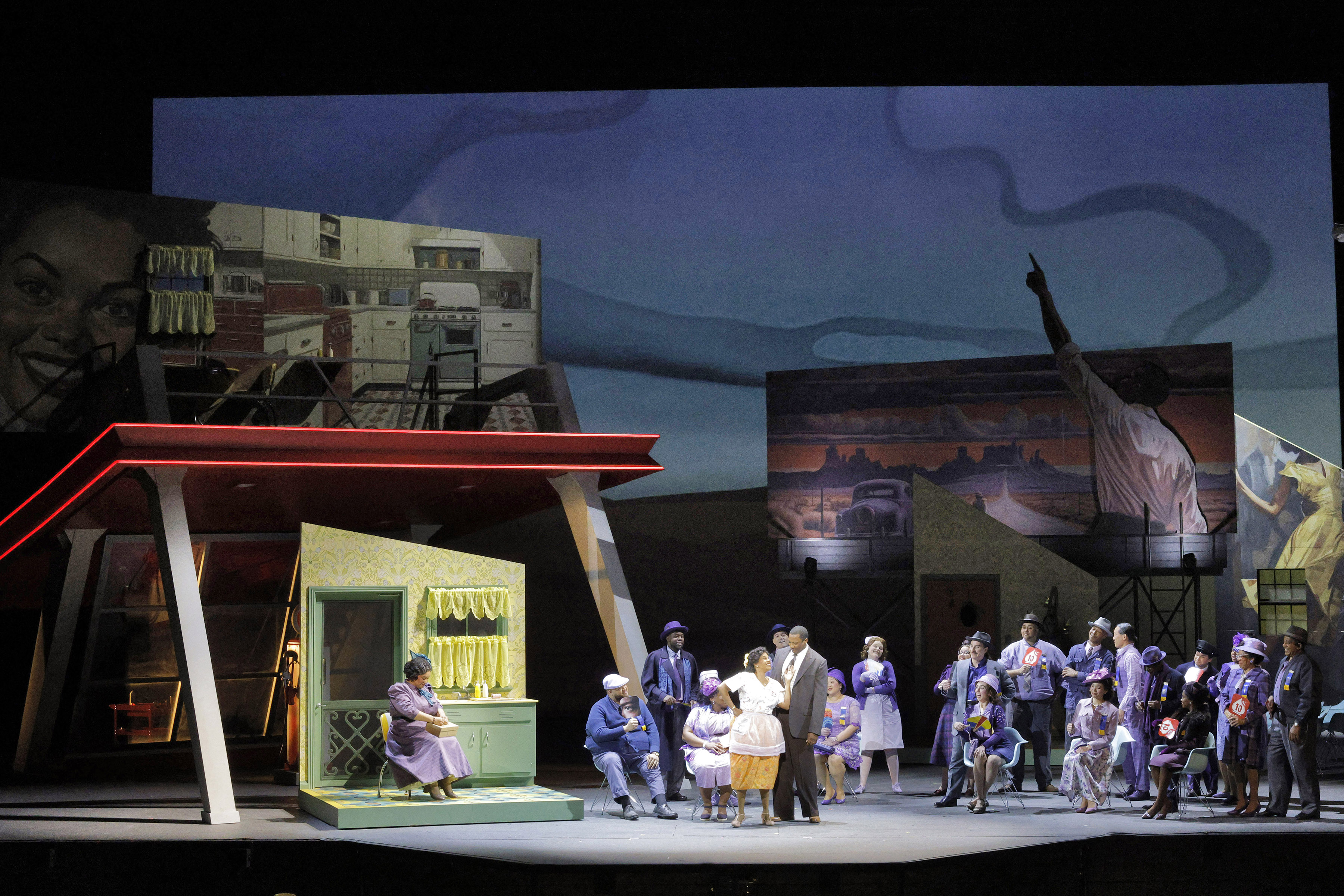
A scene from director Kaneza Schaal’s production of William Grant Still’s opera Highway 1, USA at LA Opera in 2024. Schaal’s staging will be presented by Detroit Opera on December 7, 11, and 13. Photo: Cory Weaver / LA Opera
In conversation with Christopher Myers:
AC: Of course we are in a particularly interesting time in the history of our country, where the idea of being American is being repeatedly challenged and redefined. This, I am sure, has influenced the Detroit Opera’s decision to begin the season with Highway 1 USA and Down in the Valley…
CM: These operas are deeply concerned with what it means to be American, and the kind of delineation of Americanness. Today, we have access to more of the world than ever before, and we learn about others by listening to their stories. From Shakespeare to the Bible, it’s about people meeting, sharing their world through stories and bringing the richness and diversity of experience to the folk. William Grant Still and Kurt Weill understood this back then, and used opera to speak about the world from their own perspectives. I come from a family of storytellers myself, and I have always been interested in storytelling as a way to learn and build bridges. Without that, we are just a one-dimensional world.
AC: As the set-designer for this production, how will you visually represent Americana?
CM: For Highway 1 USA in Detroit, I will be using the set that I created for the production at the LA Opera last year. For that set, I chose to incorporate the billboard as a prominent element. When I was planning for this opera, I was thinking a lot about America in the 1950s as this culture of automobiles, with the world being something you experience as you drive by. Billboards have this really lovely way of telling the story of who we are to ourselves, and I used this notion as a chance to illustrate that as part of the American experience. And for Down in the Valley, I am creating a brand new set inspired by the multi-layered tradition of quilting, which was also used throughout American history to communicate and tell stories.
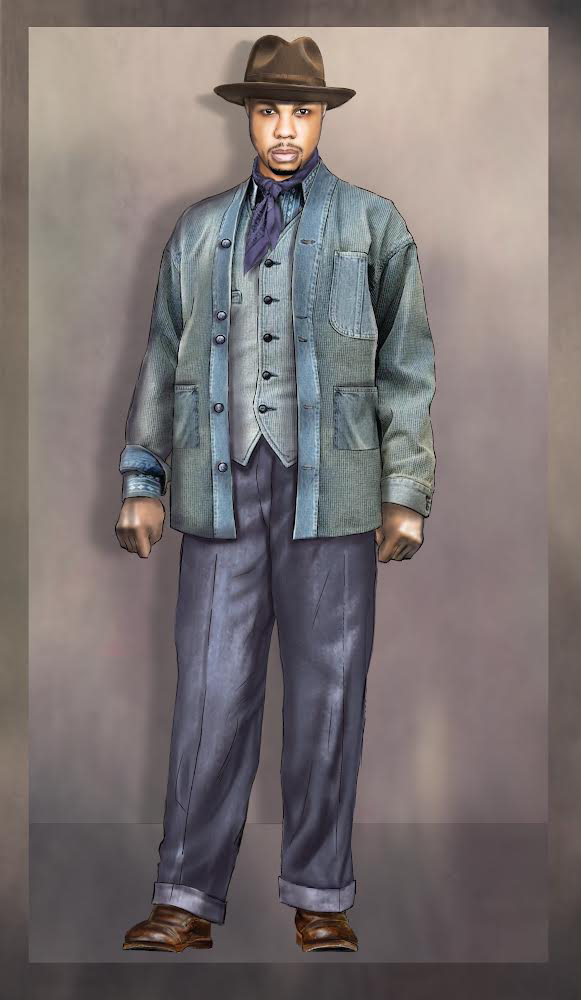
Costume design by Charlese Antoinette for Thomas Bouché of Down in the Valley for Detroit Opera's Highways and Valleys. Illustration by Shane Ballaard
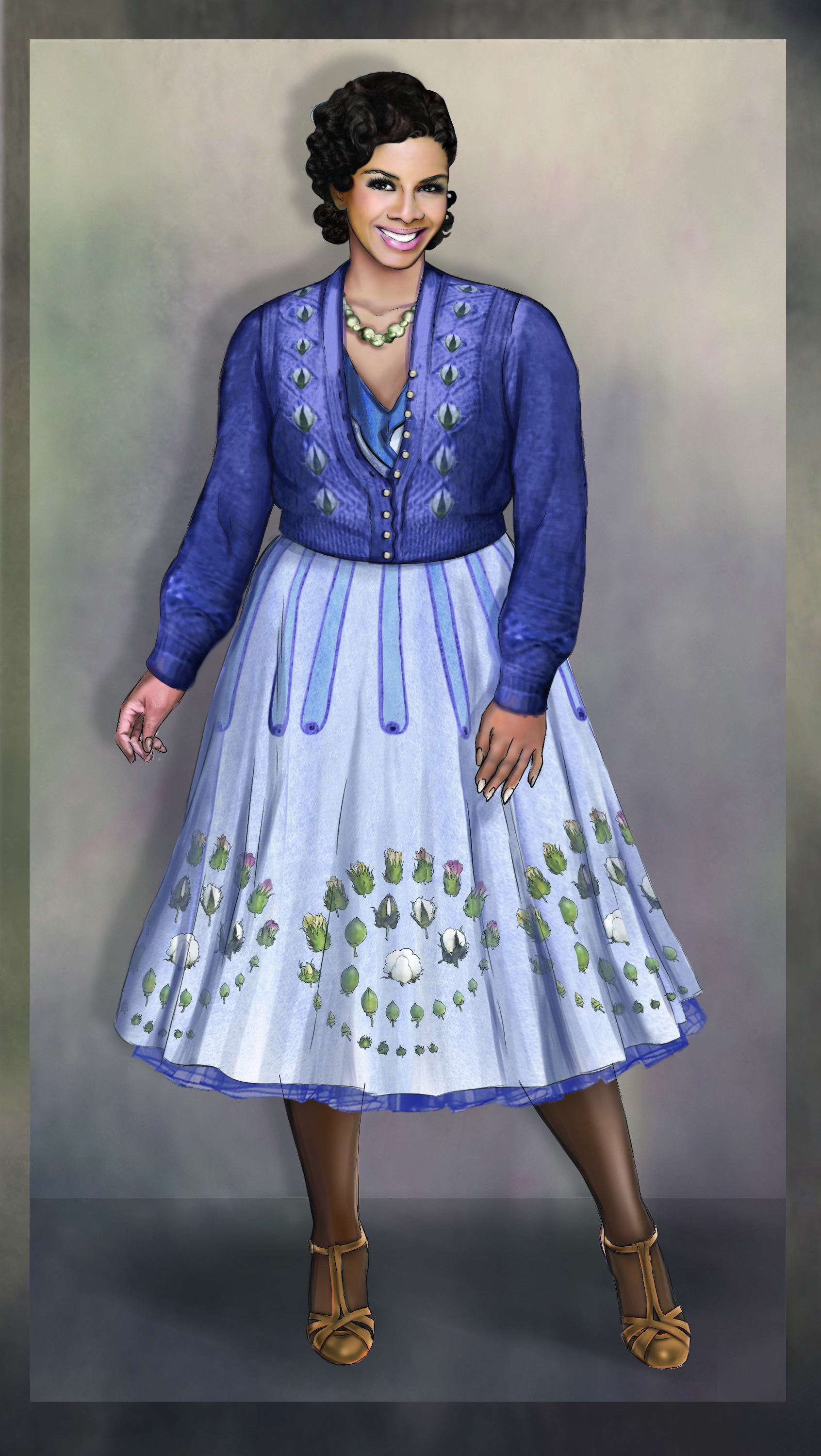
Costume design by Charlese Antoinette for Jennie Parsons of Down in the Valley for Detroit Opera's Highways and Valleys. Illustration by Shane Ballaard
In conversation with Charlese Antoinette:
AC: How has the theme of America inspired you as you develop garments for the upcoming production at Detroit Opera?
CA: When it comes to costume design for Highways and Valleys, I focused on the silhouettes often found in fashion of the 1950s, constructing them using denim as a dominant material, which is associated with working-class American culture. We have formed an amazing partnership with Carhartt—a work-wear company native to Detroit—who will be providing a lot of fabric for us to use for Down in the Valley. I was able to go into their archives as a part of my design research process and gather ideas, so everything feels very “made in Detroit”. Some other inspirations for me were the Gee’s Bend quilt-makers of Alabama and the life cycle of a cotton plant, which I was able to incorporate into one of the garments for Down in the Valley.
AC: In some images from Highway 1 USA at the LA Opera, I noticed that you incorporated masks into some of the costumes…
CA: Yes, I worked with the set designer Christopher Myers to introduce the Br’er Rabbit and Br’er Fox archetypes as storytelling elements. These two characters were a huge part of my childhood, you know, the fox and the rabbit, tales of trickery. These archetypes are actually rooted in West African storytelling and were brought to America by enslaved Africans. Chris and I looked at West African masks of rabbits, hares and different animals, and then worked with the craftspeople at the LA Opera to come up with these beautiful pieces for Highway 1 USA. Dressing them was also fun. I decided to put them in tailored suits in order to modernize them a bit. I wanted them to look like dandies.
Highways and Valleys: Two American Love Stories at Detroit Opera has a run-time of two hours with one intermission. The first performance will premiere on Sunday, Dec. 7 at 2:30pm with additional performances on Thursday, Dec. 11 and Saturday, Dec. 13 at 7:30pm.
Cast and Crew:
Set Design: Christopher Myers
Director: Kaneza Schaal
Conductor: Roberto Kalb
Costume Designer: Charlese Antoinette
Cast to include returning favorites Nicole Heaston, Davóne Tines, Babatunde Akinboboye, and Victor Ryan Robertson,
Rehanna Thelwell and Lawrence Mitchell-Matthews
Artists from Highways and Valleys will participate in several community events in Detroit. Find the schedule for these events here:
https://detroitopera.org/calendar/