




Jon Gott
August 31, 2026
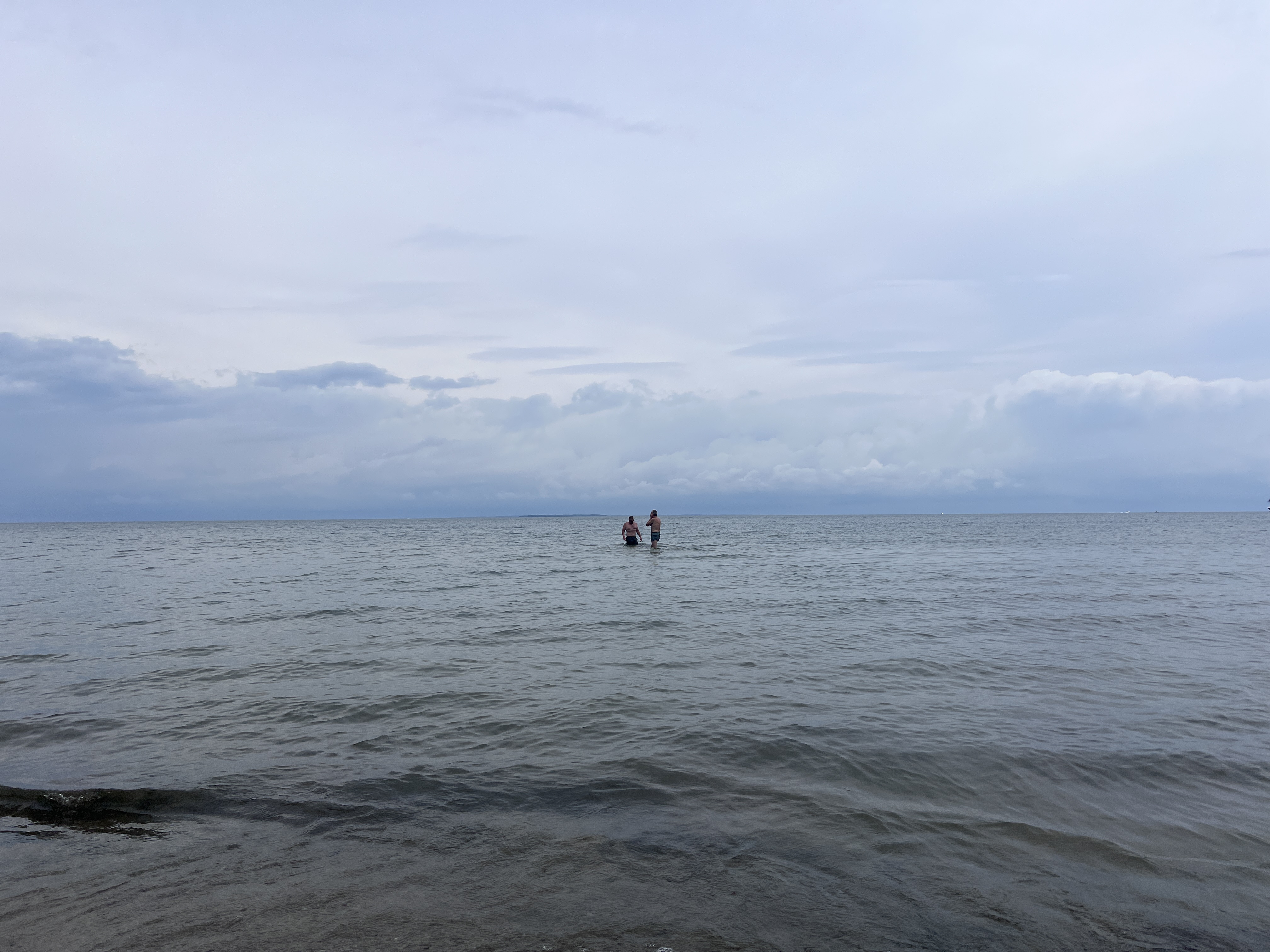
The writer and a friend standing in the waters of Lake Erie off Kelleys Island.Location: Kelleys Island, Lake Erie, Ohio. Photo courtesy of Gabrielle Banzhaf
When we moved from New Orleans back to the Midwest a few years ago, finally settling in the big old house on Pearl Road in Cleveland, I stayed there alone at first, while Gabi, Elliot, and Lula remained in Wisconsin, tying up loose ends before our move. The vacant, two-story 1857 Victorian Italianate housed a podiatry clinic for 50 years and was falling into ruin. We were coming to live, to put the place back together, and to transplant our growing family institution of experimental art.
In my solitude, I became transfixed by a mysterious painting of a young woman found hanging in the doctor’s office. I began speaking with her, eventually falling in love with her. She played songs describing her islands, singing about what had happened there. I began dismantling the X-ray lab and operating rooms, peeling back the printed fiberboard paneling, uncovering the original lime-plastered and ornately papered surfaces below. The dust piles on the floor were her islands, and I could travel there and go inside them.
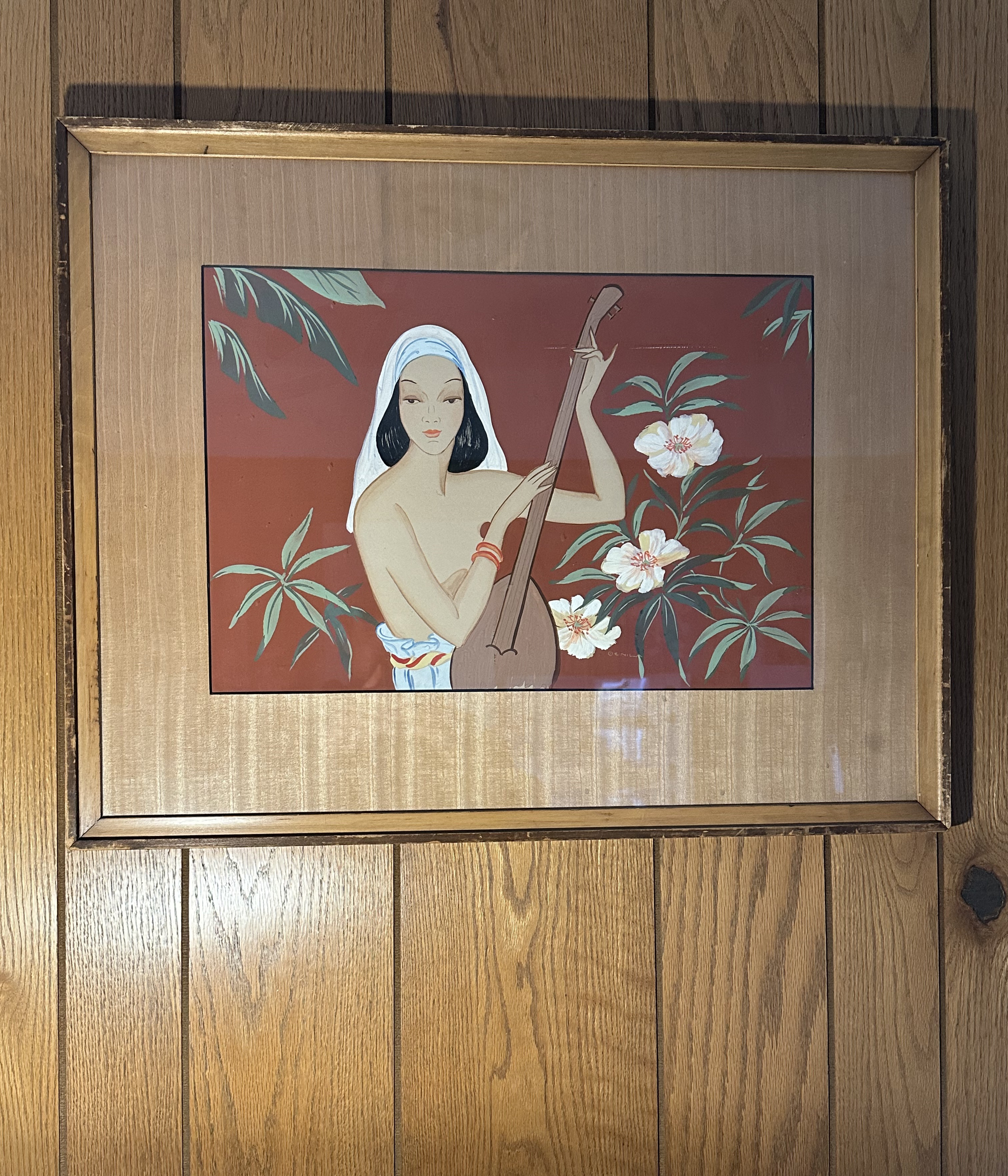
Sehnsucht: Woman in Pearl
In 2023, I created an immersive environment at Sibyl Gallery in New Orleans made up of these visions. It was a strange universe of collected systems, a topography of vessels, islands, and phenomena to be circumnavigated. A lot remained unexplained, but moving forward, I imagined revisiting these ideas again in the future on actual scale, as actual islands, as an actual voyage to get there, actually going inside them, and being able to take others along with me.
Next year, SHED Island School will gather a group of artists on Kelleys Island, Ohio, for immersion in everyday activities—for study, silence, connection, research, presence, ponderance—before the summer tourist crowds arrive. Island School is my love letter to the islands and to the people forming the school. We’ve been working towards this for many years, and what’s presented here is equally a vision of things to come as a report on our island visits moving towards them. My hope is that what I write here might serve to guide me as Island School develops, and also to embolden anyone thinking of initiating their own school, in their home, in a city park, café, library, ’93 Honda Accord, or strip mall parking lot, to do so.
Kelleys Island, located in the western basin of Lake Erie, is approximately 3.5 to 4 miles north of the Ohio mainland’s Marblehead Peninsula and about 10 to 12 miles north of Sandusky. Ruins, cottages, cabins, and docks dot its rugged coast. Its brutally gorgeous terrain of glacial formations, woodlands, forests, wetlands, savannas, quarries, and meadows, covers roughly 4.35 square miles, with about 12 miles of mostly undeveloped shoreline- marshes, bluffs, sand, limestone, and shell beaches. Underwater, submerged rock shelves, aquatic vegetation beds, shallow, nutrient rich limestone reefs and shoals, and connected wetland margins. Geologically, its composition is dominated by ancient Columbus limestone and dolomite bedrock, roughly 400 million years old, shaped significantly by glacial action.
Kelleys is exceptionally special because it preserves globally rare alvar ecosystems, exposed glacial grooves, ancient petroglyphs, and one of Lake Erie’s last natural, undiked coastal wetlands. Its unique limestone geology protects highly specialized plants found in few other places on the planet. The island’s diverse habitats serve as a critical migratory corridor for hundreds of bird and bat species.
The Lake Erie islands are essentially remaining high points shaped by glaciation and subsequent erosion: resistant bedrock that persisted as the surrounding terrain was worn away. The islands are scattered across the western basin of Lake Erie, extending from the waters near the Michigan–Ohio shoreline eastward toward the central basin near Sandusky, and northward toward the Canadian shore. Depending on how smaller rock outcroppings and protruding landforms are counted, the archipelago comprises roughly two dozen to thirty islands, with roughly six having permanent, year-round human residents.
On nearby South Bass Island, you can descend underground into what is reputed to be one of the world’s largest geodes, discovered by workers in 1897 while digging a well for the winery 40 feet above (winemaking and tourism are the island’s largest enduring industries). Crystal Cave is a subterranean limestone cavity whose walls are covered with enormous celestine crystals. Unlike caves formed by the erosion of water moving through rock, Crystal Cave is a hollow cavity within the bedrock, its interior lined with inward-pointing crystals. Island geology is a whole love letter of its own, for another time, first more about SHED School.
SHED School is an experimental school started from our home. The school borrows and expands the “Teach Anything” model from my special friend, and one of the most inspiring people I know, Dr. Jorge Lucero at the University of Illinois Urbana-Champaign, who has created numerous extraordinary texts and teachings radicalizing art education.
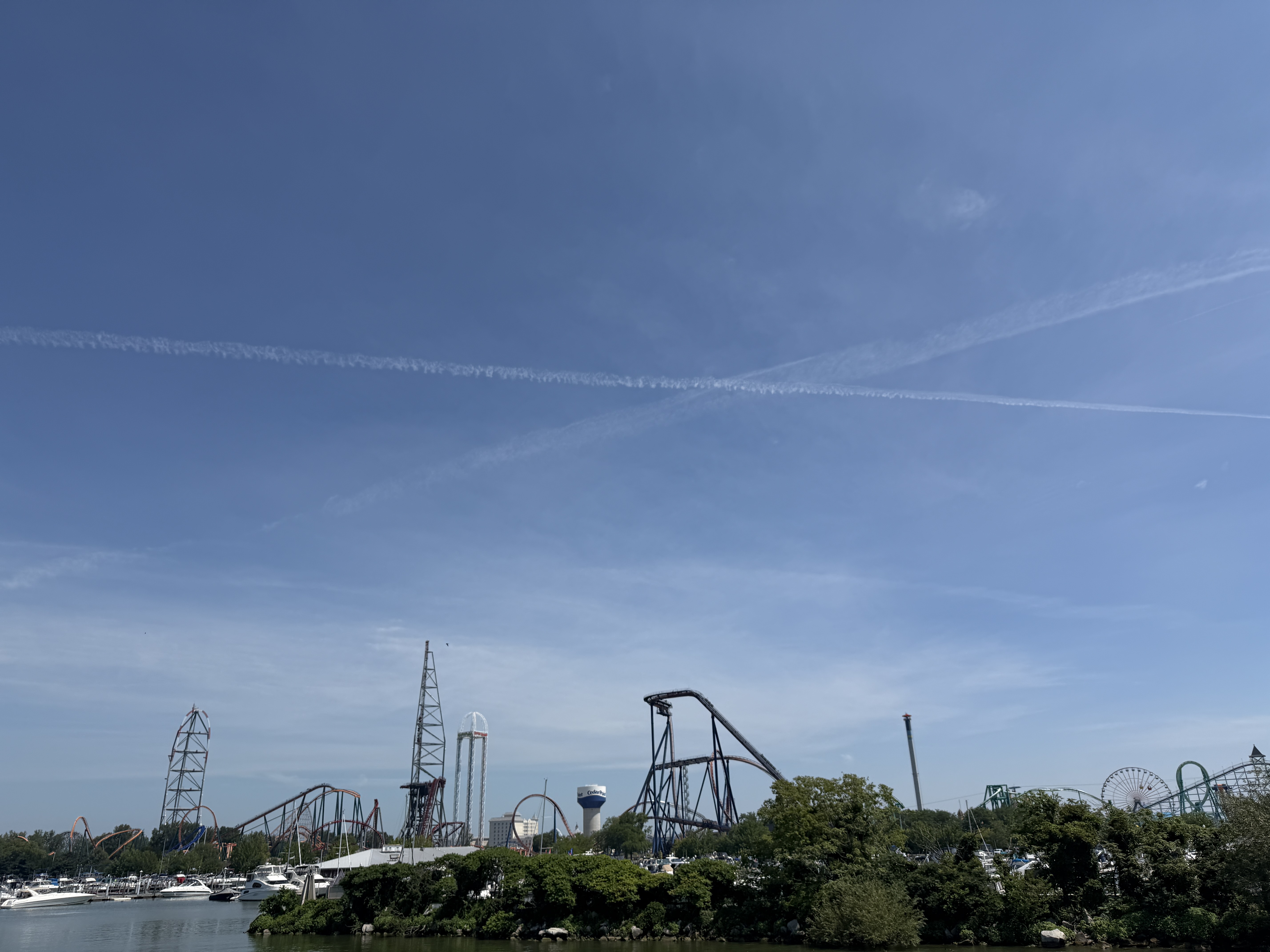
Cedar Point’s amusement-park skyline seen across Lake Erie from the Jet Express ferry while traveling from Sandusky to Kelleys Island. Roller coasters and towers appear along the distant Sandusky shoreline as the ferry crosses the western basin of Lake Erie. Location: Lake Erie, between Sandusky and Kelleys Island, Ohio. Photo courtesy of Gabrielle Banzhaf
SHED School generously applies Teach Anything to broad methods of self-directed learning, homeschooling, and artistic research.
“Teach Anything hypothesizes that every person already knows and employs various teaching methods in their everyday activities. In other words, methods-of/for-teaching are ‘possessed’ and practiced by most individuals, and those methods are not exclusive to seasoned teachers and professors of education.” — JL
I became enamored with this idea through my work with artists, who often have worldly fixations, obsessions, passions, fascinations, or specializations which they are not recognized experts in, that may not be readily apparent in their work, instead emerging relationally, durationally, through our getting to know one another. So the inspiration arose to establish an art school where artists teach anything, not limited to art.
For the first mini SHED School pilot, I ran a very informal, weekly summer course using Yoko Ono’s Grapefruit as the course text. The book was excellent because the chapters introduced fundamental art forms—music, painting, dance, event, object, poetry—in urgent, highly imaginative, generous, and short form, contemporary terms. I employed the book strategically at times, but mostly encouraged others to interpret and apply its instructions on their own terms. Each week, working along what I called invitations, a different group assembled to share things. I intervened seldomly, letting activities form organically around gathering in different spaces, in our home and around Cleveland. From there, the teachers and subjects of study have exploded, covering local ecology, somatics, quail rearing, architecture, baking, archiving, mapping, and body movement, to mention a few.
Defining school as an event, something which happens given our attention, we can approach education and schooling as travel, sculpture, choreography. Exposing the raw elements of a school: text, classroom, teacher, student, testing, and so forth, to alternative ritual patterns, to the destabilizing and transmutative conditions of art, play, movement, nature, change, and chance. Just as it might not require special credentials to be an expert teacher, a school might happen anywhere, in many places, in many ways. SHED School sheds the school and moves into the wild.
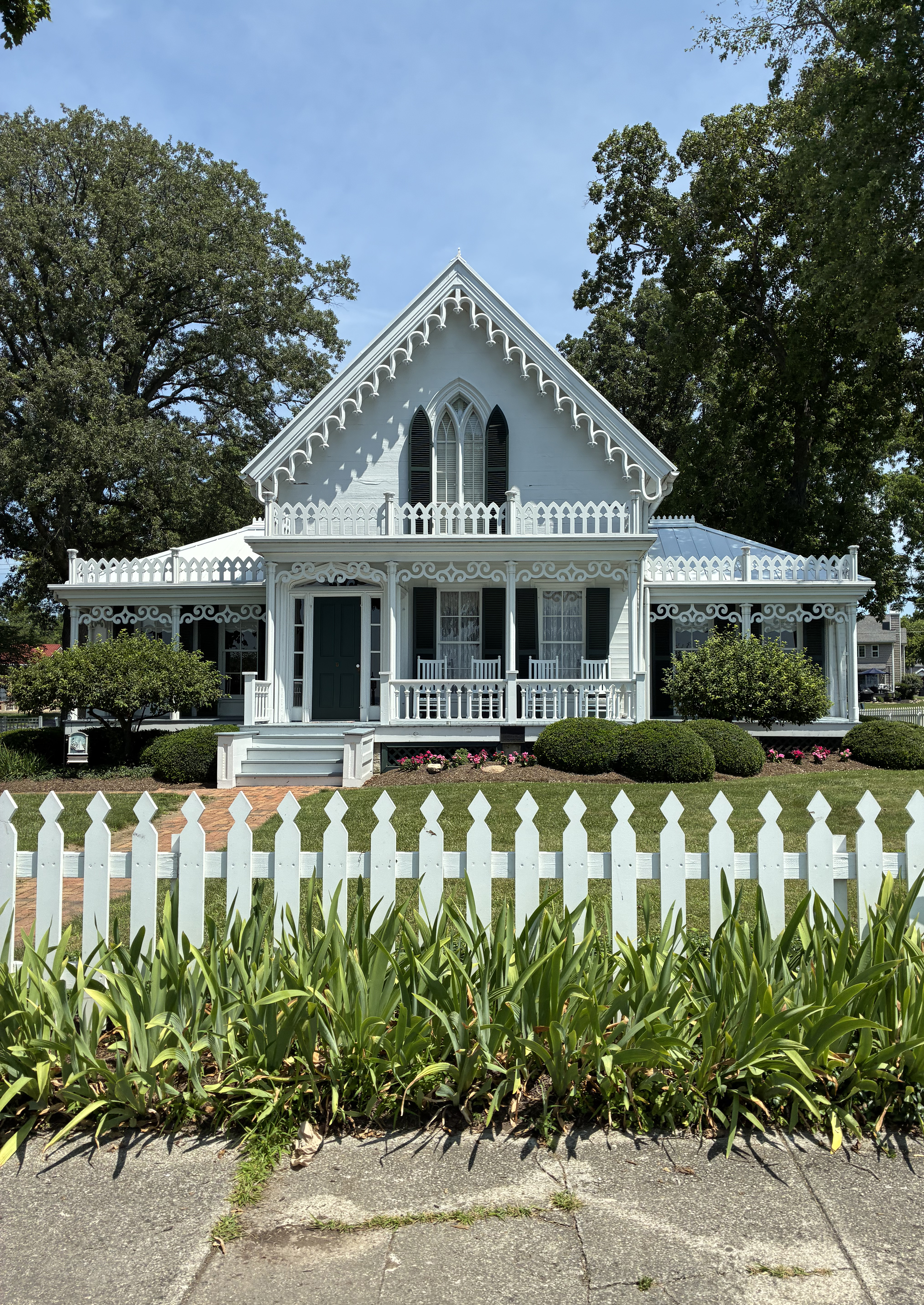
Historic island residence, representative of the domestic architecture that exists alongside Kelleys Island’s agricultural and industrial landscape. Location: Kelleys Island, Ohio. Photo courtesy of Jon Gott
Island School presents the Lake Erie Island system as a course text, scoring and choreographing a particular set of relationships and circuitry between bodies, boats, land, water, atmosphere, ecosystem, time, and duration. Its syntax is layered evidence of prehistoric events and of being alive right now. It chooses attention to what’s already there over what might be brought forth or imposed. Participation determines its reading.
The curriculum is emergent by our gliding over water, by the silken wheels of orb-weavers, by the silence of scattered stones, the mystic turning of watersnakes, the gravity of skeletal industrial remnants, or crystal shards lying in the sand. The lesson plans are looking, listening, breathing, crossing, swimming, wandering, floating, sinking, drifting, climbing, by quarries, ancient coastlines, marshes, tree canopies, fossil beds, glacial formations, ripples, reefs, and shipwrecks. Island School insists only that a school is brimming with life, a fluid environment with interchanging layers, waves, currents, weather, atmosphere, and wild wonder.
At dusk, we might encounter night movers of the Quinn Preserve—the majestic northern saw-whet owl or the magnificent, state-endangered tricolored bat. Their red cedar forest habitat is extremely rare in Ohio; Kelleys Island is the only known location in the state where this forest type remains. Once dominated by lush red cedar forests, the island was clear-cut for timber in the nineteenth century, the wood was used to fuel steamboats operating on the Great Lakes, or for construction in rapidly growing cities along Lake Erie.
There’s a disorienting entrancement about traveling over expanses of water that distorts my sense of time, space, distance, and scale. Sailing in particular can feel like time traveling—the quiet conveyance over water by wind power, using ancient human means, at their core largely unchanged over 6,000 years from their Mesopotamian origins. I first encountered the islands sailing. Sailing predates maps by thousands of years.
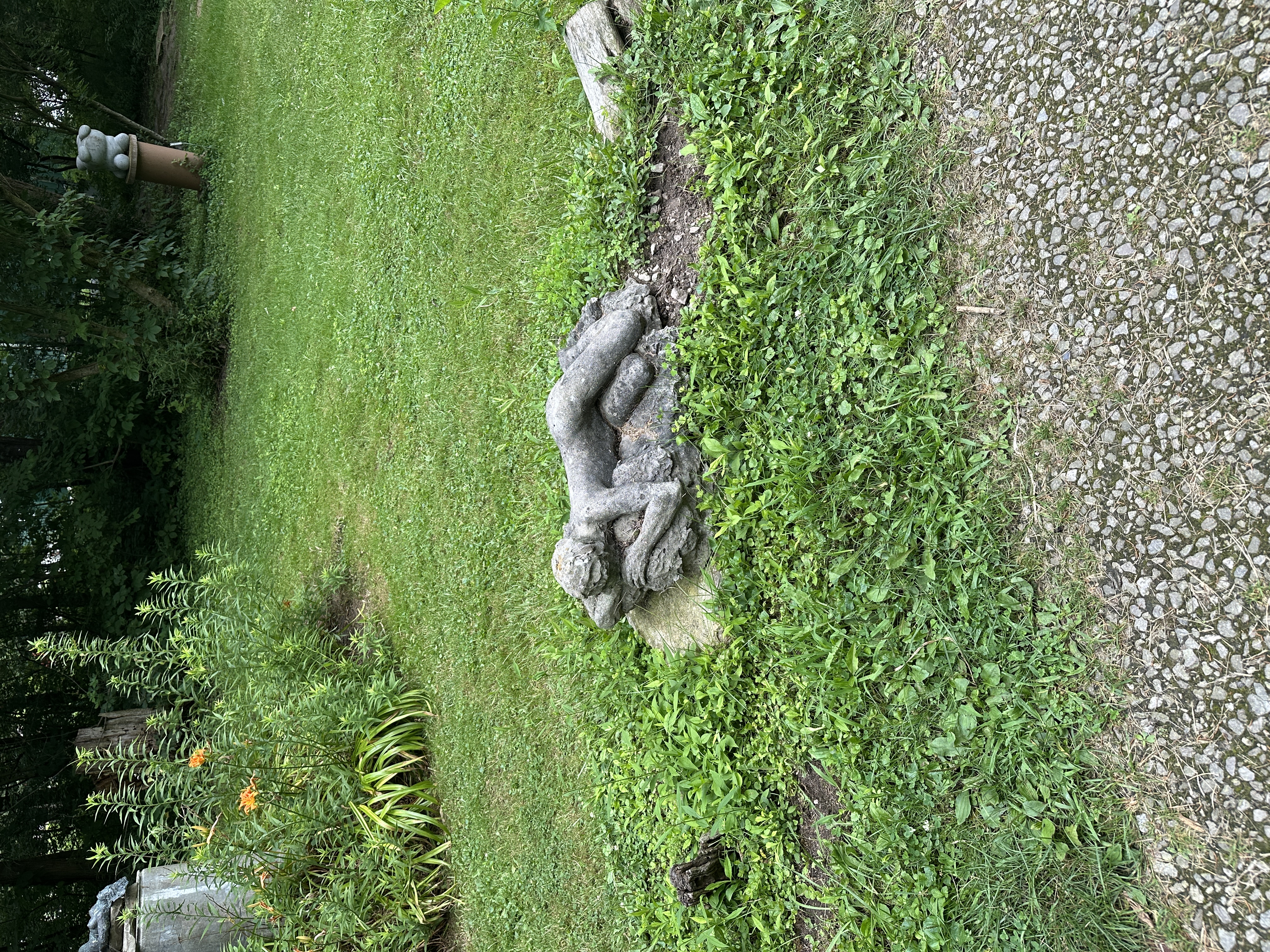
Sculpture within the Charles Herndon Gallery and Sculpture Garden. Herndon has developed the approximately ten-acre sculpture garden surrounding his Kelleys Island studio and galleries since 2000, integrating sculptural works into the island’s wooded landscape. Location: Charles Herndon Gallery and Sculpture Garden, Kelleys Island, Ohio. Photo courtesy of Jon Gott
Imagine hopping into a tiny boat you made from trees, setting sail on a vast body of water, having no idea what’s beyond the horizon.
Island School invites the initiation of crossing to another time and place.
Considering the consequences of wonder and exuberant romance, my conflict in this whole endeavor contends with the brutal reality that to approach these islands at all, to be there, to seek the wondrous treasures they protect, compromises them. We may fall in love with them, but they are, at best, indifferent to us; at worst, our contact might critically wound them.
On our most recent trip to Kelleys in July, I jumped from the north shore rock ledge into the lake, below where remnants lay scattered of the Kelley Island Lime & Transport Company, once the world’s largest producer of limestone and lime. Swimming offshore, then bobbling in the swell, I drifted and flopped and floated, cradled sternly by the current, the waves threw me. I wondered if we should be here at all. Maybe we should just stay in the city where we’ve already fucked everything up.
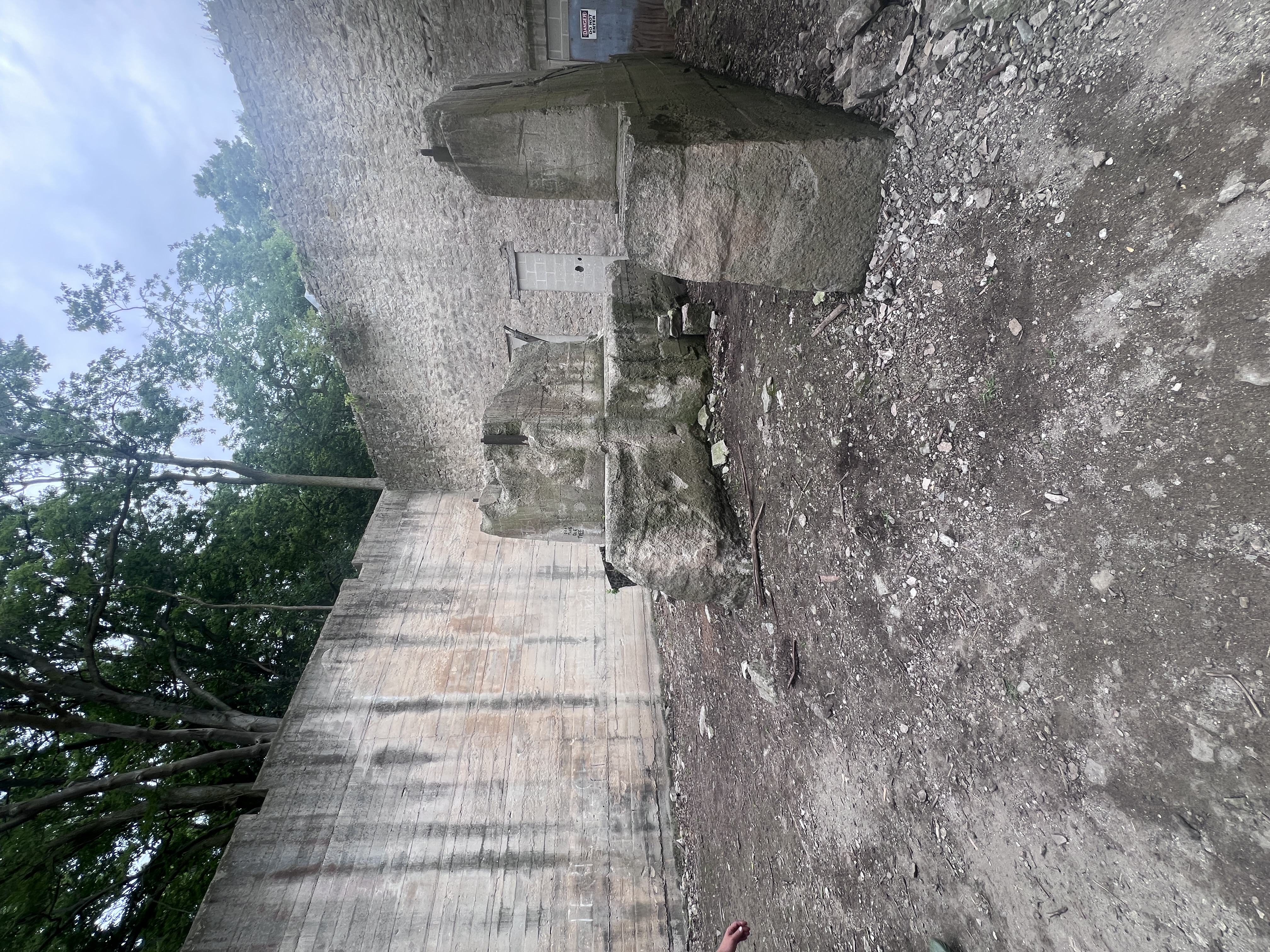
View from within the former Sweet Valley Winery / Monarch Wine Company, looking outward through the surviving limestone architecture. The ruins remain as a physical trace of the island’s historic vineyard and wine-making economy. Location: Kelleys Island, Ohio. Photo courtesy of Jon Gott
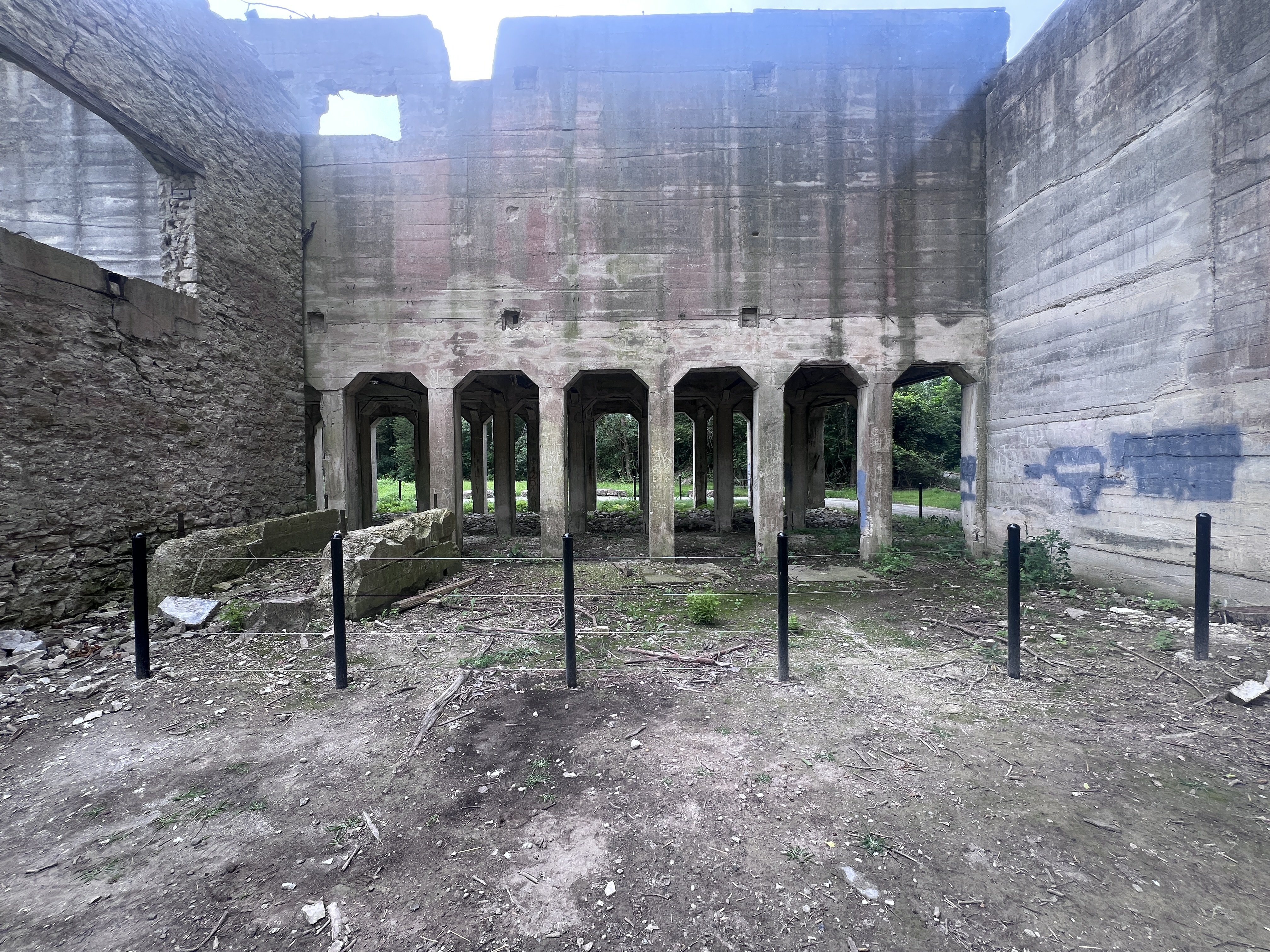
Interior view through the repeated openings of the former Sweet Valley Winery / Monarch Wine Company. The structure once housed part of a commercial wine operation capable of processing hundreds of thousands of gallons during the height of Kelleys Island’s wine industry.. Location: Kelleys Island, Ohio. Photo courtesy of Jon Gott
But there’s magic. Goosebumps cover my arms when a late summer stormwind swirls around us, the northern bog violets thrashing in the alvar, the dogs shooting over the stony barrens, the lake surge cutting upward into narrow crevices, cooling the hot, craggy bedrock, then draining through its hollows, changing voids into shallow pools, the dark glimmering electric sky mirrored in their shifting colors, flashing from pink to emerald black, to squally silver, all in a moment, and we’re alive. It seems from another world when we jumped in our little sailboats as child boatsmen headed for the islands, returning home with buckets full of fossils and jewels.
I’m reminded of William Blake, the opening lines from Auguries of Innocence:
To see a world in a grain of sand
And a heaven in a wild flower,
Hold infinity in the palm of your hand
And eternity in an hour.
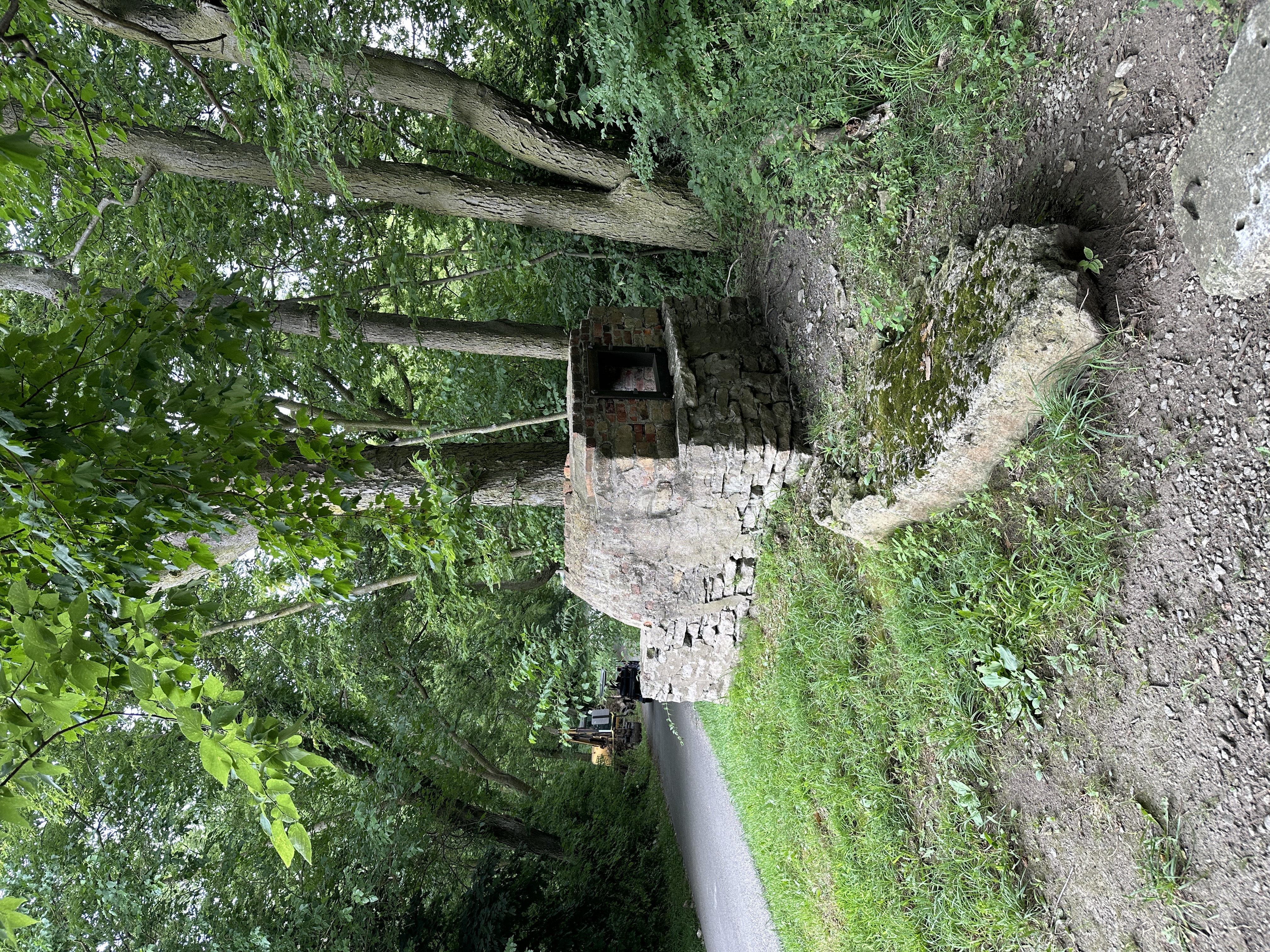
Remains of a nineteenth-century communal bread oven associated with Kelleys Island’s quarry community. The beehive-style outdoor oven dates to approximately the 1870s and was used communally by immigrant quarry workers and their families. Location: Kelleys Island, Ohio Photo courtesy of Jon Gott
The magic of these islands making me think that we shouldn’t be there at all is the same magic causing me to return again and again, and to invite others to visit, and to urge you to visit. To feel it you must go, they speak for themselves. I now approach them with all the guilt and consequence of a modern human, but the spell hasn’t been broken. Their wonder remains through my loss of innocence.
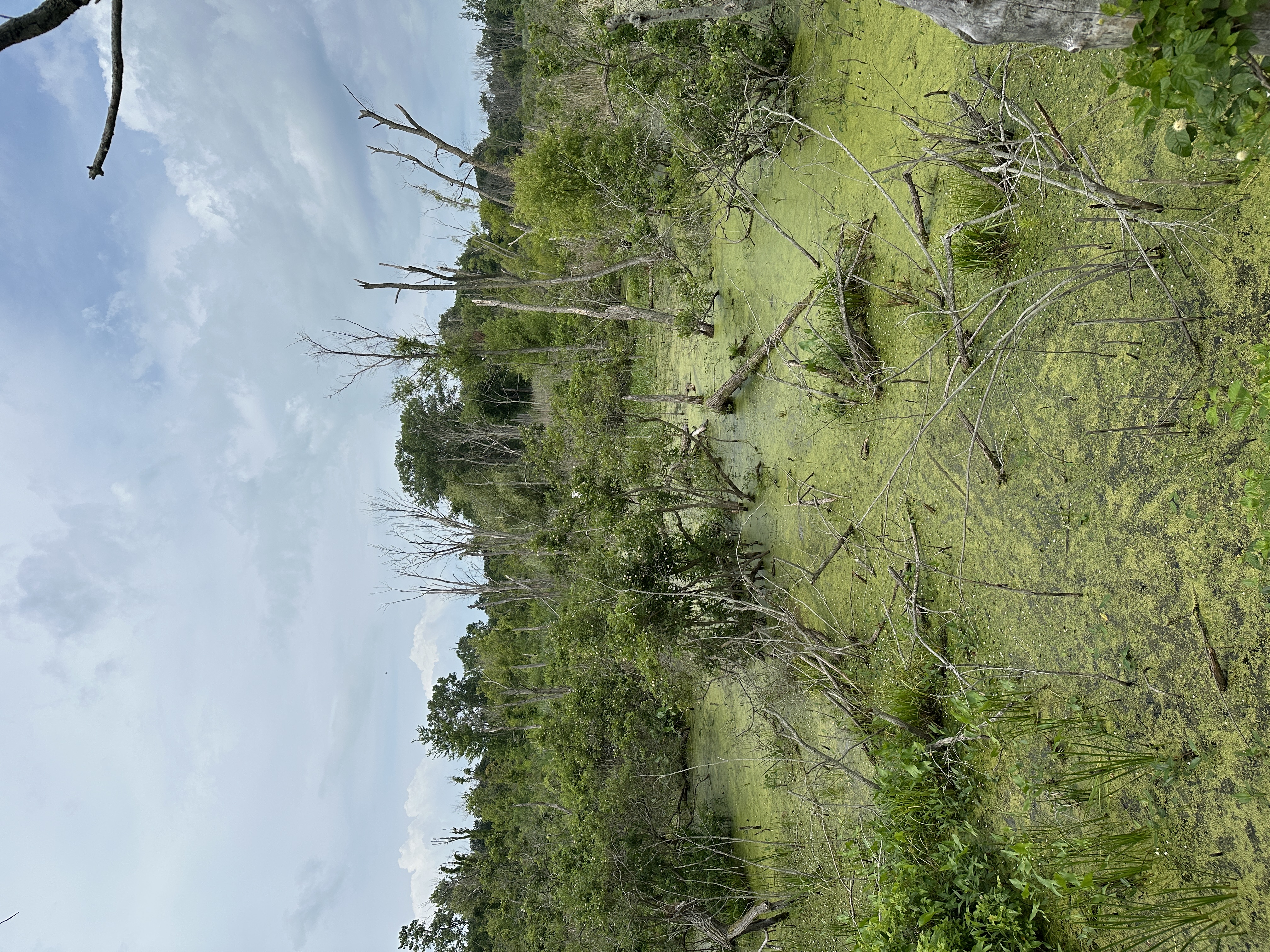
Trail passing through the forest and wetland landscape of North Pond. The preserve encompasses one of only three surviving natural lake-embayment ponds once characteristic of the Lake Erie Islands.. Location: North Pond State Nature Preserve, Kelleys Island, Ohio. Photo courtesy of Jon Gott
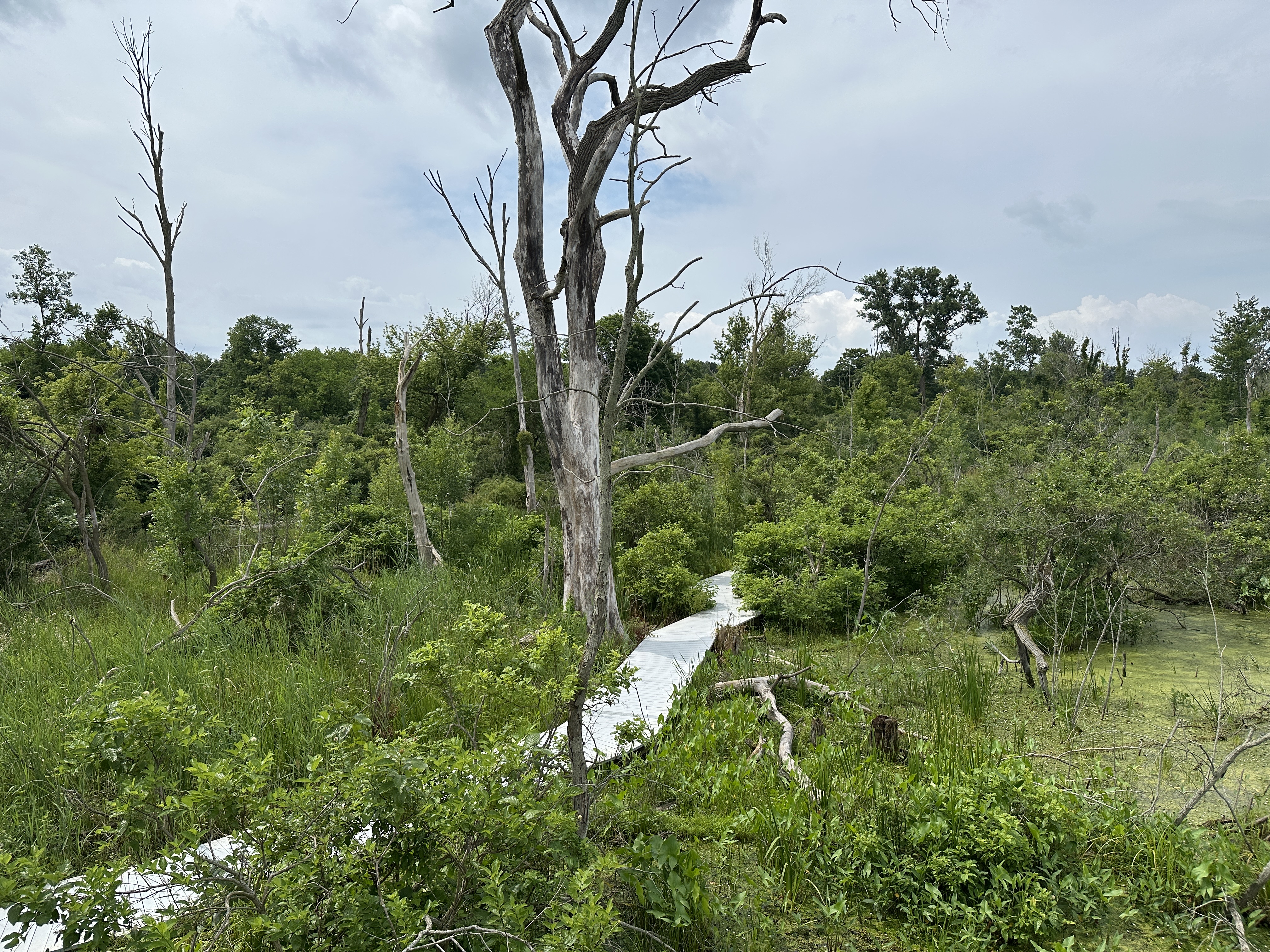
Boardwalk extending through the wetland landscape of North Pond State Nature Preserve. The preserve protects approximately 30 acres of forest and marsh surrounding Ohio’s only state-managed natural lake-embayment pond. Location: North Pond State Nature Preserve, Kelleys Island, Ohio. Photo courtesy of Jon Gott
Island School might compel these doubts to be surfaced, as the island itself has. Artists might bring their special powers of observation, play, transformation, imagination, and grace, to listen, and to see where we may go together, in the friction and flow of our connections, when we gather in the quarries along with their percussive echoes, approaching our precious cosmic wonders and natural beauties with deepening love and mystery, and the fearless spirit to cross unencumbered, far into the wild mystic.
Learn more at shed-projects.org/shed-school