




An interview with Jackie Valadez and Alec Dolter
September 30, 2026
Soon after becoming a state in 1848, Wisconsin attracted farmers from several European countries including Germany, Poland, England, Ireland, Netherlands and Scandinavia, who immigrated to the Great Lakes Region to purchase cheap land and establish agricultural settlements.1 The rich soil of the midwest cultivated a flourishing industry of wheat production, which was complemented by access to trade routes via maritime and railroad transportation. By 1860, Wisconsin had become the second-largest wheat-growing state in the country, and Milwaukee had become the largest transporter of wheat in the world, shipping the produce from its deep harbor on the western shore of Lake Michigan to markets in the east.2 The processing and trade of wheat supported the vast majority of Milwaukee’s commercial economy during this era, but after only about twenty years, the soil had become depleted from overproduction, leading to a staggering decline in the city’s agricultural dominance.3 Milwaukee adapted to this crisis by pivoting to iron casting and high-powered manufacturing, which was possible because of the foundational wealth and infrastructure available from their previous industrial milestones.4
By the early 1900s, Milwaukee earned a new reputation as the “Machine Shop of the World”5 but was also appreciated for its increasingly diverse labor market. While known primarily for the production of massive heavy machinery used in global mining, construction, and manufacturing6, Milwaukee has also made significant contributions to publishing, brewing, as well as the production of tanned leather, locks, and motorcycles.7 This diversity protected the city from the instability that crippled other single-industry Rust Belt towns, but could not prevent the economic and infrastructural challenges that resulted from the state-sponsored urban renewal and highway construction projects, which demolished working class neighborhoods and prompted the withdrawal of residents and corporations.8 By the mid-1970s thousands of blue-collar union jobs had disappeared, and the tax base began to erode along with the industrial plants and railways.9 But Milwaukee’s post-industrial revival is particularly unique. Rather than completely abandoning old industrial sites, the city is working with professionals in a variety of fields to transform them into “eco-industrial” zones to be used for clean industry, ecology and recreation.10
Economic and cultural shifts continue to illustrate the resilience of Milwaukee, with one being a turn toward independent publishing and a growing scene of independent bookstores.11 This knowledge-based market has strengthened the creative community and provided “third spaces” where people can gather, linger, and converse outside of home and work.
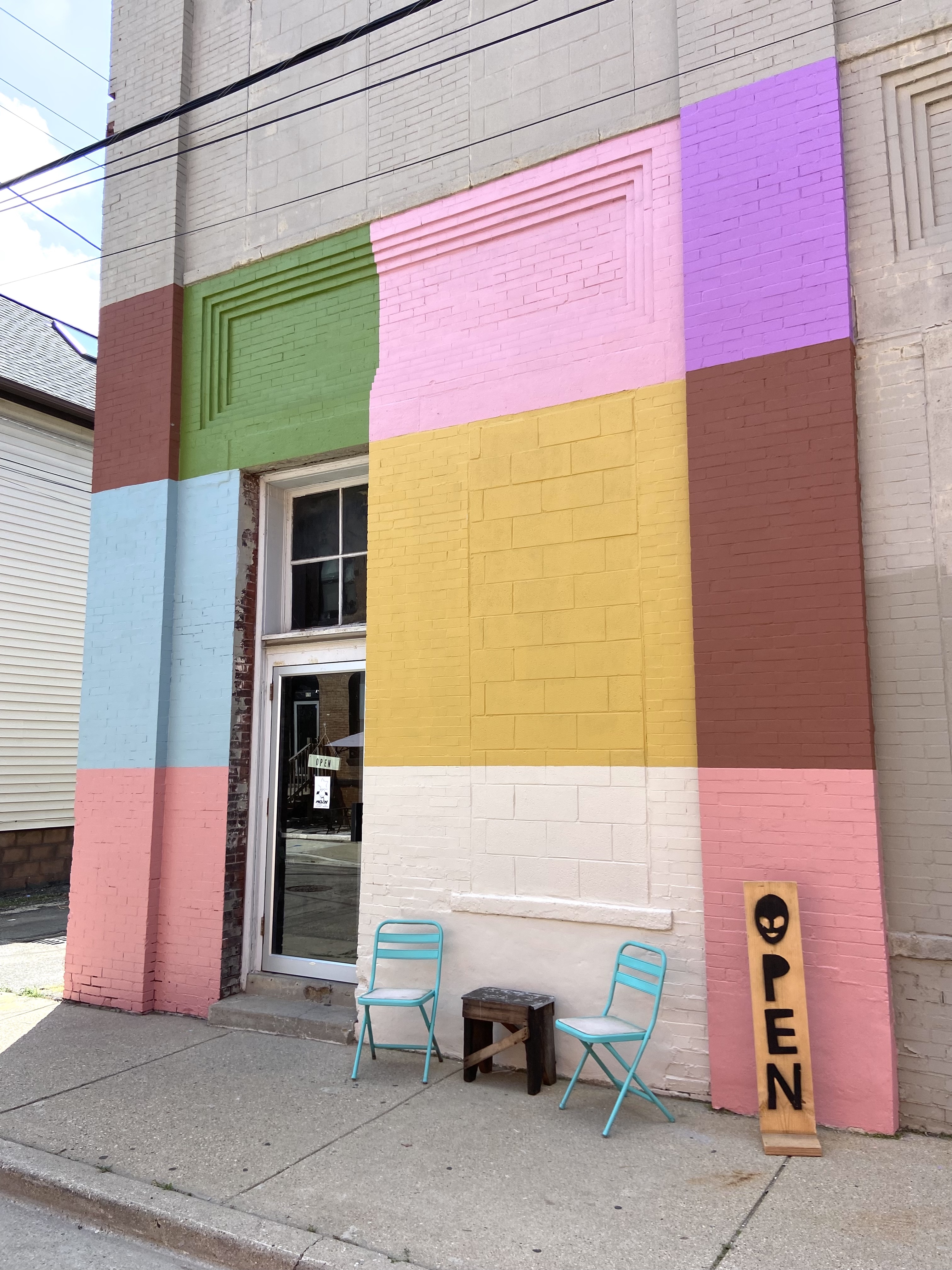
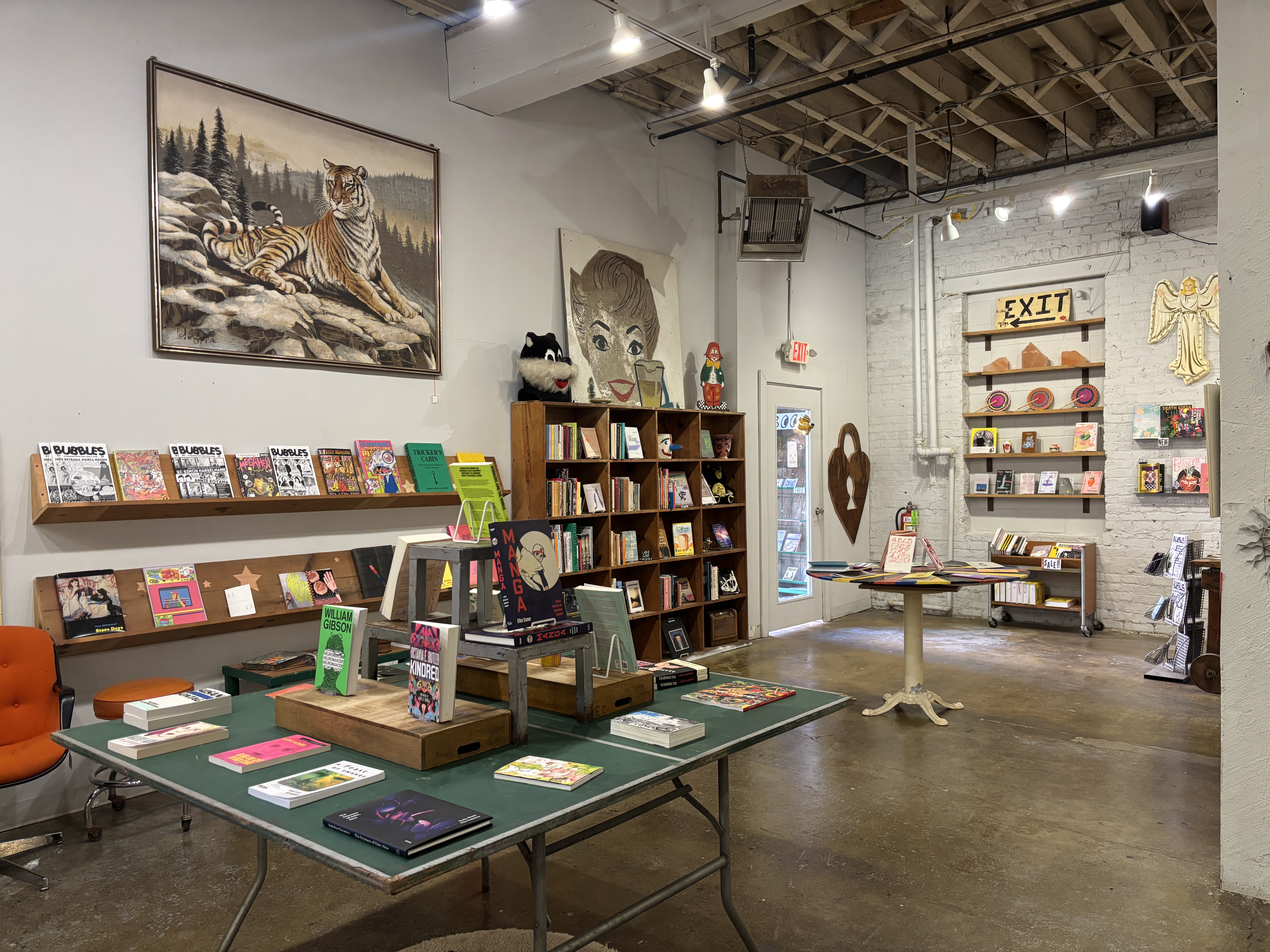
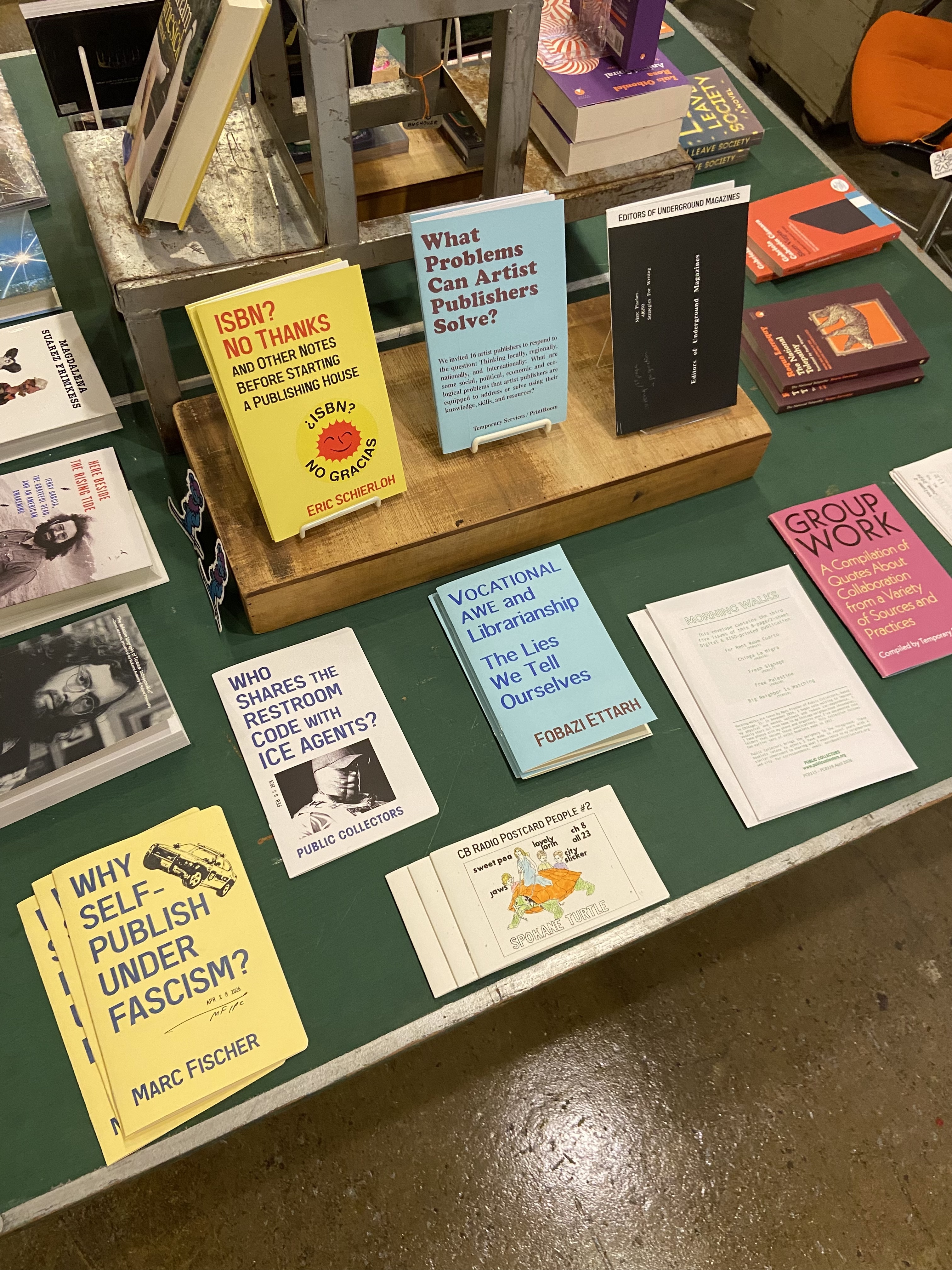
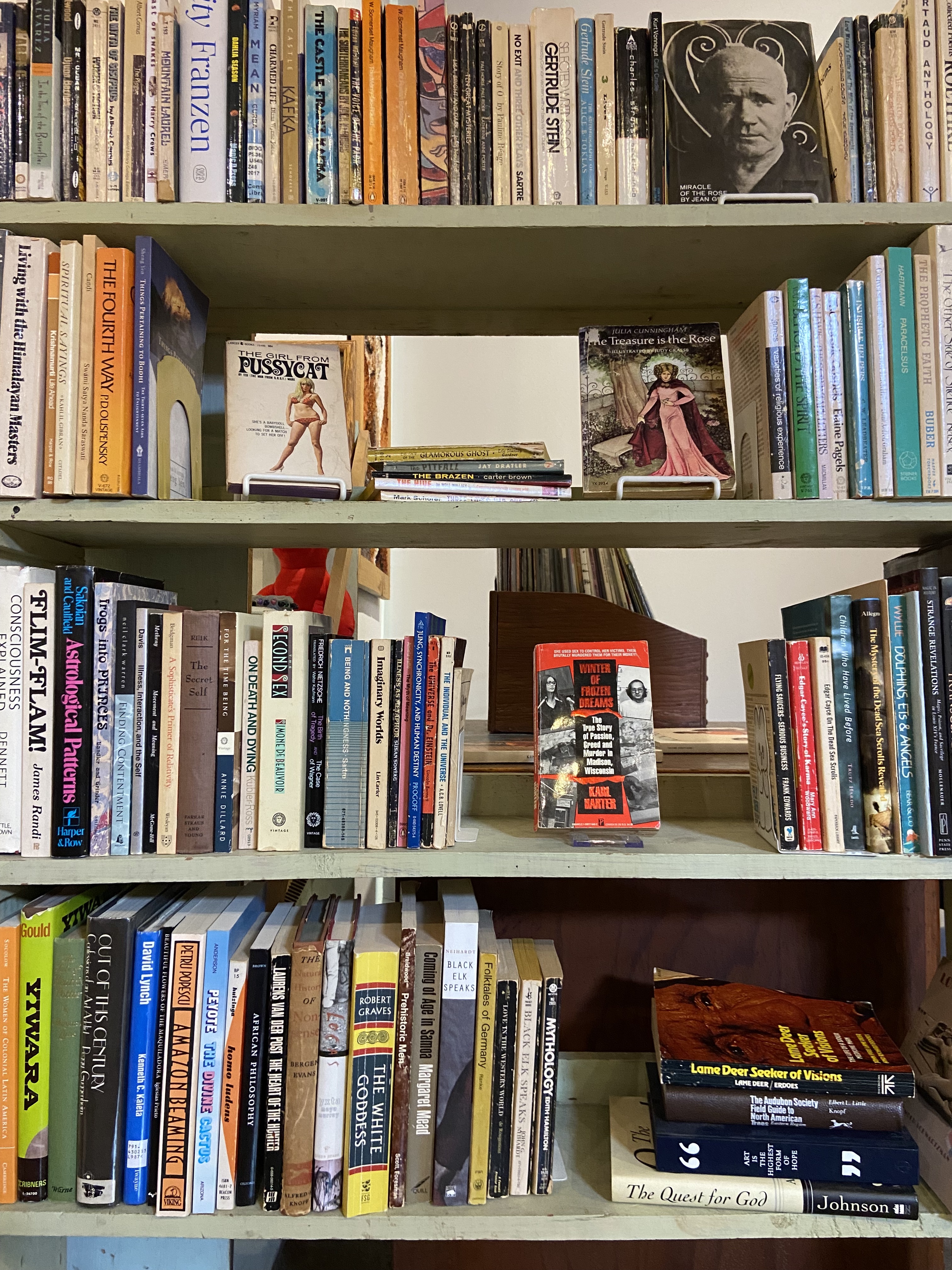
Melon is an independent bookshop in the Walker’s Point neighborhood of Milwaukee that sells printed matter focused on an array of topics including new and used alternative comics, books on visual art, philosophy, and spirituality. The majority of new books are from small-press and independent publishers alongside self-published works. It was opened in 2025 by Jackie Valadez and Alec Dolter, whose business model is founded on collaboration. The bookshop functions in tandem with Bughouse, a design studio that blends art, carpentry, and curated vintage goods. Together, Jackie and Alec explore a dynamic number of subcultures throughout the history of literature, publishing and design, while also hosting public music events, poetry readings, book releases, book fairs, workshops, and art exhibitions.
runner: The city of Milwaukee has lived through many lives already, bouncing back through innovative uses of preexisting infrastructure and resources. Has this history influenced your decision to establish a life there?
JV: I haven’t really thought about it until now but definitely yes, in an unconscious way. Visually you can tell Milwaukee has been a very industrial city, and while a lot of that industry has moved on, the infrastructure and buildings have been preserved or at least put to use here more so than a lot of other cities with the same background. We both went to MIAD, the Milwaukee Institute of Art and Design, and the building is alongside the river in an area that had a lot of factories. It was used to house cars coming over by steamship from Michigan, and I always loved the warehouse feel it had. The aesthetics of the city are so visually enriching, and for the both of us who love vintage and old school objects, artifacts and architecture it makes sense to build our life here and be inspired by the layers of history around us.
AD: Yeah, it probably has, in ways I haven’t spent a whole lot of time thinking about. All the draw bridges over the river, the graffitied rail cars cutting through downtown, and the enormous steam boats pulling into port below you as you drive over the Hoan Bridge are a few of this town’s special hallmarks to me. The DIY skateparks in Milwaukee, utilizing torn down building foundations, vacant tennis courts, and parking lots under the freeway have definitely played a part in making it my home as well.
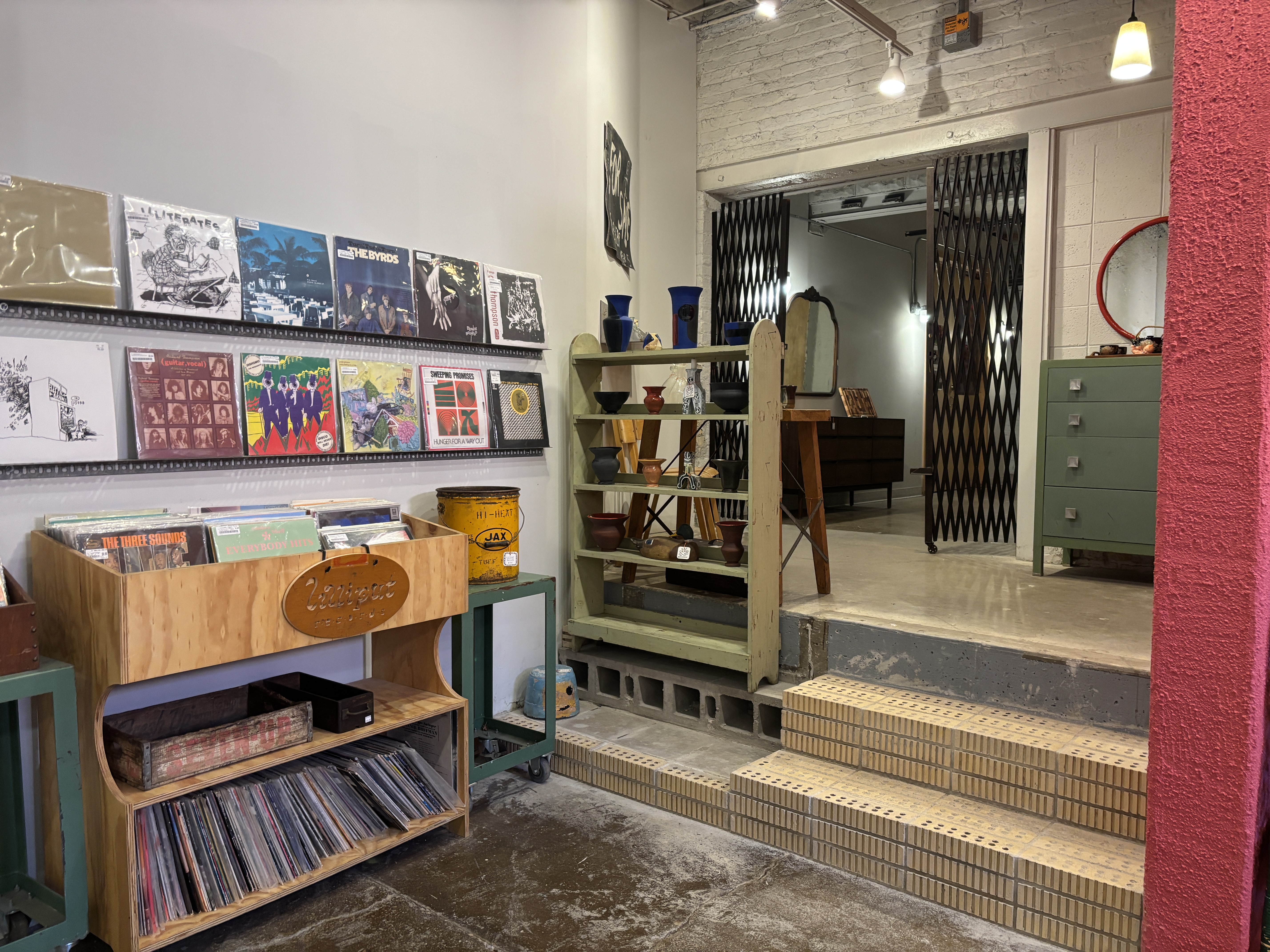
runner: Images of the inside of the store indicate that it was once an old production facility of some kind, with brick walls, high ceilings, and sturdy wooden columns. Do you have any knowledge about the history of that space?
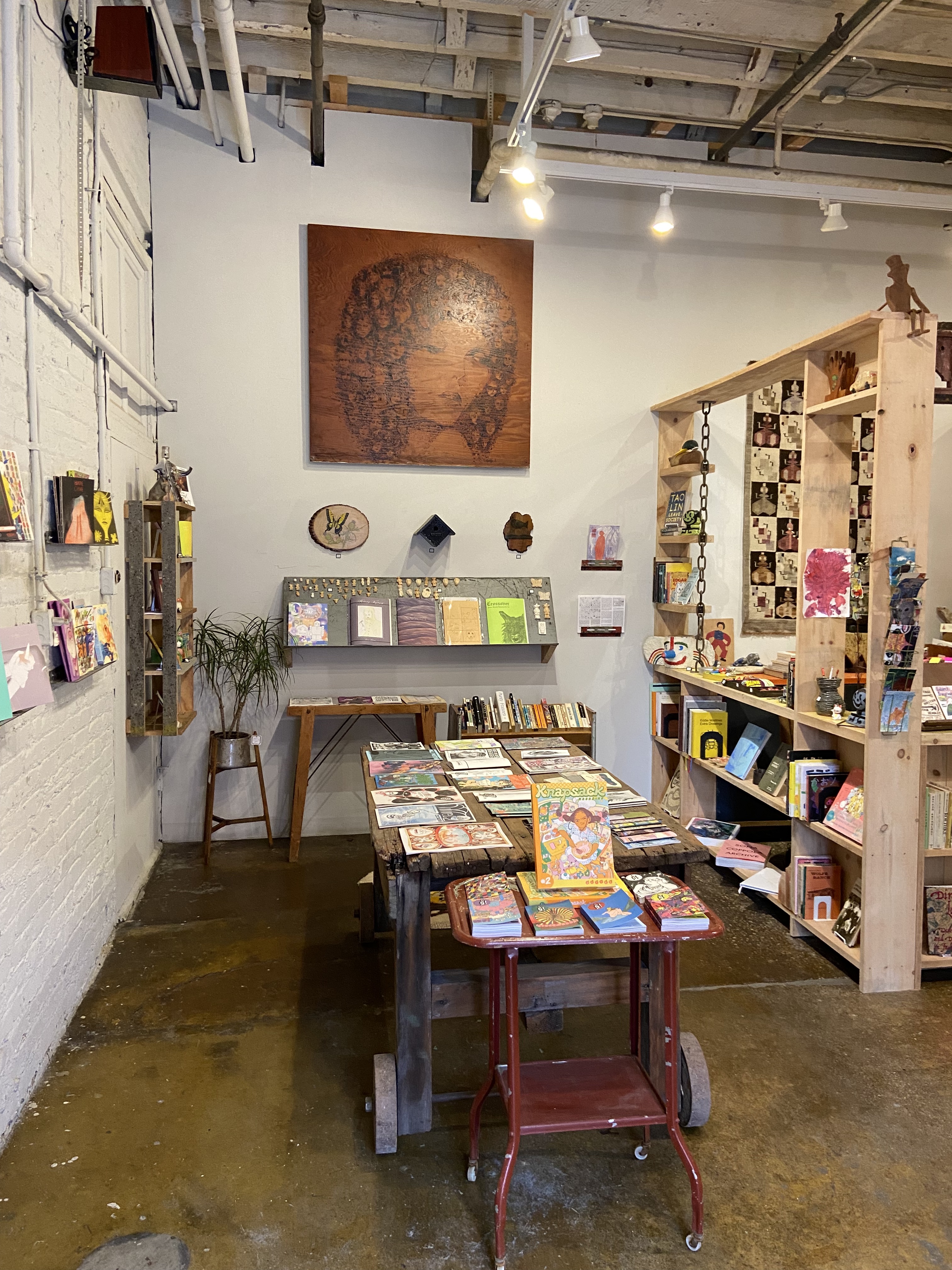
AD: These days the building is very mixed-use. It houses an art gallery, vintage store, bar/event space, woodshop, a bunch of art studios, and us. None of us have been able to pinpoint its original use, but it’s very industrial. The building has three exterior loading bays and two freight elevators inside. Within our shop there’s this two foot high cement dock with a now defunct heavy duty elevating platform. One hallway has a walk-in bank style vault (now used as gallery space) that I’m really curious about. Until just this year the building was still heated on steam. It’s a really fun place to explore and easy to get lost in here.
JV: The shop is in Walker’s Point, it’s the oldest neighborhood in Milwaukee and the only one of the three pioneer settlements to keep its original name. It was an area with a lot of factories, and a large immigrant population that worked within those factories. While we don’t know its exact original use, it was definitely a part of the industrial history of the neighborhood. I love the high ceilings, the cream city brick walls, and the large wide wood beams that make up the ceiling. There’ s a lot of beauty in it but it’s not a precious space, it allows us to experiment freely with the layout and other aspects of the shop that we might not have done otherwise in a more pristine storefront.
runner: You are both artists, but your practice extends beyond the stereotypical fine art mediums and methods, and having this public space offers you the opportunity to explore your ideas and experiment. How have your practices or views on “art” evolved since opening the shop?
JV: I’m having a lot of fun with the curatorial aspect of running the store. I’ve leaned into that more, in my personal practice I hadn’t experimented with curation but I’m finding it really fulfilling within the context of a bookstore. I’m really into alternative learning systems, and in Reggio Emilia the classroom itself is considered a third teacher, where instead of it being just a physical space it activates curiosity and engages the student by how it’s set up. So I’ve had that in mind with Melon, and I want people’s own curiosity to be furthered by a book or object, and to get excited and have that be generative. Within a white wall gallery context, there’s less room for curiosity and engagement because of how they are traditionally set up with it being a presentation and less of a space for back and forth. A bookstore provides a more familiar and less threatening space for people to ask questions, while still being a place where people come across ideas, people, subjects, whatever that they would never have encountered otherwise. I’m being intentional with what I put in the shop, and I’m finding that the ideas I was working with in my personal practice are able to be spread further and engaged with better through the medium of books.
AD: Having the shop is kind of an excuse to keep doing what I like - finding, collecting, and making things out of other things. I often exceed my own limits in what I can keep in terms of the space available to me. Since opening the shop and getting more space at a nearby antique mall, I recently downsized a storage unit, so it’s helping me find equilibrium - hunt, gather, release. This has basically become my practice for right now, taking something cool, old, or discarded and reintegrating it into the world via the shop. I’m pretty careful about what I bring in here, like not every chair or teddy bear out in the world is art, but the things I choose to sell here are, or at least fit my own criteria for what is.
runner: “Third spaces” are considered by sociologists to be a vital part of a society. Can you speak to some different ways that artists in Milwaukee are investing in the creation and preservation of this kind of cultural infrastructure?
JV: COVID really killed a lot of the momentum Milwaukee had, and it had been quiet for a bit but within the last year or so I’ve really noticed a big push from all facets of Milwaukee communities to create spaces and events where people can come together. New spaces like MKEUltra have added a lot to the DIY music scene, food related projects like Open Kitchen, HOT POTATO and Ordinary Risks bring people together under the seemingly simple premise of food, but because they’re artist led projects they become an elevated, fun experience for the community. Alec and I are part of a group called DKNutz, we host free open drawing sessions around the city and through that we see how enriching it is to provide a space for people to come in and make art regardless of whether or not they consider themselves an artist. A lot of film related projects have popped up too, St. Jawn Cinema, Blue House Film are bringing in DIY experimental film to Milwaukee and popping up with screenings around the city. I can’t name everything that’s happening, but overall people are being creative with what they’re presenting to the community and it seems like there’s something new all the time. Grants like The Open Fund have been extremely vital and it’s allowed artists to invest in themselves and their ideas to create exciting and wonderful projects in Milwaukee.
Learn more about Melon at instagram.com/melon.mke and about Bughouse at instagram.com/bughouse.mke
Alec Dolter is an artist and furniture maker from Iowa living and working in Milwaukee, WI. He melds carpentry with artistic processes and sensibilities to create functional and imaginative objects and furniture from mostly found and salvaged materials. Bughouse sells curated furniture, homegoods, artifacts, media and more.
Jackie Valadez is a visual artist, writer and teacher based in Milwaukee, WI. She writes, creates sculptures, books, and works on paper that explore play as a way of understanding ourselves and the world. Drawing from the visual language of toys, craft, childhood iconography, and popular culture, her work considers wonder as a practice of attention and transformation. Valadez earned her BFA in New Studio Practice from the Milwaukee Institute of Art and Design in 2019. Her work has been exhibited both nationally and internationally. She runs the bookstore Melon, which focuses on alternative comics, books on visual art, spirituality, philosophy and more.
1 “Wisconsin Fur Trade.” Milwaukee Public Museum. Accessed September 22, 2026. Link.
2 Beutner, Jeff. “Yesterday’s Milwaukee: The World’s Largest Shipper of Wheat.” Urban Milwaukee. Accessed September 22, 2026. Link.
3 Apps, Jerry. “Remembering Our Rural Roots.” AgUpdate, April 2, 2020. Link.
4 “Milwaukee History Timeline: Milwaukee County Historical Society: Early Settlers: Modern Developments.” Milwaukee County Historical Society, April 30, 2026. Link.
5 Prigge, Matthew. “The Years We Became Milwaukee.” Milwaukee Magazine, January 15, 2021. Link.
6 Hoover, Gary. “Mountain-Moving Monster Machines from Milwaukee: The Bucyrus-Erie Story.” Business History - The American Business History Center, October 2, 2025. Link.
7 “Photos: Milwaukee’s Industrial Past.” PBS. Accessed September 22, 2026. Link.
8 Home. Accessed September 22, 2026. Link.
9 Brief history of milwaukee - children in urban america. Accessed September 22, 2026. Link.
10 How milwaukee shook off the rust - politico magazine. Accessed September 22, 2026. Link.
11 Kozlowicz, Cathy. “Why Milwaukee-Area Independent Bookstores Are Thriving.” Journal Sentinel, April 17, 2026. Link.