




Jackie Valadez and Alec Dolter
October 29, 2026
Milwaukee, Wisconsin has an ever-growing, ever-evolving ecosystem of thinkers and makers at the Milwaukee Makerspace. It’s a large community of DIYers with an undying interest in making things and learning new skills. When Makerspace members are not working their day job, they’re here honing their craft and special interests amongst each other. People not only come here to create, they come here to make friends, share knowledge, socialize and collaborate.
While chatting with co-founder Tom Gralweicz, he spoke about the curious nature of makerspaces, saying “a makerspace is pretty much undefined…There is no box saying what a makerspace is…It’s very much what do you want a makerspace to be…You don’t need a permit, you don’t need a license, it’s a concept that is free and available.”
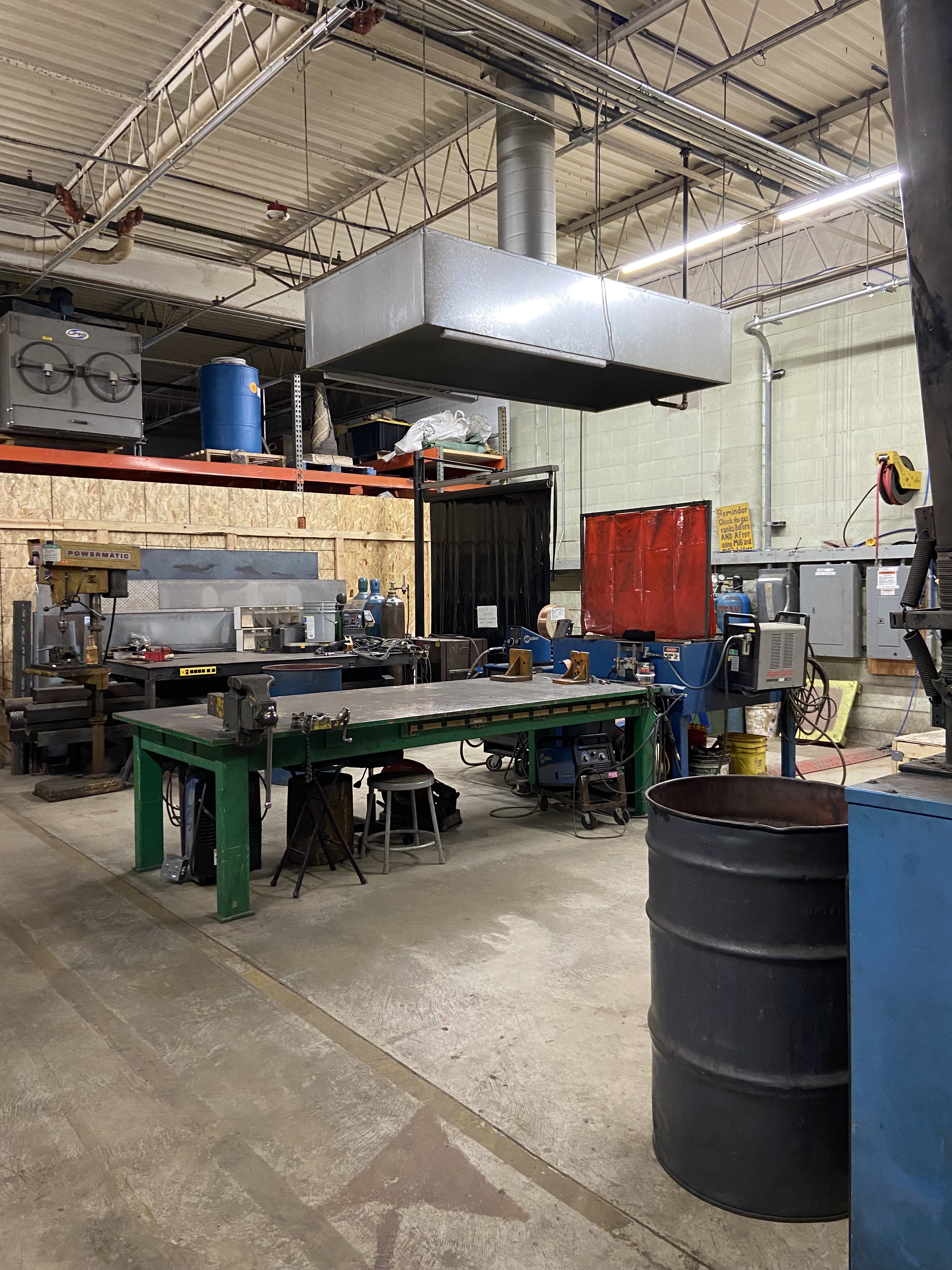
Welding Area
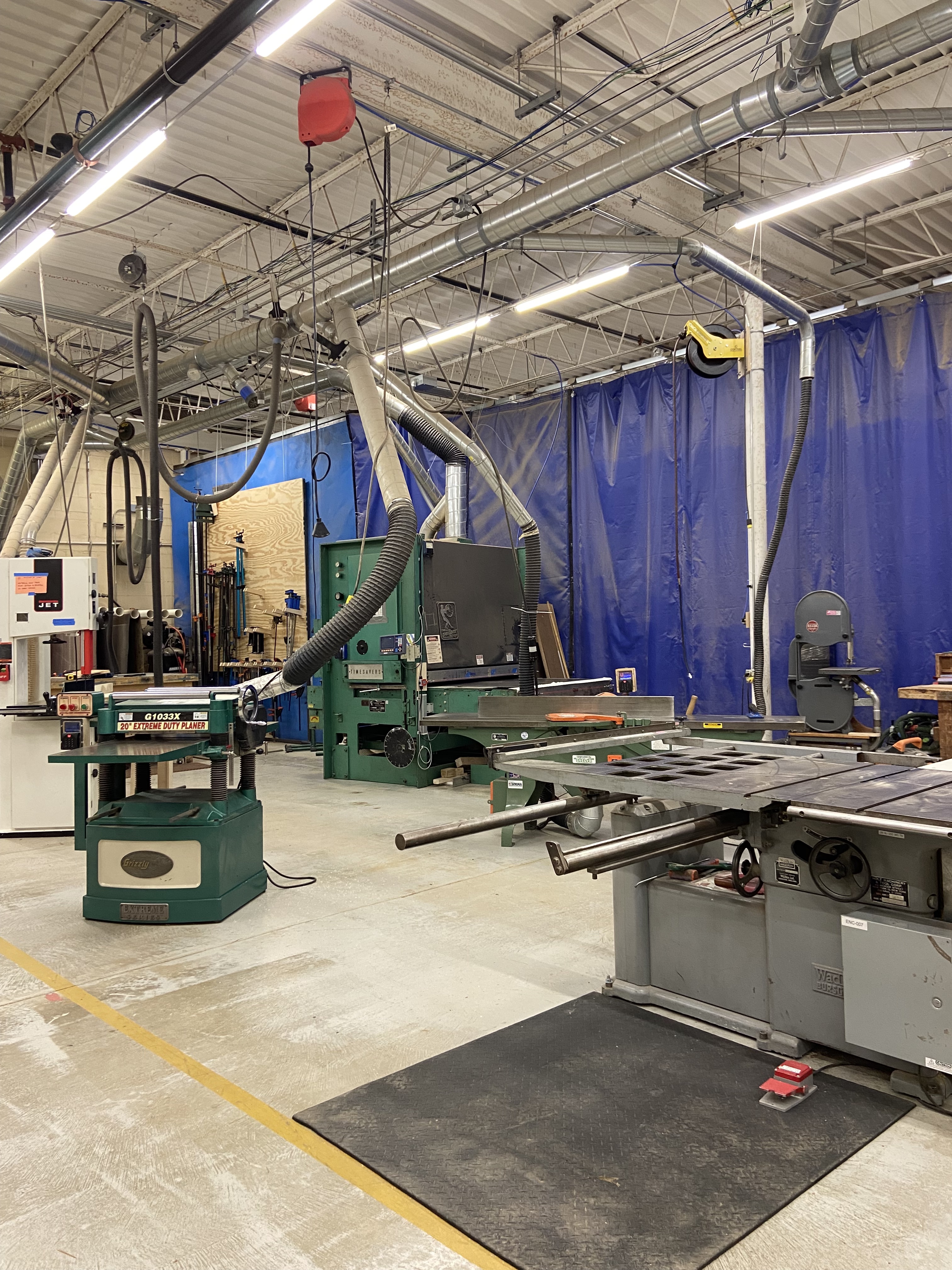
Woodshop
Tom and co-founder Royce Pipkins got some ideas for starting their own makerspace through a site called hackerspaces.org, an online network for makerspaces all over the country. One suggestion, “pick a day, start having meetings” led to weekly gatherings at a Culver’s Restaurant, and within a year they had enough people interested and enough resources pooled together to find a building and open the first makerspace in Milwaukee.
They never imagined the Milwaukee Makerspace would have almost 100 people, but what began in 2009 as a group of friends “working on little robotic projects” and “building homebrew electric cars” in garages quickly blossomed into two large facilities with a total space of 63,000 sq ft., and 850 current members.
The Milwaukee Makerspace hosts a large number of individual spaces that are catered to specific crafts. Members have 24hr access to facilities where they can practice woodworking, metalworking, welding, forging, sewing, leatherwork, glass fusing, stained glass, neon, CNCing, lasering, jewelry making, electronics, powder coating, screen printing, printmaking, ceramics and 3D printing, to name many but not all.
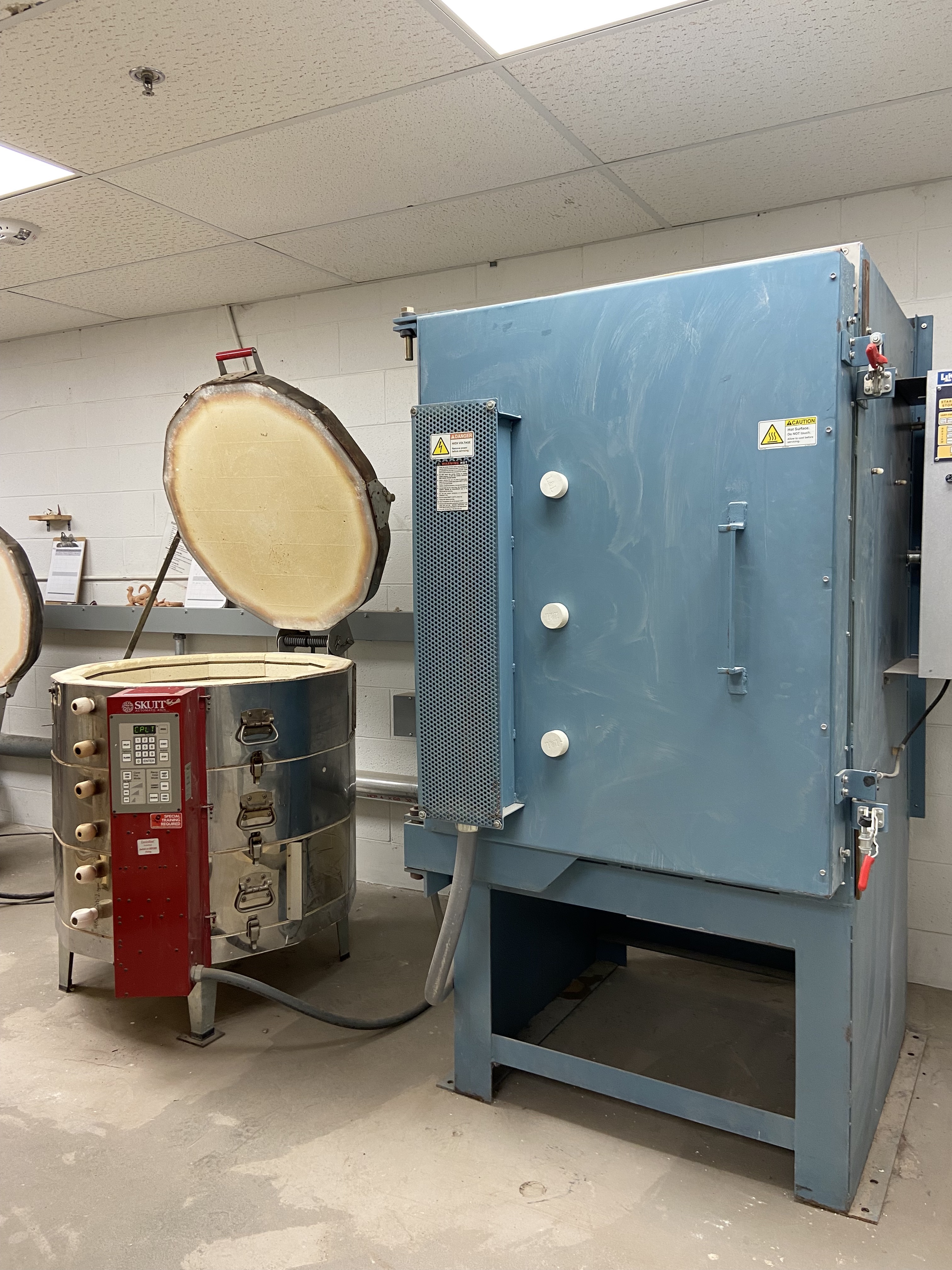
Kiln Room
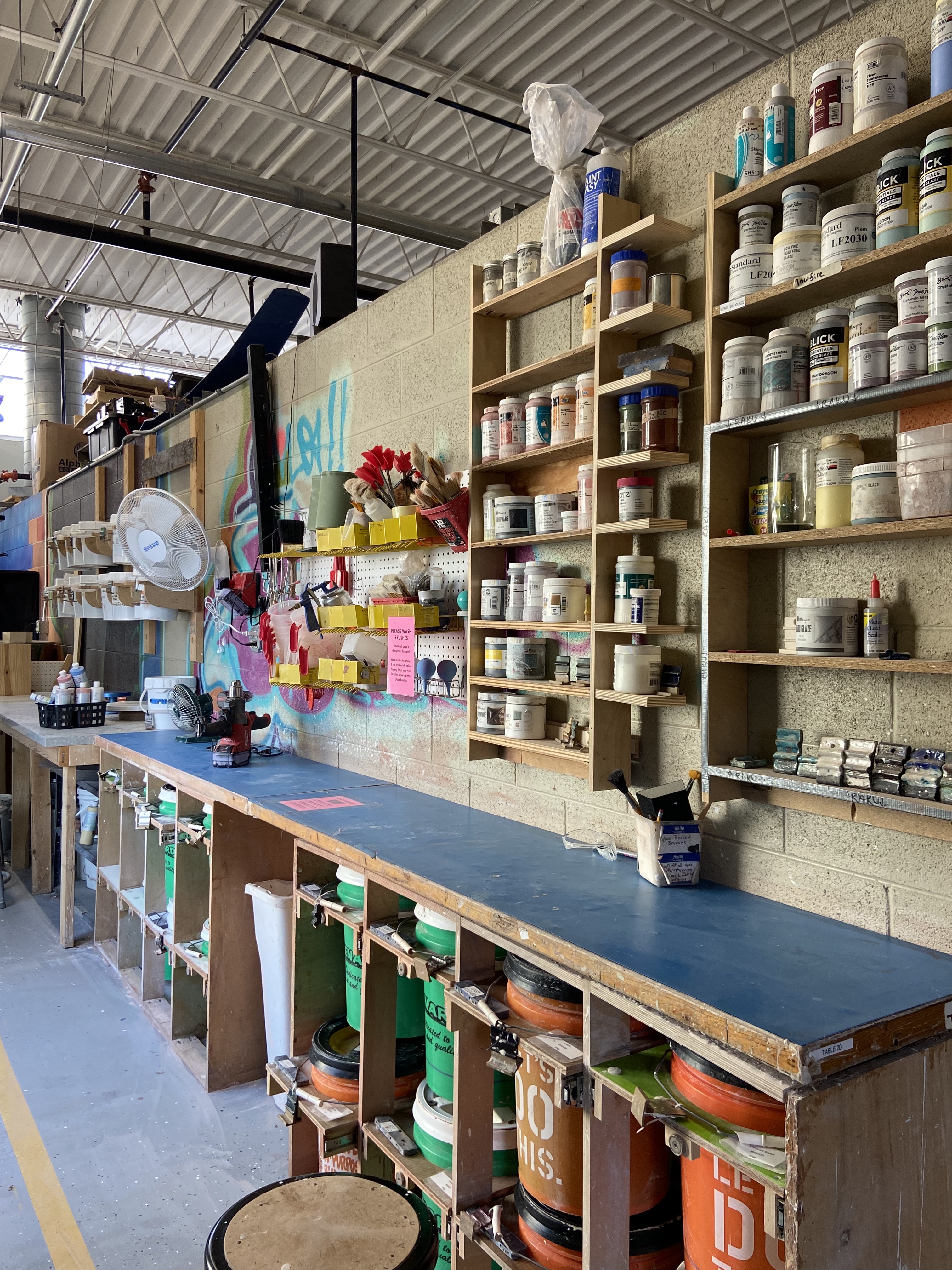
Glaze Area
We spoke to member Peter Miczek, who gave some insights as to why the makerspace in Milwaukee took off the way it has.
Peter, like a large cohort of other makerspace members, is a retiree. He says, “I like to do stuff with my hands”, after spending most of his career working with computers and writing software. For him, not working with his hands throughout his career incites him to do more of that now. As for other industry workers of his era, he tells us another story.
“Milwaukee, when I first moved here, which was about 40-some years ago, had a lot of small local industries. So there were a lot of machinists…furniture was being built here and north of Milwaukee. There were a lot of small shops and a lot of people with all kinds of manual skills, and they worked in a variety of industries.”
He goes on, “It seems to me that most of the people that I’ve met here, at a minimum, know someone who had a job in those industries, those workshops.” And, “I’ve run into people who worked for almost every one of the companies that were among my clients when I was a software engineer.”
He suggests that The Milwaukee Makerspace is like a hub for the industry generation who still enjoy working with the skills they have, and that maybe those skills and the desire to create things in general have been culturally inherited by younger generations in Milwaukee.
Peter considers himself a ‘‘purely hobbyist’ woodworker; “I make small pieces of furniture and occasionally things like stands for plants or for glass”, with particular interest in joinery techniques. In his studio area, rented within The Makerspace, Peter shows us components of a small table he made, with a base inspired by George Nakashima’s Cluster-Base design.
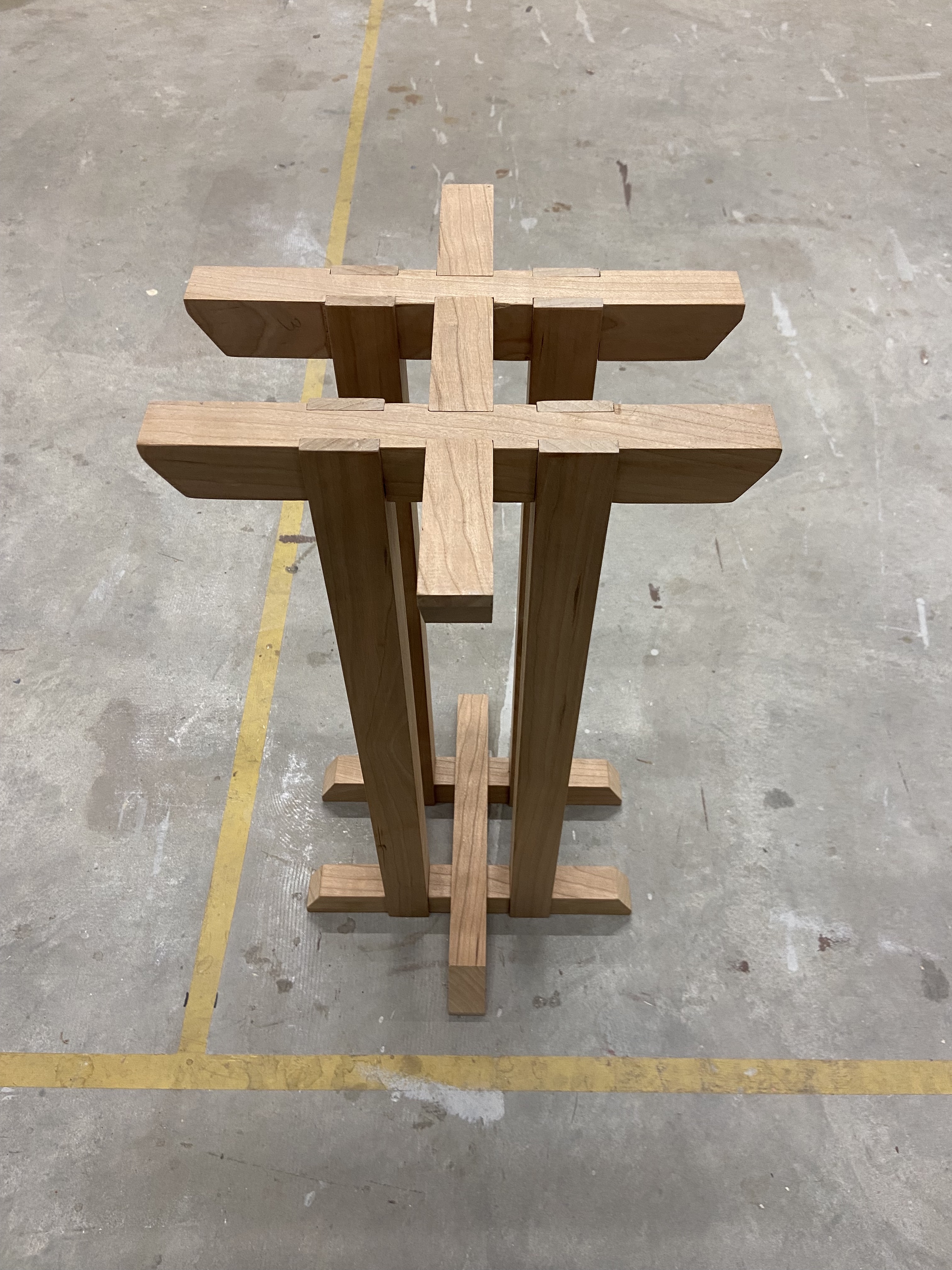
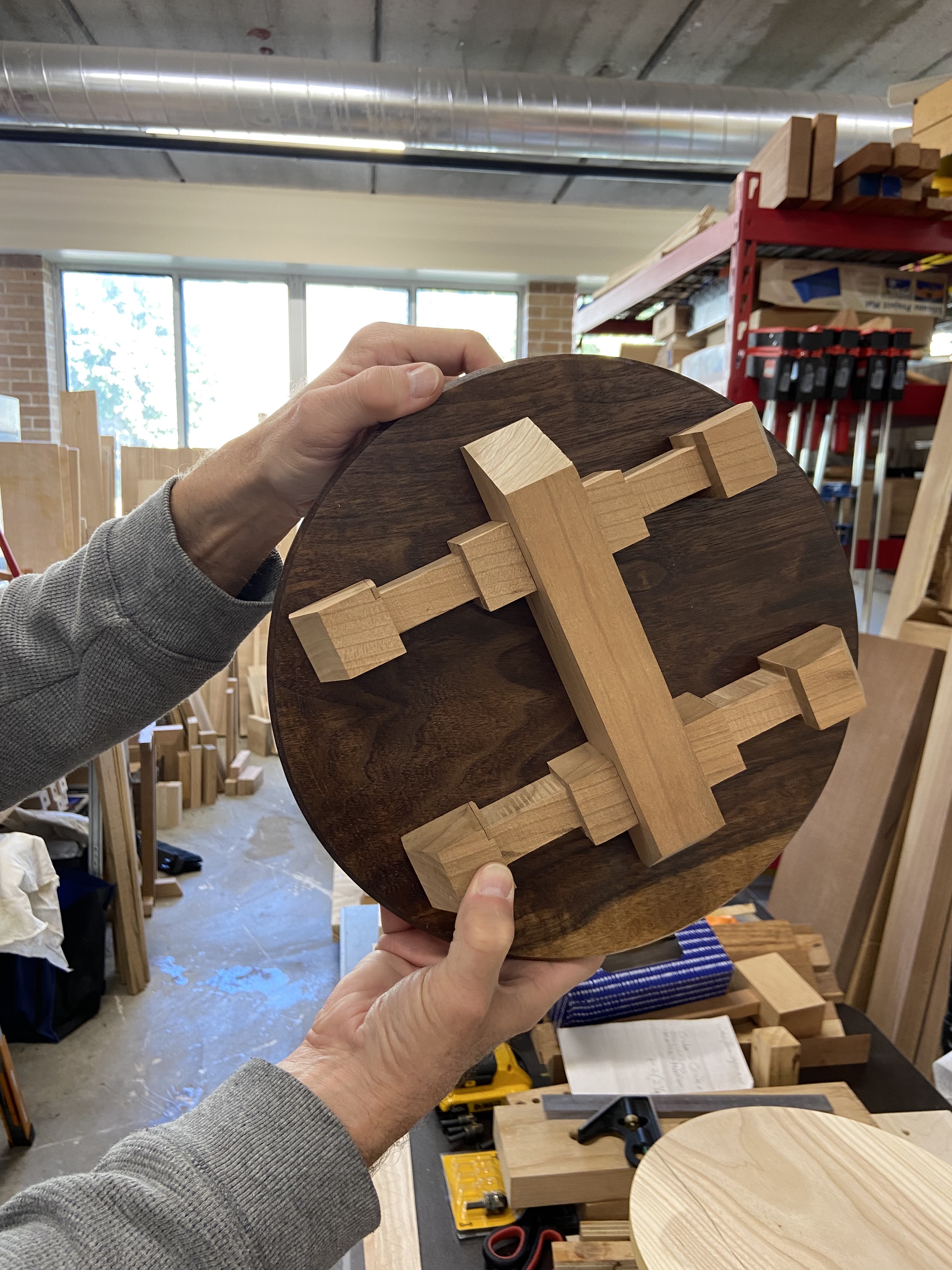
Peter’s Table
“I’m definitely not an artist,” claims Peter, which brings forth another discussion. Most people who join the makerspace wouldn’t think of themselves that way. They come spurred by a desire to work more physically, or by memories of having a grandparent with hand-building skills, recalling what it was like to watch them,or even work alongside them. At the Makerspace people are able to connect through a spirit of curiosity, with no monetary or external goals in mind. You’ll often encounter people going about their projects while kindly sharing insights and stories with other makers in the process. Spaces like these provide something so important yet often overlooked; the conditions for experimentation, collaboration and discovery, where knowledge is freely distributed by people who are passionate about their interests, and where building a community is an underlying goal.
The community aspect of The Makerspace is really what ties it all together. As members for the last 3 years, we often see new facilities spring up all of a sudden, and preexisting facilities consistently fortified and improved. Each one is its own ecosystem, maintained by its core makers, but made possible by the ecosystem of the makerspace at large. With a cooperative model, the reasonable $40 monthly membership goes towards rent, and utilities, with remaining funds spent based on suggestions of the members. Beyond that, every machine and resource at The Makerspace is either donated by a member or outside party. The necessary training of new members is also handled by existing members, who volunteer their time and expertise to those wanting to work in a new area. From there, each member sets their own goals and learns by experimentation, turning to those core makers in each area for help and guidance along the way.
What The Milwaukee Makerspace provides, most of all, is the independence to make whatever it is you want to make, or at the very least, to try. In a culture increasingly driven by digital experiences and outcome-driven productivity, makerspaces like this one provide an opportunity to engage with the physical world alongside others. To follow your curiosity, experiment freely, and discover what making can be.
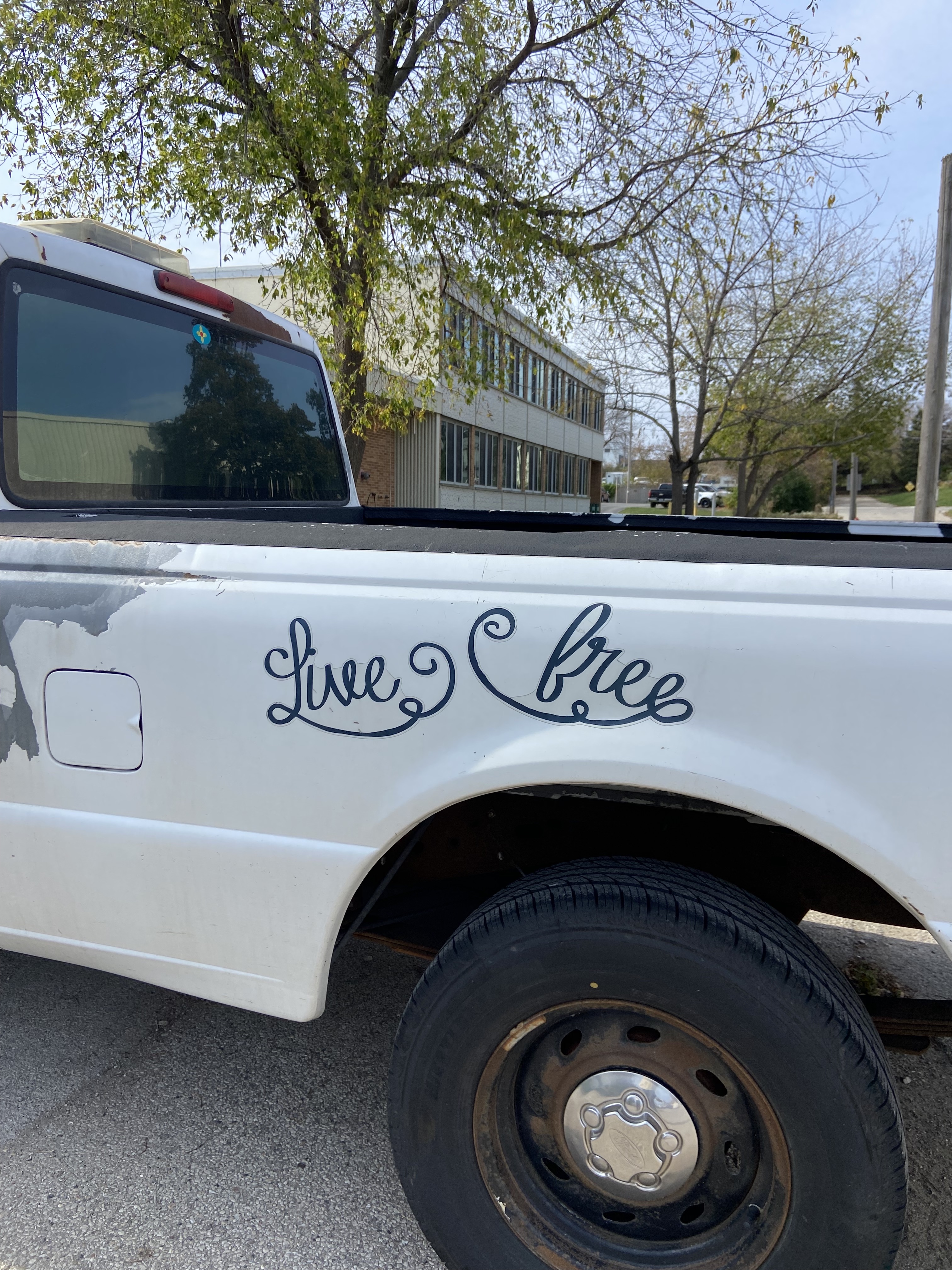
Truck in the Milwaukee Makerspace parking lot
Learn more at milwaukeemakerspace.org.