




An interview with Anthony Morin of Omilian & Morin Architecture & Design, LLC
November 13, 2026
Tigris
Omilian & Morin is a Detroit-based architecture and design firm co-founded in 2019 by Ronald S. Omilian and Anthony J. O. Morin. Together, they collaborate with their clients to accomplish a shared vision while also striving to understand and respect the history of the space and context they are working within. Since opening, the firm has made meaningful contributions to conversations surrounding contemporary architecture through their innovative approach to the creation of new public spaces. Here, we present a conversation with Anthony Morin, whose design process begins with a simple conceptual sketch and extends all the way to the fabrication and installation of custom furnishings and details.
Tigris
runner: What is your biggest inspiration or influence when practicing architecture?
Anthony Morin: Something that drew me into architecture as a practice is when I realized just how much our surrounding environment influences our mental and emotional state. The idea that you can make someone feel certain ways just by introducing certain forms, colors, lighting, textures, etc, really speaks to the deep psycho-emotional power of space.
runner: I know you are an architect, but have you studied psychology as well?
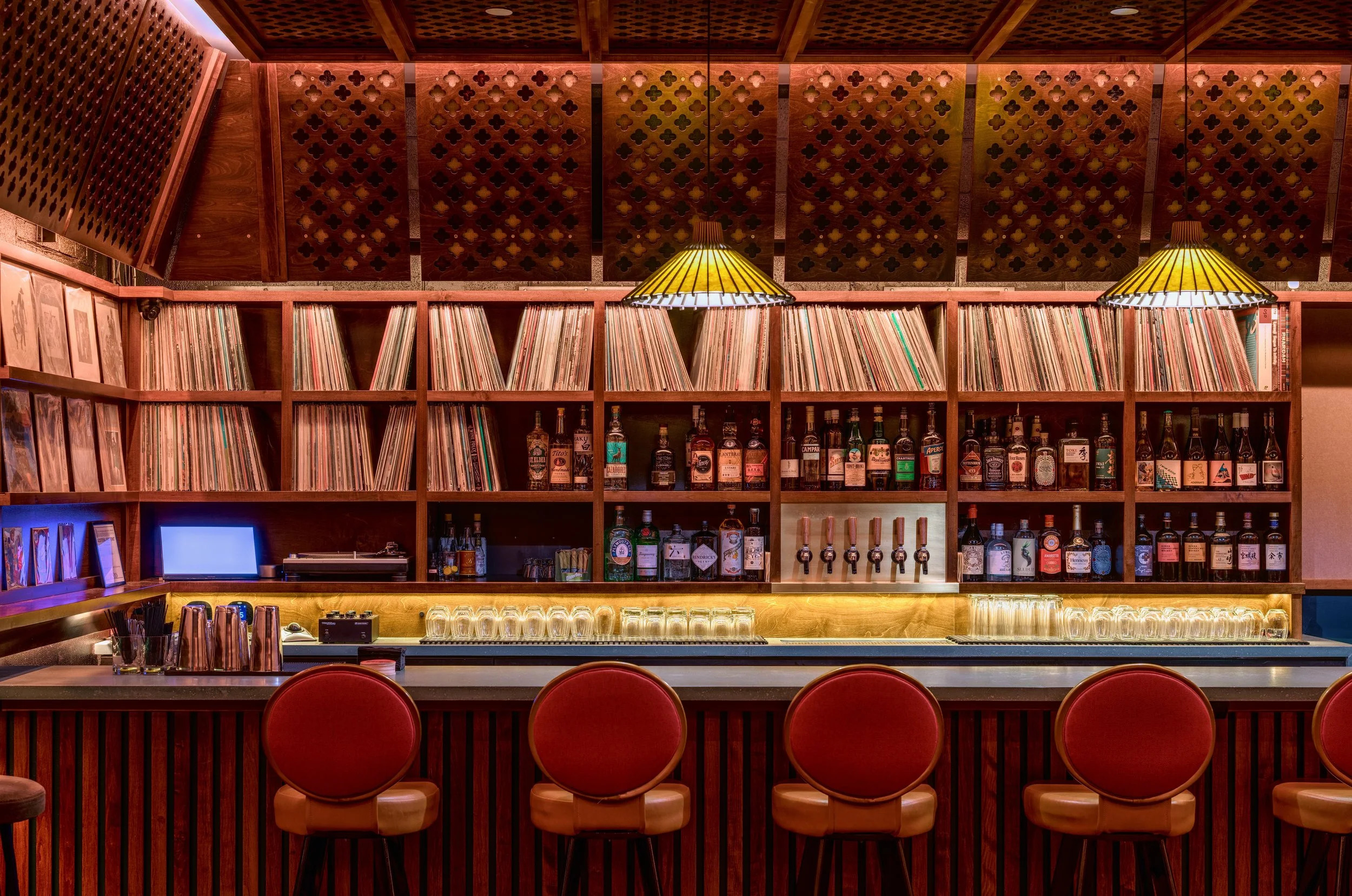
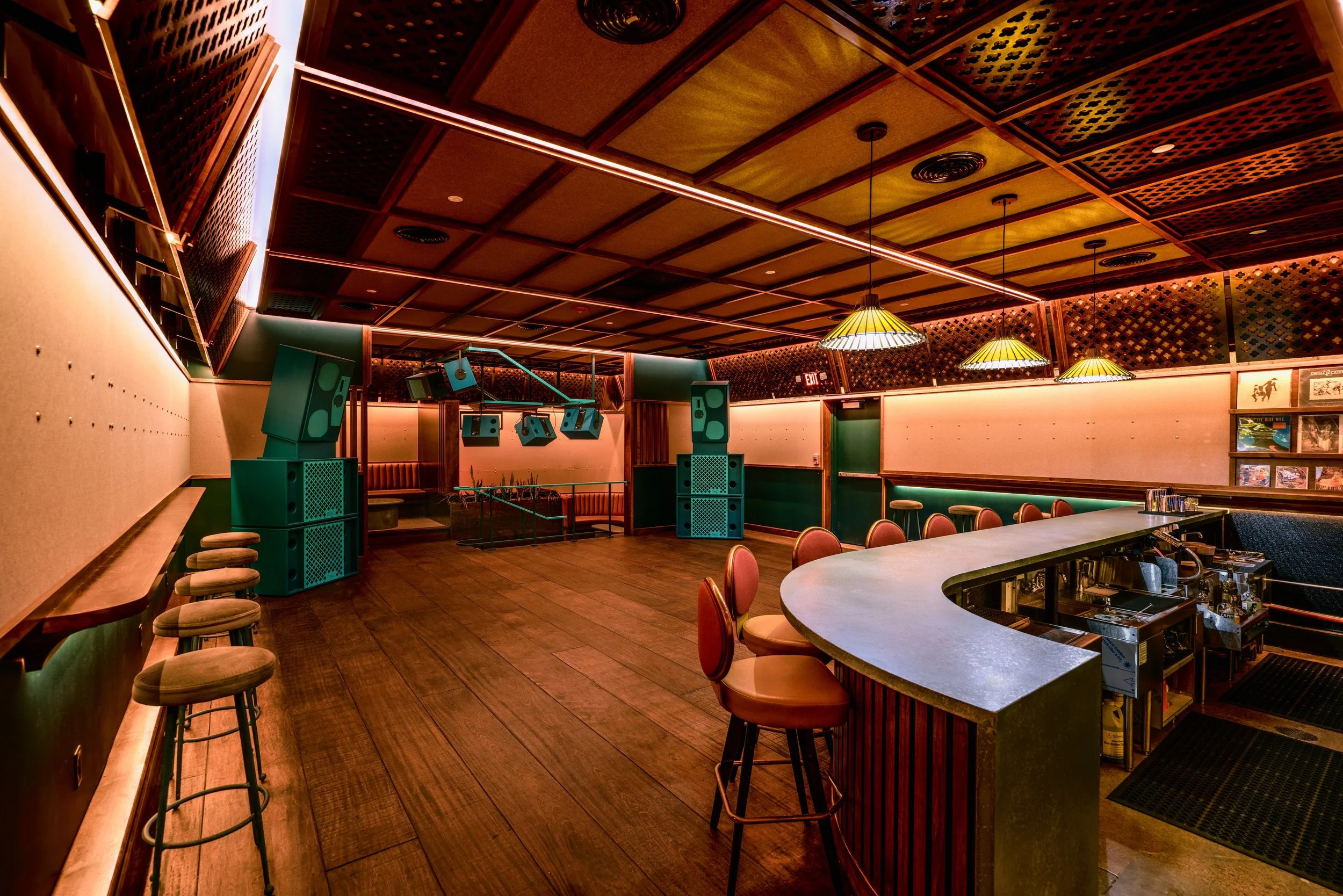
Anthony: Not specifically. Architecture has so much to do with that though. I think we may be at the end of an era where detail and decoration were heavily devalued. Sterilizing words like “clean space” or “open floorplan” suggested an absence of human scale and of the complex specificities of human life. People now are responding, even demanding, honest and expressive detail again, both for reasons of aesthetics and because architectural detail communicates our cultural identities and histories to us, and those who will come after us. Tigris is an example of a project where detail plays a critical role in the success of the space and how it make people feel.
Tigris
runner: When do you think this era of architecture began, where the designers were generally more concerned with function than form?
Anthony: It’s funny, I was talking with my dad recently who had dinner with Frank Lloyd Wright a long time ago.
runner: Is your dad an architect, too?
Anthony: No, he’s a poet. But he’s 92, so he has met some crazy people over the many years he’s been around. Anyways, he said that Frank Lloyd Wright told him, “America has a lust for the ugly.”
runner: That’s so sad. But, he’s not wrong. But the widespread lack of refinement or care for detail influences our psyches. It impacts our sense of dignity, and makes us question whether we are even worthy of having beauty around us.
Anthony: Yeah. Totally... but I think it’s really up to the designer and the architect to do that. People don’t necessarily know what they need, or how to get it. For instance, there’s no reason why the dentist or the barber who is hiring the designer should need to articulate how to create a space that feels comfortable to be in. It’s our responsibility, as architects, to figure that stuff out for them.
runner: What you are saying is that you’re not just a designer, you’re a place maker. I’m sure that at the beginning of an architectural project you would contemplate how you want the space to feel based on the activities that will be happening there when you are done.
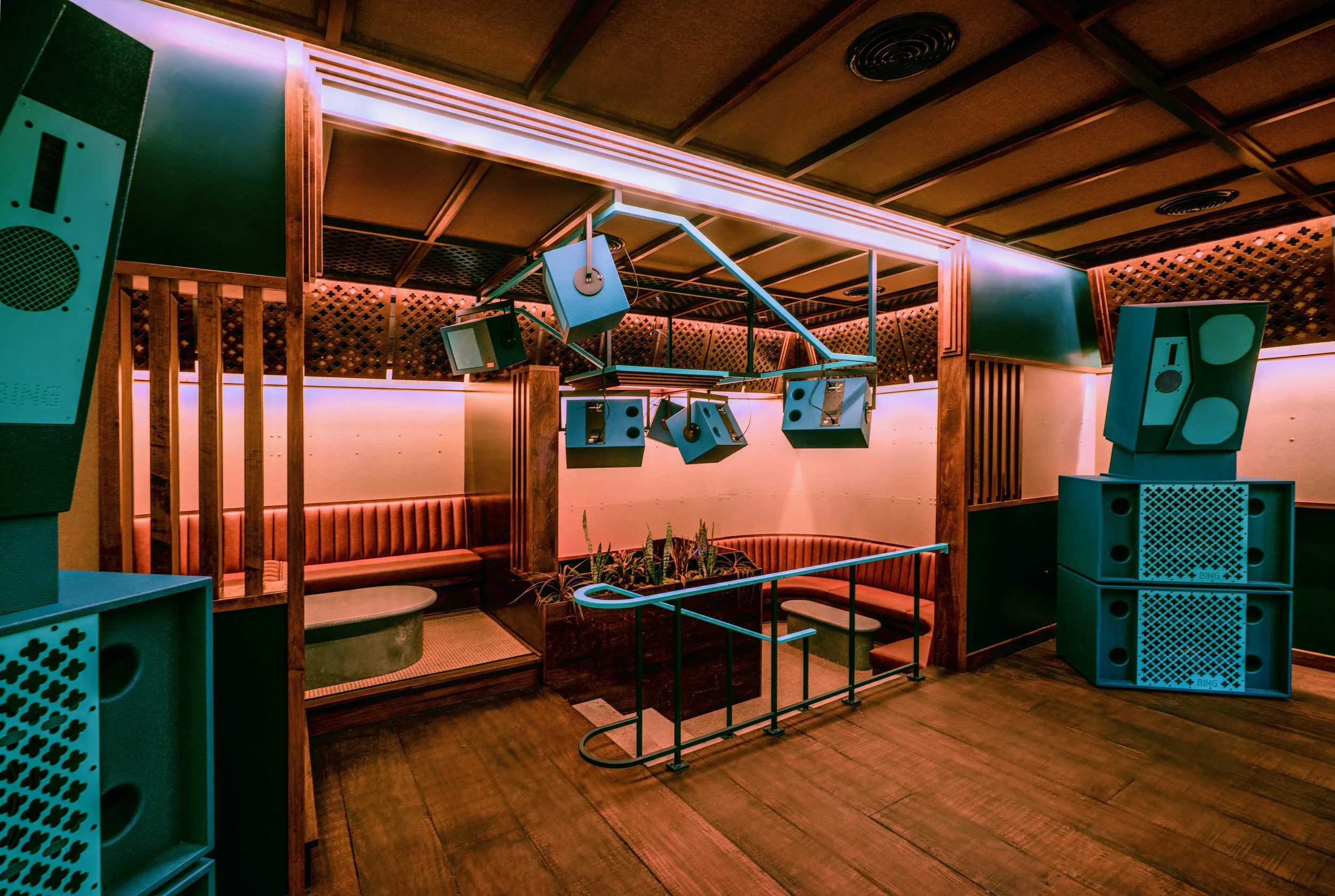
Anthony: Yes, and with Tigris, we wanted it to be a space that can be occupied in several different ways, because you have no idea where people’s heads are when they get there. One person might have just come off a stressful day at work and is going there to unwind. Someone else may be coming there on a date so they’re feeling a little nervous and excited. Somebody else comes there every single Friday to dance all night, you know? There’s a space where people can dance to the music, and there are spaces for people to hang out and listen. There are spaces for having conversation, and there’s space where you can kind of get away from everything too.
So, between the 100 people that are in that room, there are multiple perspectives and many different needs. The interactability of the space is super important to being able to engage with a broad range of ages, races, socioeconomic classes etc. All those people need to feel welcome.
runner: And great design isn’t something that people always actively notice. Their comfort often exists more so on a subconscious level.
Anthony: Exactly, they may think “I don’t know why, but when I come here I always wanna sit there.” It’s so great when someone can find a place that feels right for them without even needing to understand why.
And that’s the same thing with great sound, too. You might not be saying, “Wow, the high frequency is so clear,” or “The bass isn’t muddy at all like all those other places.” You don’t need to be able to articulate that. All you need to know is that on Sunday morning, for instance, when you got up, you felt so good because you danced all Saturday night at Tigris.
runner: Have you ever heard of neuroesthetics? It’s an interdisciplinary field of neuroscience that studies the biological and neural underpinnings of aesthetic experiences. For instance, they study how the brain and body perceive, process, and respond to art, beauty, design, music, and nature. It started in 1999, and since then scientists around the world have been highlighting, through actual data, the impacts that aesthetics have on mental health.
Anthony: I haven’t heard that term specifically, but I do have a lot of fun working at the intersection of architecture, design, and psychology. I feel like this “function over form” era of architecture that we have been living through is not only careless about the mental wellbeing of the people interacting with their spaces, but it also breaks from the history of architecture, which for so long has been a means to uphold cultural legacy. In the classical period, for instance, people understood that the structures they built were gonna outlive many, many, many generations. So if you wanna tell a story, not to your children or your grandchildren, but to your great-great-great-great-great-grandchildren, you carve it into the frieze of a building.
La Ventana
runner: But, Modernism in many ways, kind of revolted against that cultural detail in favor of “purity”.
Anthony: Yeah, their mission was to strip away the untidy details of human existence in order to engage with these “pure” concepts, forms, and spaces. That kind of pedagogy has been around for a long time now, and any schools that continued to teach classical architecture were pretty much laughed at, you know. But, more and more, the simplicity, and “purity” of Modernist architecture started to become ripped off by capitalists who just lazily and cheaply slapped this modern “simplicity” onto garbage. I think, maybe, because of this, that we’re witnessing a newfound appreciation for ornament, and revelations that let us know we don’t have to sacrifice ornament, detail, and cultural communication in order to make it good architecture.
For the first time, Modernism as a standard is being challenged in academia and in practice. It’s definitely refreshing, but it has also become apparent that we have actually forgotten how to speak through architecture. Communication through architecture is not something that is taught in school anymore, and so they’re sort of starting from scratch. It’s unfortunate, but hopefully a new language can form through these new directions in academia and practice.
La Ventana
runner: You seem to have an expansive knowledge of art as well. Did you study art too?
Anthony: Yeah, I studied art for one year at University of Michigan and then I moved to New York and went to Pratt. There, I studied art and architecture for five more years before I started my graduate program in architecture.
runner: How do you feel like your knowledge of art history has influenced your decisions with architecture and interior design? Tigris seems to be drawing from Art Deco, for instance, which is a style that seems to be influencing a number of new spaces in Detroit.
Anthony: Yes, art deco is really appealing to a lot of people. It also happens to be kind of the last style before Modernism.
My client for Tigris, his lineage traces back to Iraq and Baghdad specifically. He was really interested, not in the more widely known contemporary Muslim architectural details, but more so in those of the ancient Mesopotamia River Valley. I think the Art Deco that you’re seeing is actually rooted in those ancient motifs, which were often references as source material for the Deco era of the 1920s.
When I started working with him, he gave me source material to reference from that era…paintings, illustrations, mosaics, and other things that spoke to him in terms of the colors, textures, and forms that could represent the cultural history and legacy in the ways he was looking for. To really connect with people on a deeper level in any kind of work I do, I take time to dive into archival materials and really learn about the cultures or movements that I am tasked to draw from. I had fun doing that with the materials he provided.
La Ventana
runner: Something that I’m noticing lately is that a lot of people seem to be really interested in learning about history. They want to uncover lost stories and weave old aesthetic ideals into their work.
Anthony: Yeah, when we look back at previous generations, there was often this desire of the first generation immigrants for their kids to assimilate. Like “don’t worry about learning Italian. Go to school, learn how to be a good American kid instead.” And then, the generation after them was sort of curious, and now people are really eager to know about where they come from.
In this same kind of way, Modernist architecture produced this period of interruption where the generation of architects today are disconnected from the history of the field. Today, they are trying to reach back and somehow reconnect with their roots or forge new connections.
runner: Can you talk about some other projects you have done in addition to Tigris?
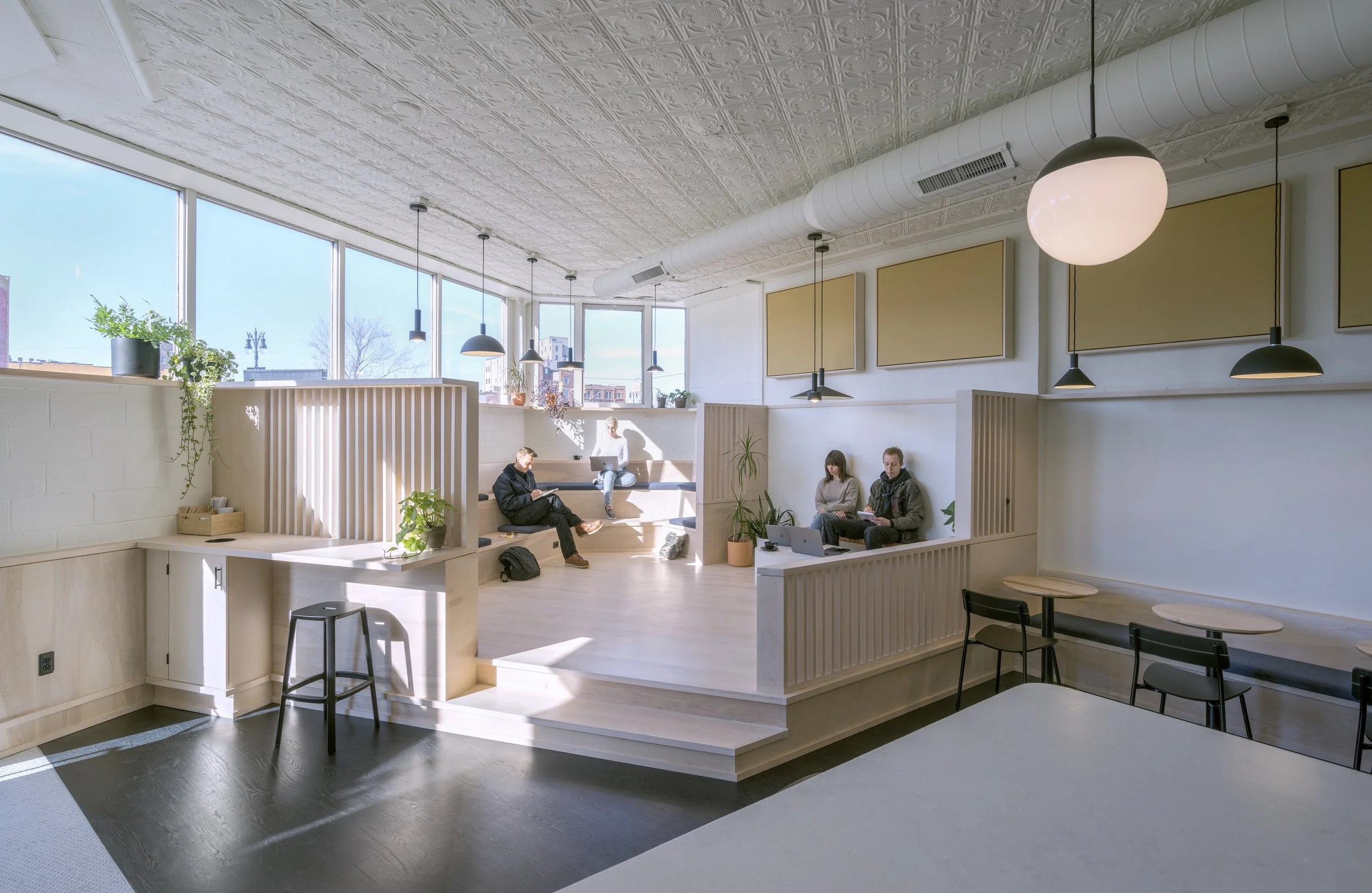
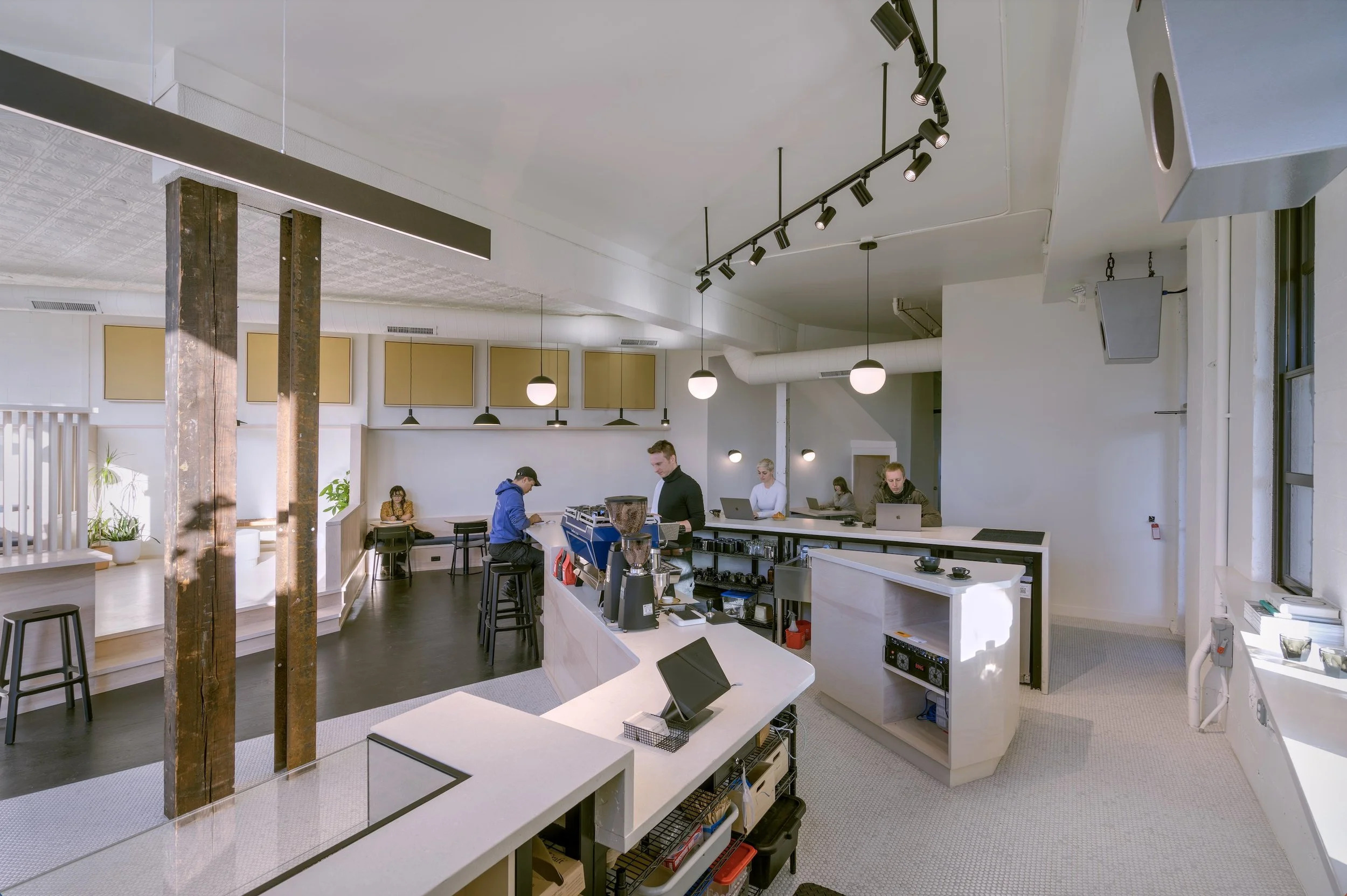
Anthony: Another project I did is a cafe on Gratiot called La Ventana, which opened in 2023. Like Tigris, La Ventana is a space that has a variety of different kinds of ways you can occupy it. But unlike Tigris, the cafe is a very light-filled, airy, plant-filled, bright space with lots of windows.
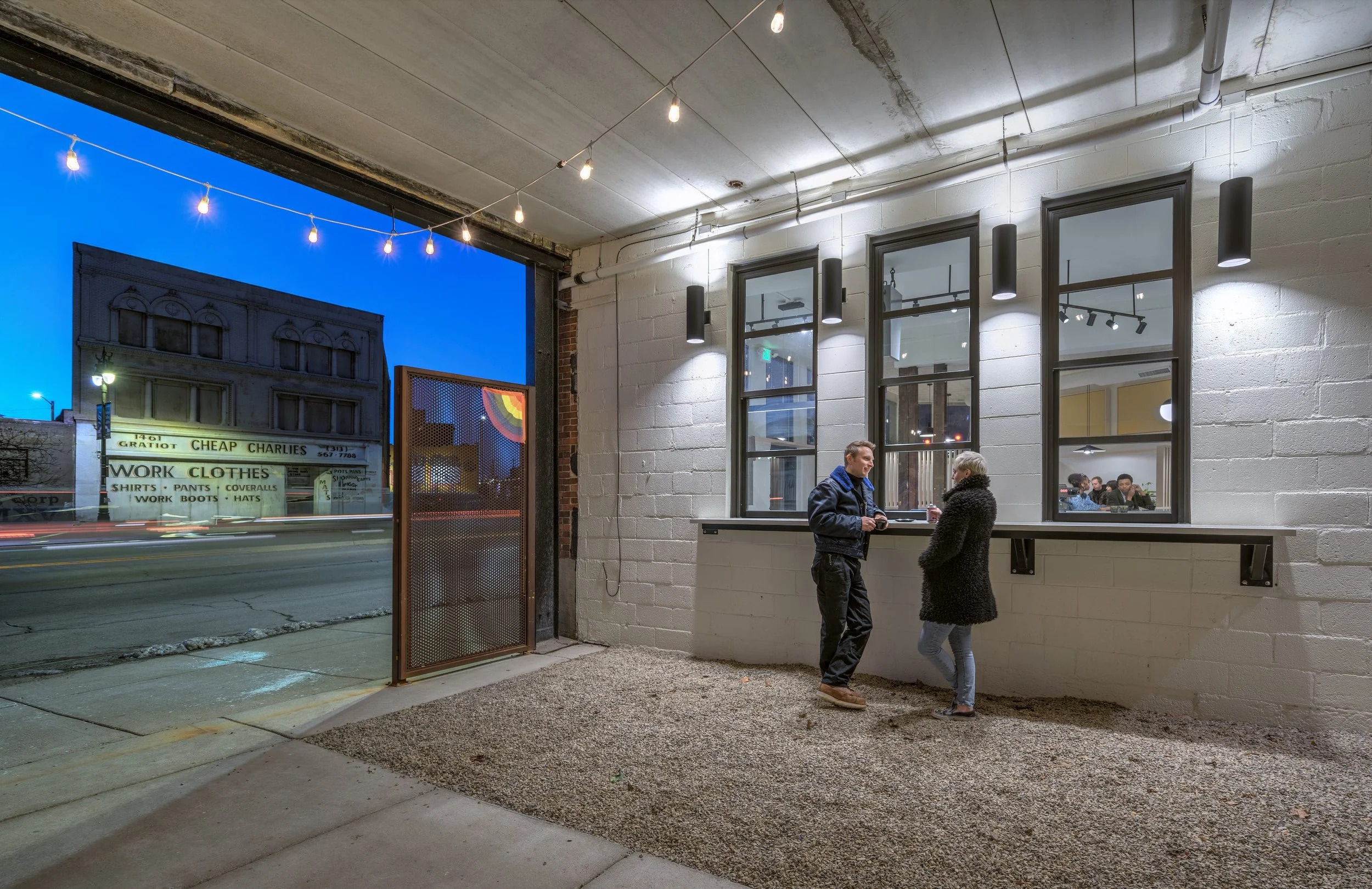
I had a chance to play a lot with form. The bar itself does all kinds of crazy movements, with rounded areas and angular areas. And then it travels through the wall and reappears on the outside of the building. La Ventana is a very small space, and working with a small space is often harder than a larger one just because you have to be so precise and intentional. For instance, there was a little closet under the stairs, and to use that space, we decided to take the walls and door off the closet, and expose the underside of the staircase, which ends up going into this little alcove behind a small booth area. It is unconventional, but ended up being one of the favorite spots for people to sit.
runner: Those kinds of things make a space feel so dreamlike and playful.
Anthony: Play is really important to the work that I am doing. When I go to Cranbrook, I like to look at the buildings on the campus and I often think about the relationship between the architect and the mason who built them. The degree of freedom and exploration that the architect must have given the master mason to be playful is apparent. It’s so nice to have little playful remarks around us that catch our eye that make us more consciously engaged with the world around us. You just don’t really see that kind of play and exploration in the making of buildings these days, or the kind of material mastery which allows it.
runner: And so, when you’re designing, you’re mainly focusing on the patrons, and how they’re going to feel when they are interacting with the buildings and spaces you create…
Anthony: Yes, I feel a great sense of responsibility to them, and my clients will be the most happy when their patrons like the space enough to keep coming back.
Additional projects by Omilian & Morin Architecture and Design, LLC include:
The Schvitz (expansion), UMA + Afrofuturism Museum, Starvue NYC, Burns Street Residence,
Brix Wine Bar, Cabbage Patch Fox Creek Pavilion, Gather Detroit
Learn more about OMAD at omilianmorin.com/.