




Ashley Cook
March 23, 2026
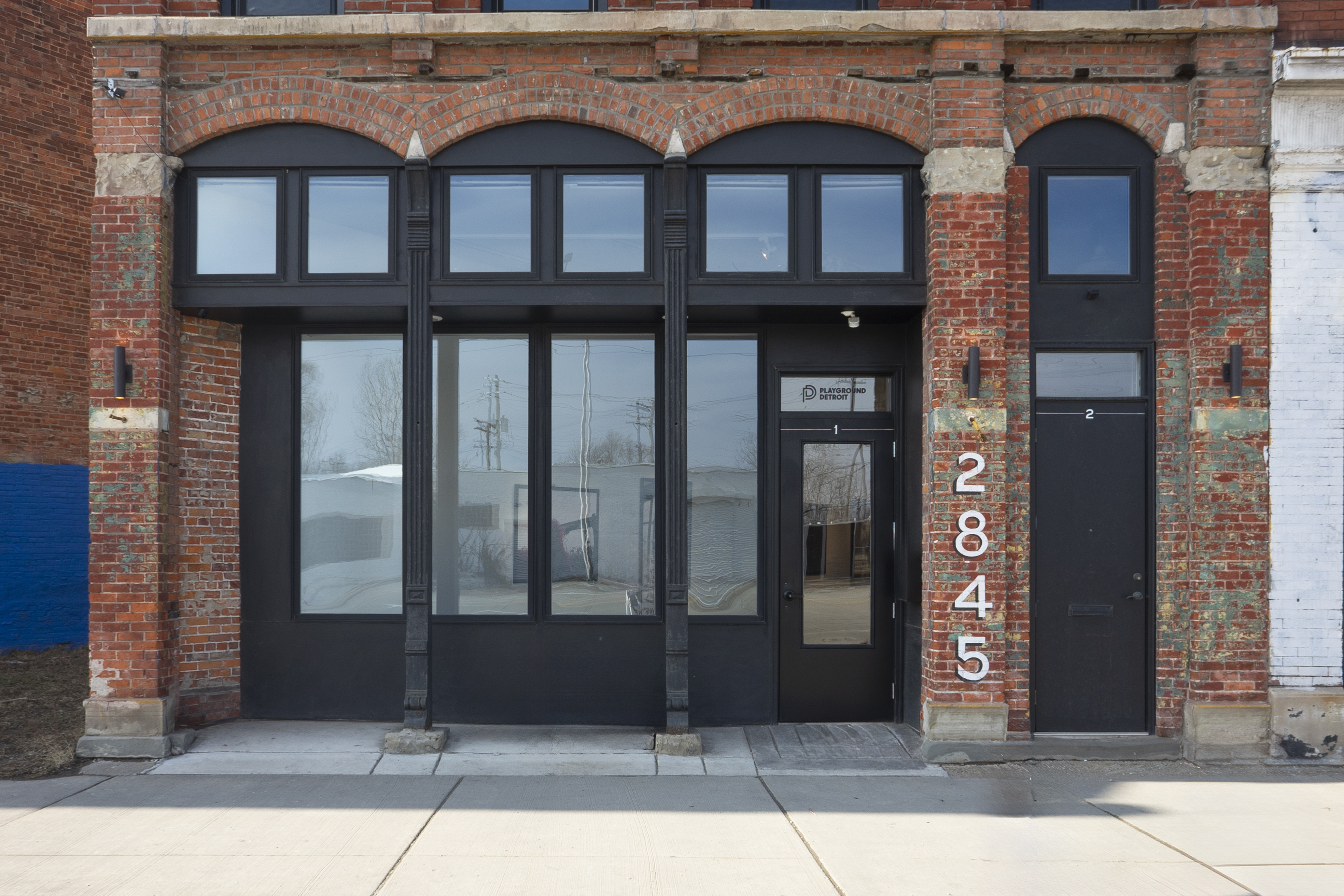
PLAYGROUND DETROIT at 2845 Gratiot Avenue, Detroit
The art market is a complex ecosystem of professionals who are working to establish aesthetic and financial value through the sale of original art objects and art concepts. As a global industry, annual transactions hover around $60billion, with appraisal and investment decisions that are based on a myriad of factors including the background of the artist, their prestige and institutional endorsement, fleeting tastes and trends, as well as the scarcity, condition and provenance of their work. This market’s lack of regulation and extreme opacity–relative to traditional financial markets where data is public and standardized–has garnered its reputation as a “black box” where a small circle of advisors, gallerists, and collectors hold disproportionate power over the trajectory of an artist’s career and how their work is valued long-term.
While there is an abundance of artists in the world, the barriers to entry into the market are high. Competition for gallery representation makes it difficult for emerging artists to establish relationships within the network. The acquisition and management sector also faces challenges. Collectors pay steep prices for insurance, storage, security and conservation, and for gallerists and auction houses, operating costs are on the rise. While financing exhibition spaces, participating in fairs, installing, handling, and shipping artworks are all inseparable from the profession, they are expensive endeavors and not always fruitful in a business as volatile as this one.
Paulina Petkoski, Owner and Director of PLAYGROUND DETROIT, shares her experience as a Detroit-based arts professional who has worked for more than a decade to showcase contemporary art, provide representation and influence the Detroit creative economy through her social enterprise.
Runner Magazine: Paulina, your career as an art curator and cultural producer dates back to 2012 when you and your co-founder launched PLAYGROUND DETROIT as a platform for Detroit artists. What inspired you to pursue a career in the art world? And how did this concept initially form?
PP: In 2012, I was living in Brooklyn as a recent graduate from the Fashion Institute of Technology, and working as a designer in the fashion industry. Art and music were an intrinsic part of my life- continuous inspiration for my design work, and the backdrop of my social life; I never intended to pursue a career in the art world, it was a lifestyle.
While living in NYC during the height of the widely-publicized historic bankruptcy, people I met constantly probed me about Detroit. All they knew was negative press and misinformation about what was happening. They had negative stigmas and misinformed impressions in their minds. As a native Detroiter, I grew up living between the suburbs and downtown, and was fiercely proud being from the city.
It was frustrating because I had been connected to and fortunate enough to be a part of a tight DIY-artist-led community and art scene that was thriving in Detroit, but it was mostly underground and barely ‘online.’ Also being a part of the art and fashion scene in NYC and Brooklyn, I witnessed how similar in culture the Lower East Side and Williamsburg, especially the undeveloped waterfront where DIY venues like 285 Kent and Secret Project Robot were to the Detroit art scene.
To demonstrate the connection between both cities, I was like, ‘I can’t tell you about Detroit, I need to actually show you what’s happening there.’ From that point, inspired by DIY art and music activations, a group of ex-pats and myself began to conceptualize what that meant. When trying to define what this thing was that we were building, the word ‘playground’ just stuck when thinking about what the city was for artists and creatives at the time. It seemed to capture what the scene was like in the early 2000s.
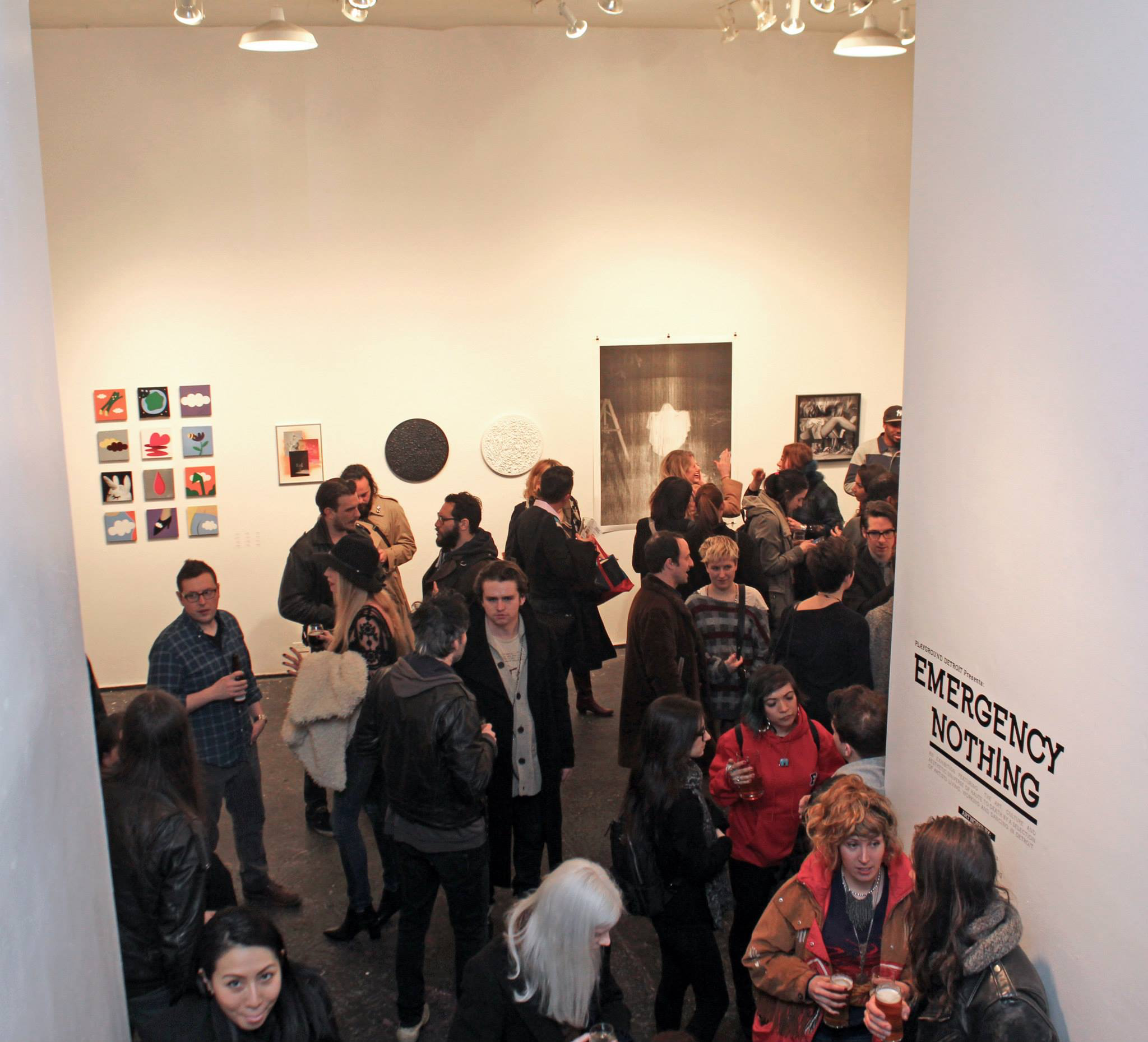
PLAYGROUND DETROIT Presents “Emergency Nothing,” group exhibition, CultureFix, Lower East Side, NYC, 2014
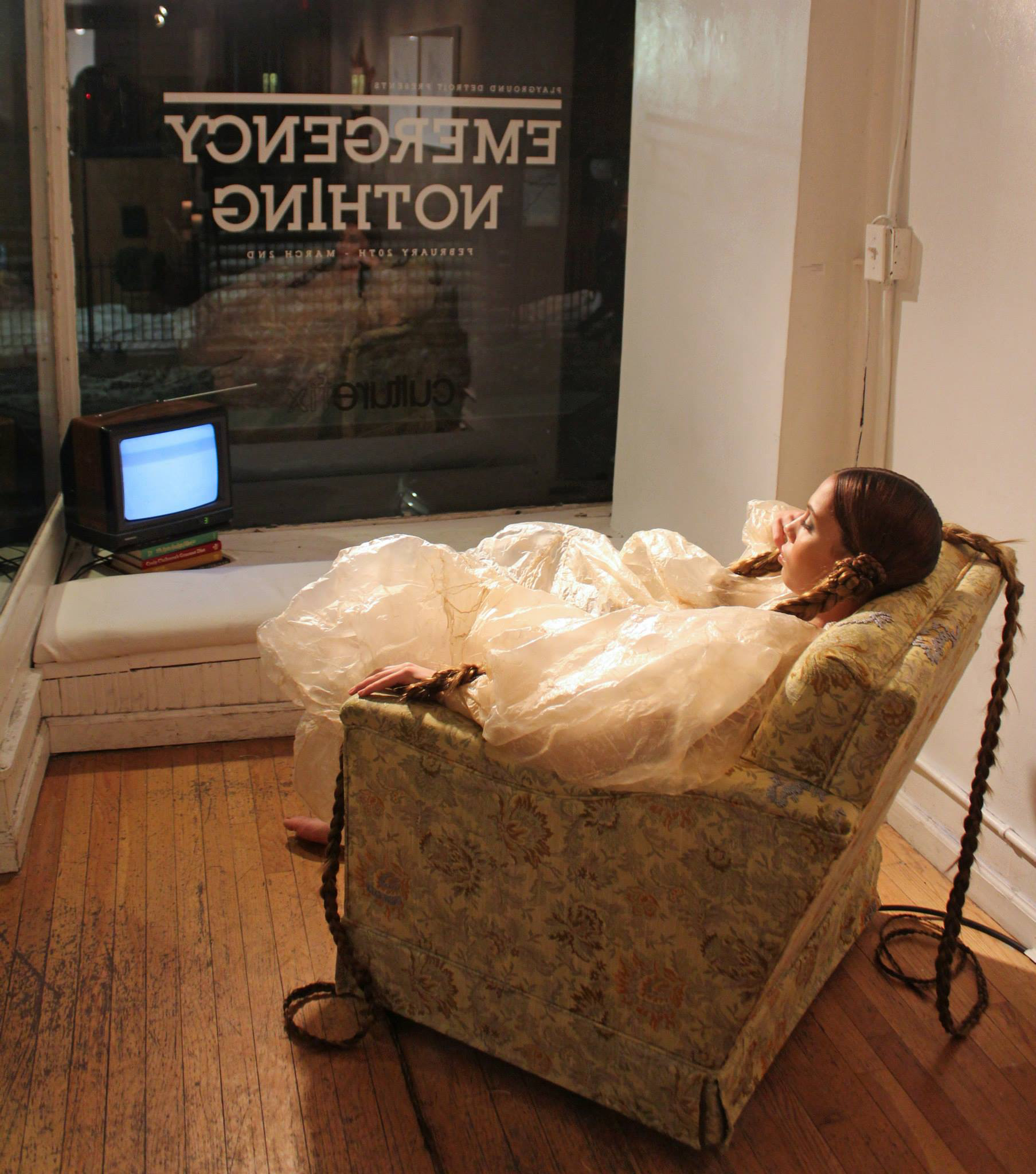
Installation view, “Trifle III,” Cristin Richard. CultureFix, Lower East Side, NYC, 2014
RM: From the beginning, your mission was to create connections between artists in New York City and Detroit. What were some of the ways you fostered relationships between these two cities?
PP: The types of young, creative people creating and partying in both cities at the time I found myself around were similar: likeminded talented artists living out crazy fantasies and pursuing their careers, unapologetically making culture happen.
The main difference was NYC provided a larger market and audience that was more sophisticated, and rapidly growing. In contrast, Detroit provided creatives with other key ingredients: time and space. Plus, there were many Detroiters living in New York City. A lot of college graduates and aspiring artists were leaving the city around the same time as I did in order to find themselves in places like Chicago, Los Angeles and Brooklyn.
The idea was to connect these creative communities and despite the geographic separation and distance (only a two-hour flight or manageable drive), there could be a lot more synergy between NYC and Detroit. One of the first efforts to do this was a rideshare group on Facebook. Friends of friends traveling from one city to the other could connect, hitch a ride, and make new friends (it still exists). I personally hosted touring bands from Detroit when they played shows in Brooklyn, sleeping on my apartment floor and helped promote their shows through our social media and blog to increase turnout.
Instead of fundraising to produce one large-scale Detroit-centered art and music showcase in Brooklyn (initial concept) we scaled back and hosted smaller events, bringing out Detroit artists and musicians including Tunde Olaniran’s first Brooklyn show at Union Pool, various documentary film screenings, and “Emerging Nothing,”our first group art exhibition at a gallery space in the LES produced with Haute to Death.
In 2013, we hired a driver from Craigslist and chartered Harvey the RV, a psychedelic RV bus and drove out overnight nearly 20 creative professionals from NYC for an immersive weekend-long experience to Detroit Design Festival. The tour explored Eastern Market, attended Detroit SOUP, and took a Mies van der Rohe walking tour led by at the time, a volunteer who is now the Co-Director of Design Core and Detroit Month of Design.
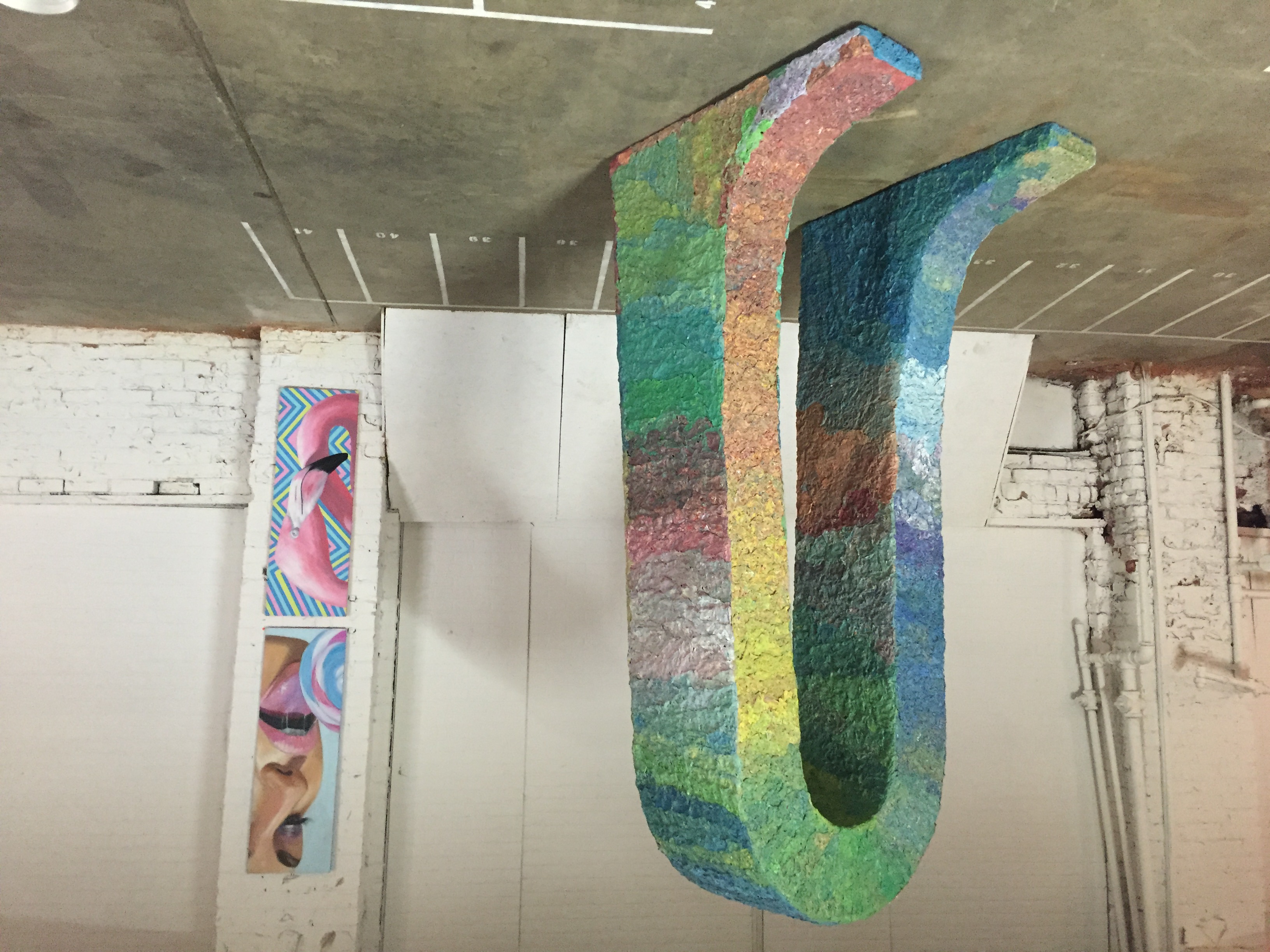
“Holiday Recess,” group exhibition, Pickle Factory, Islandview, 2015
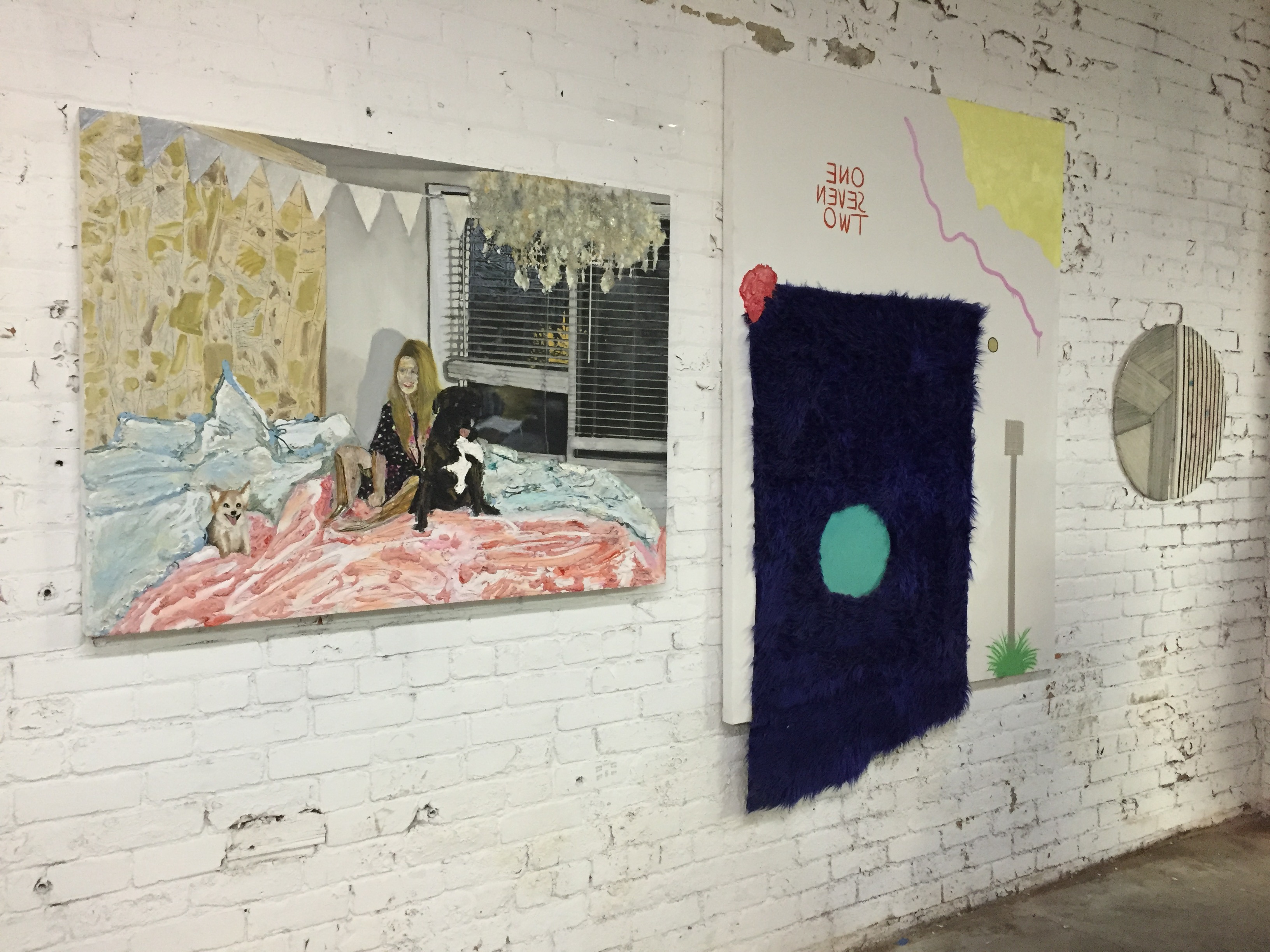
“Holiday Recess,” group exhibition, Pickle Factory, Islandview, 2015
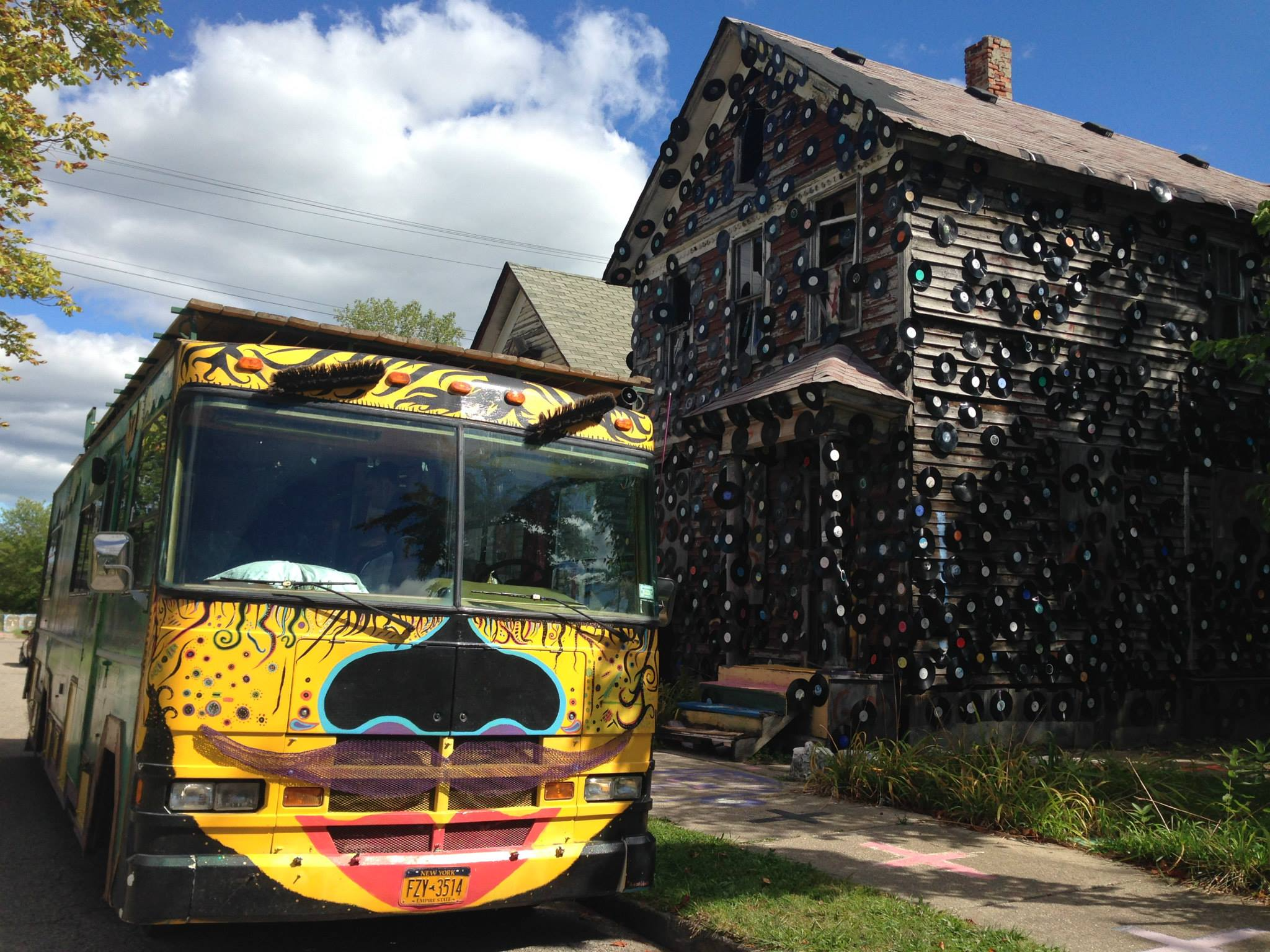
Harvey the RV left; “House of Soul,” Heidelberg Project, 2013
RM: After returning to Detroit in 2014, PLAYGROUND began to host pop-up exhibitions in various locations including retail, lofts and other off-the-path spaces until 2017, when you moved into 2845 Gratiot Avenue where you are currently located. How do you feel that this nomadic period impacted the trajectory of the work you do today?
PP: I love that the term ‘nomadic gallery’ is a trendy buzzword, like it’s a‘new concept or response to high rent prices and rising costs of operating a physical space. In 2015-2017, it was just what we had to do in order to show a proof of concept to produce exhibits and cultural activations. The city provided many ephemeral opportunities in an evolving landscape and new businesses like Kit & Ace, Will Leather Goods, Détroit is the New Black (RIP all) supported unique collaborations. Many properties were pre-development and friends working in real estate had access to these spaces. One friend, originally from NYC, purchased a 6,000 sq ft loft in Corktown where we first began hosting solo exhibitions in a vacant bedroom while managing it as an AirBnB with artwork displayed for visitors to view and purchase.
There were a lot of challenges to operating in temporary spaces, each with different variables like lighting - or lack of - and accessibility issues. To continue to host exhibitions, it became obvious that a space of our own would be the next step to uplift the artist community and evolve what had organically grown over the years.
The ‘Detroit Hustles Harder’ mentality initially kept things moving forward- and this spirit continues to drive doing this work forward- despite challenges over the years, including the pandemic, and more recent art market volatility. The early days instilled resilience and being able to constantly evolve to meet current circumstances or new opportunities.
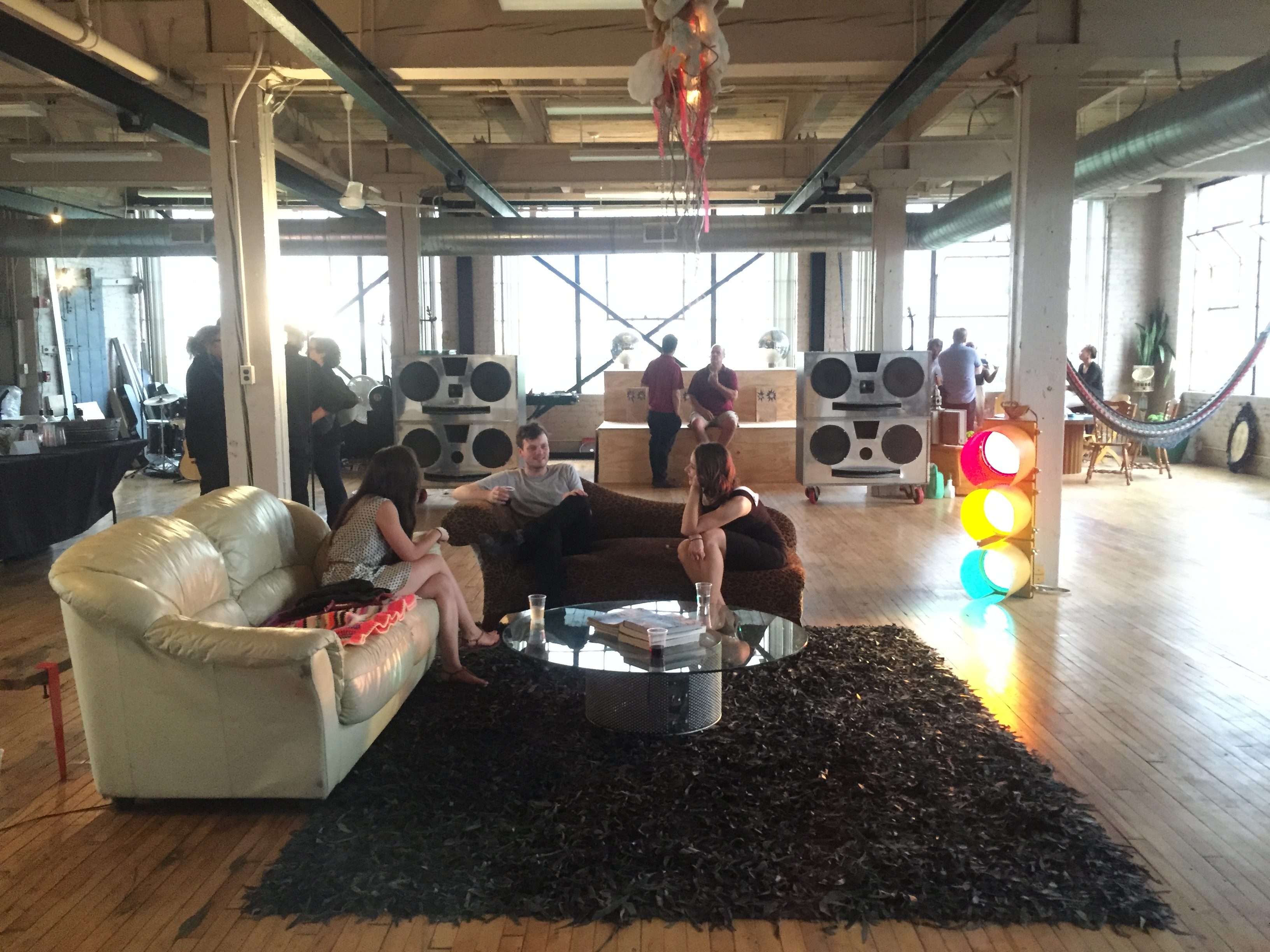
Interior of loft, Corktown, MI, 2014
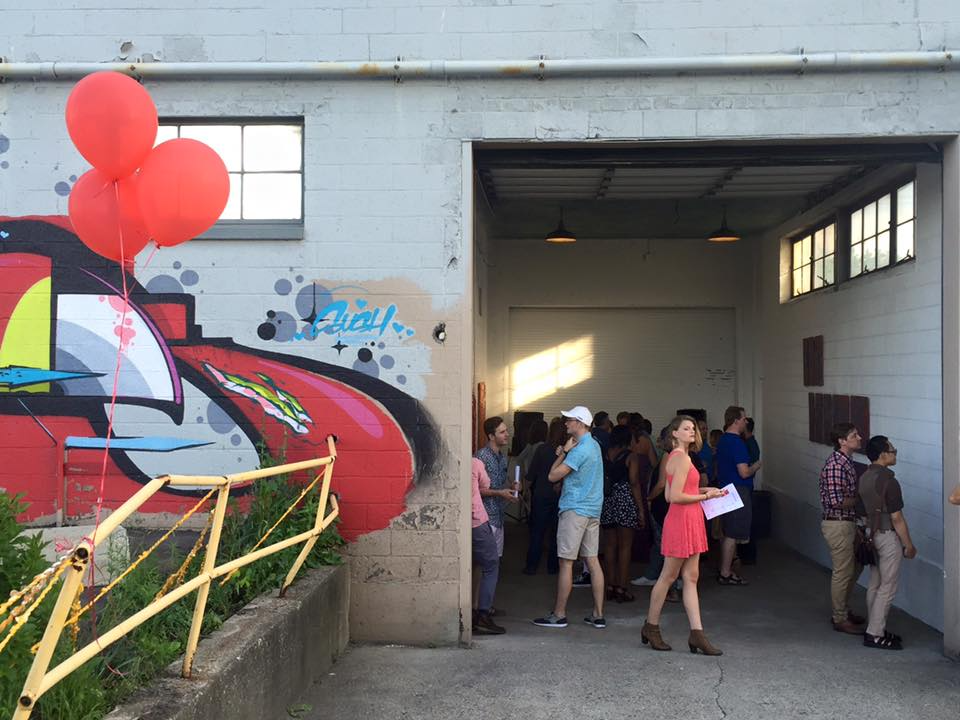
“Through Healing,” Romelle Solo Exhibition Opening Reception, Corktown, MI, 2016
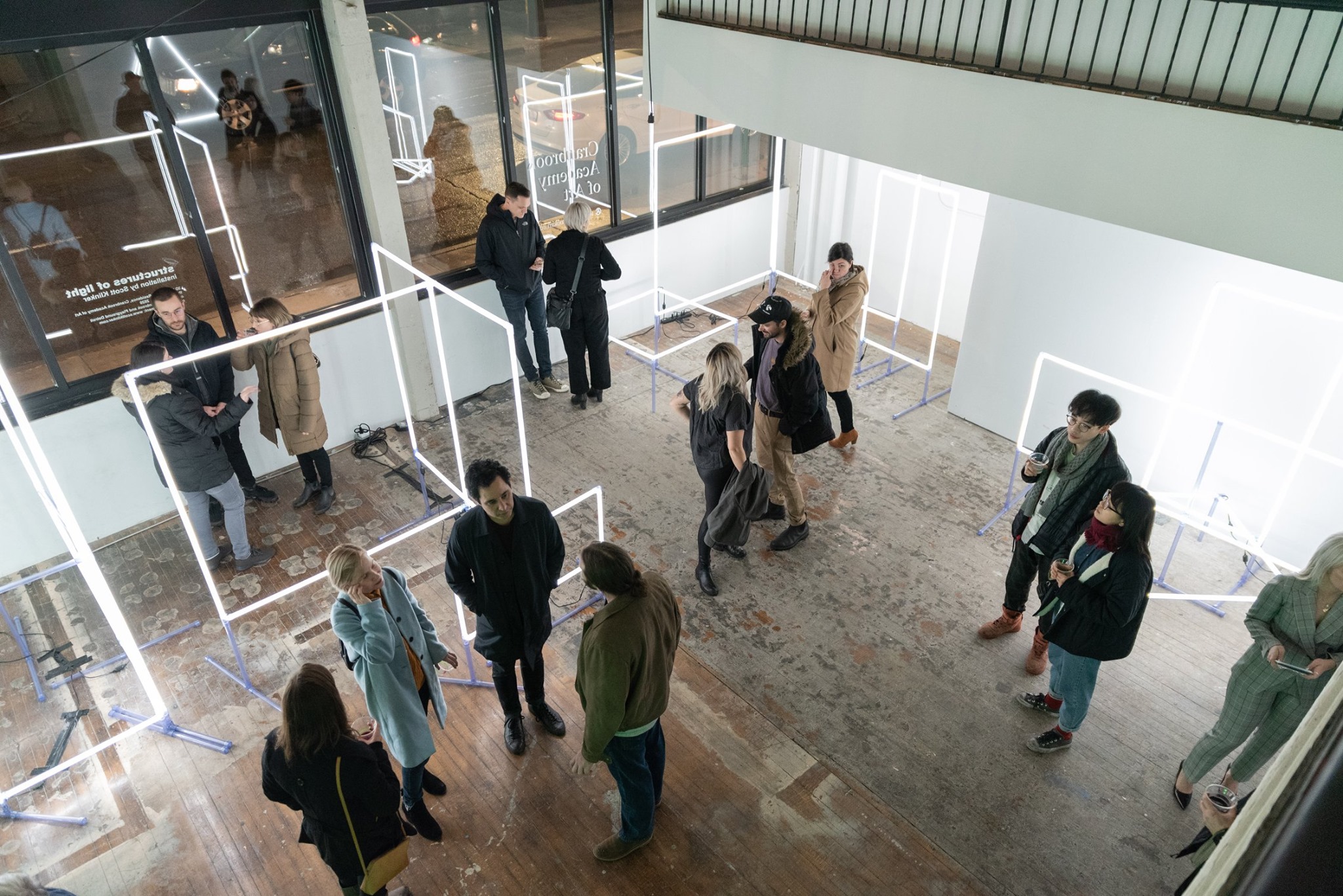
“Structures of Light,” Scott Klinker, Detroit, MI, 2020
RM: Reflecting back on Detroit in 2012, what was the market like for artists here?
PP: The idea of a ‘market’ for emerging artists in Detroit was pretty nonexistent. Instead it was more of a community of artists and musicians that collaboratively produced events and shows in ‘informal’ spaces like lofts or abandoned buildings. I wouldn’t say there was a focus on driving artwork sales, much less any press. It centered mostly around being bored and creating ‘things to do’ for socializing and artistic expression. Typically there were only a handful of art happenings any given weekend, and a small scene of artists would end up at the same places.
Without social media, many people wouldn’t even know these events were happening, spread throughout dark streets and neighborhoods. The citywide initiative to turn back on the street lights happened between 2014–2016. Vacant, abandoned buildings, lots and churches served as music venues, art shows, film sets, and skateboarder havens. Graffiti artists - local and international- like my all-time favorite Detroit artist, TRDL, tagged all over the city. It was a wild, special time, despite the obvious economic and social challenges that proliferated.
There were a handful of traditional galleries that hosted more traditional exhibitions, however, they primarily exhibited mid-career or established artists, especially those not from Detroit. I’m not sure how sales were. Most of the artist community that I was connected with did not feel that those galleries were for them, or even that they had a chance to exhibit their work. Other less established, artist-led galleries and collectives regularly closed after navigating operational highs and lows. One of the most exciting spaces that launched artists careers was Red Bull House of Art, an incubator residency and exhibition space in Eastern Market.
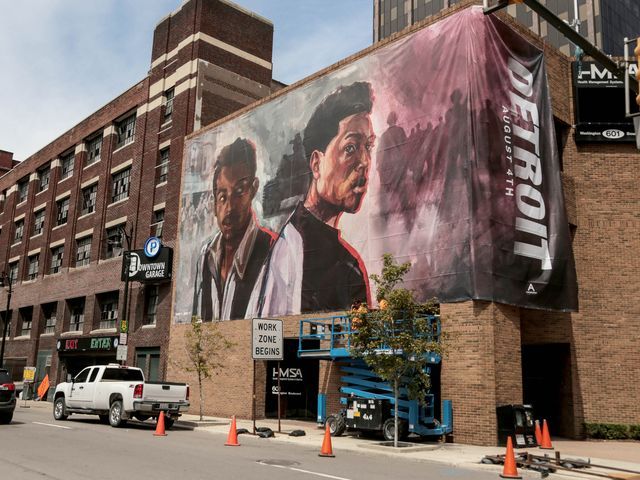
Sydney G. James, Outdoor Campaign for DETROIT Film, Annapurna Pictures, 2017
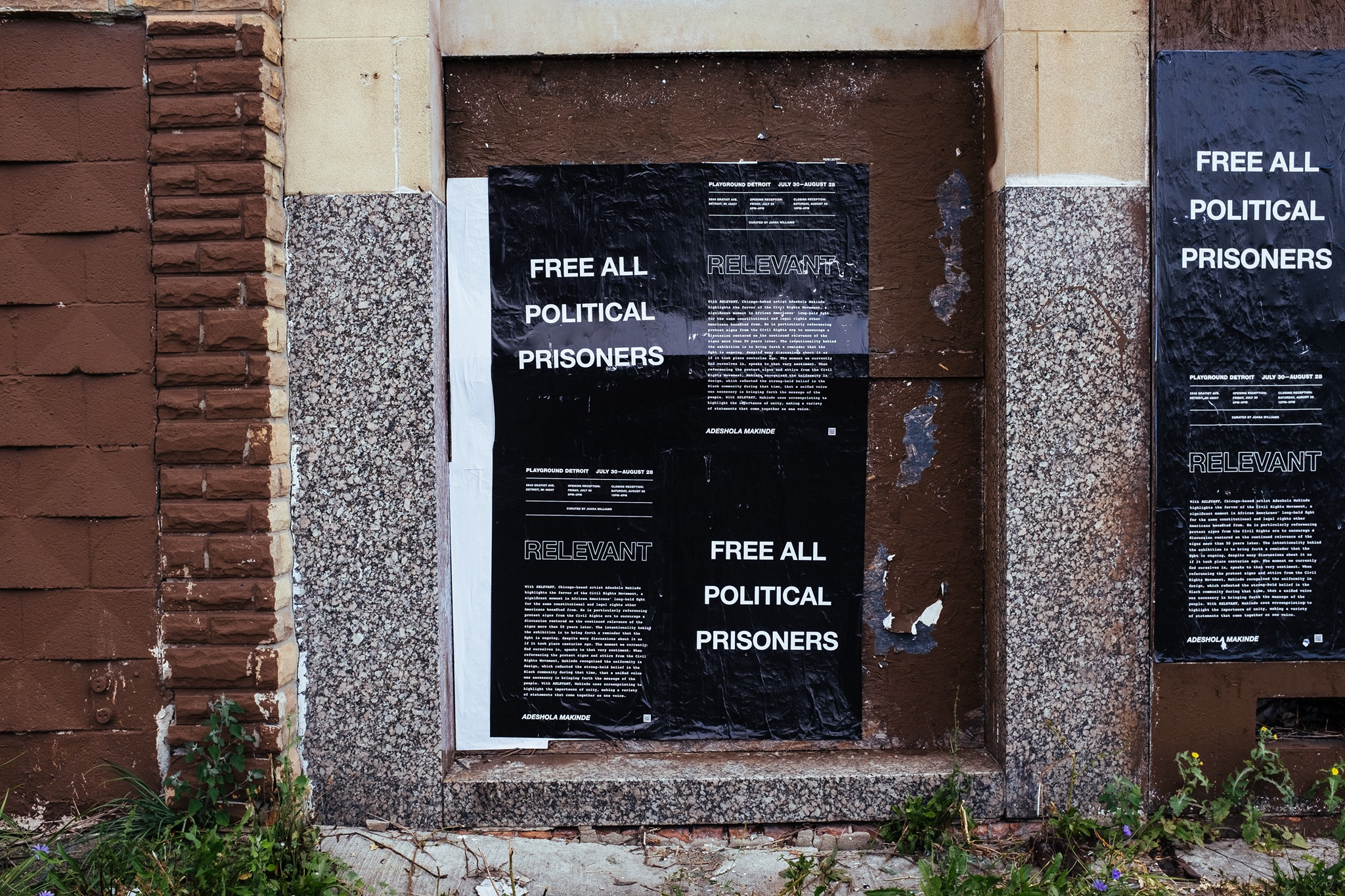
“RELEVANT,” wheatpaste campaign, Adeshola Makinde, 2021, Photo credit, Adeshola Makinde
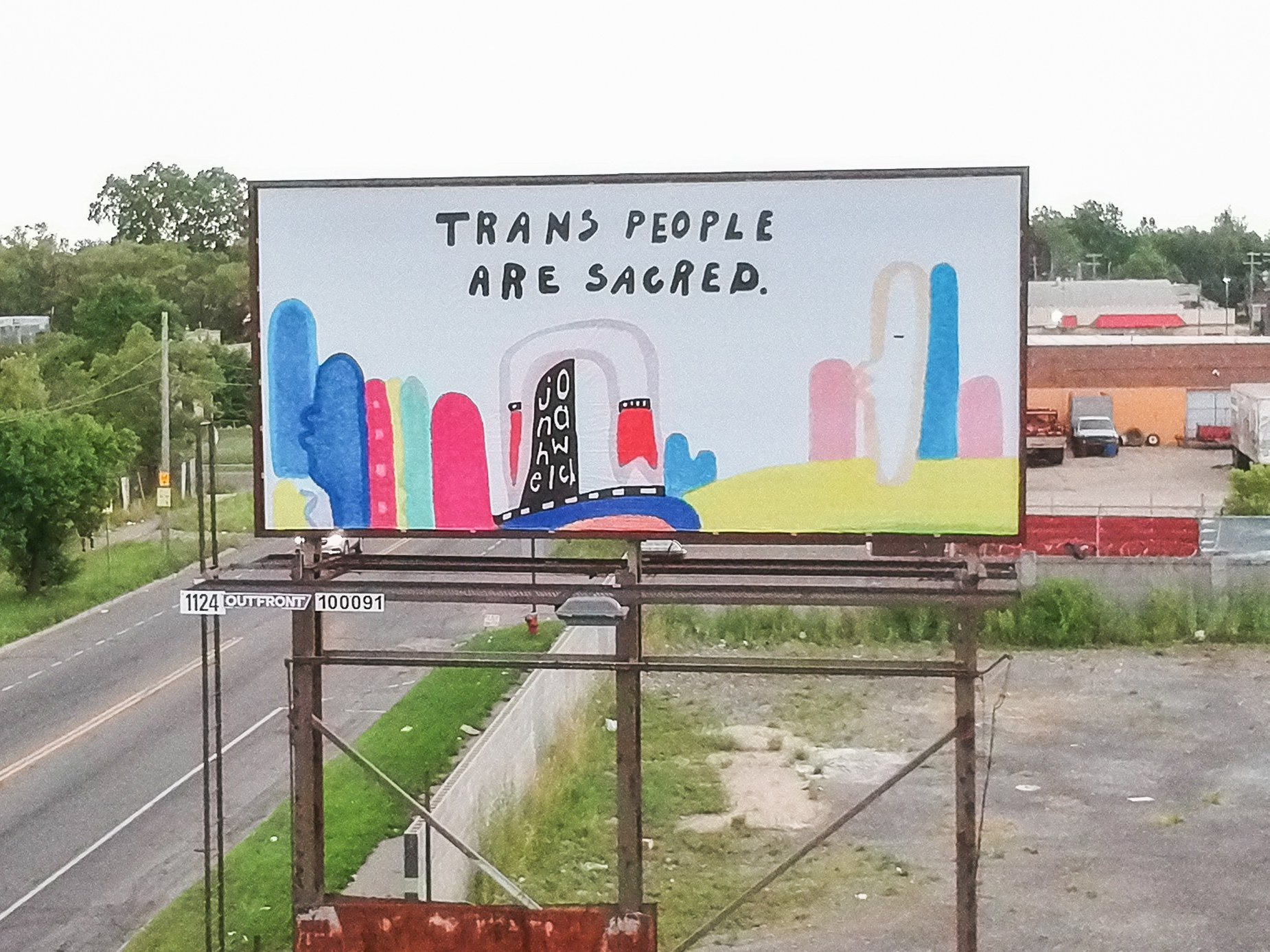
“Trans People are Sacred,” by Jonah Welch included in ‘Signs of The Time,’ curated by Ellen Rutt, SaveArtSpace X PLAYGROUND DETROIT, 2019
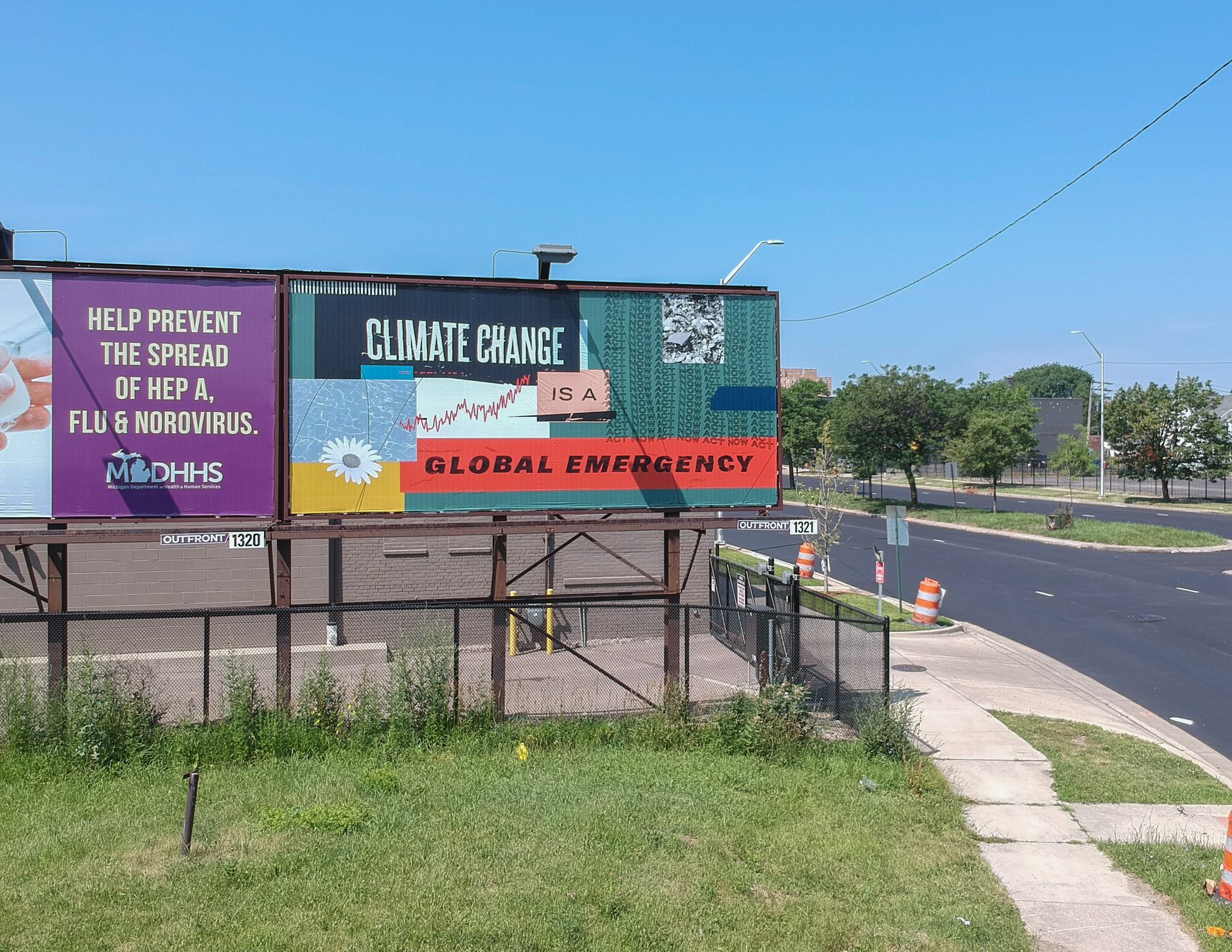
“Climate Change is a Global Emergency,” by Ellen Rutt included in ‘Signs of The Time,’ SaveArtSpace X PLAYGROUND DETROIT, 2019
RM: Fast forward to 2026, how is the market for Detroit-based artists different today than it was 14 years ago?
PP: The market for Detroit-based artists in 2026 has developed so much, it has come a long way. When I think about it, it is pretty incredible to see. Many artists and musicians I know, old peers and friends from back in the day from in the ‘scene,’ are quite established and their careers enable them to travel around the world because of what they’ve built. And now, as a gallery, we can reach the global art market through online platforms like Artsy and our own e-commerce and social media.
Artists that PLAYGROUND supported early on in their careers including Sheefy, Patrick Ethen, Ellen Rutt, Louise Jones (Ouizi), Danny Sobor, Gisela McDaniel, Bakpak Durden and Sydney G. James are established, full-time artists. It’s incredibly rewarding and inspiring to witness their continued successes. Many businesses and corporations- even the City of Detroit- now fund mural programs, and invest in public art installations in developments including the Joe Louis Greenway, Dequindre Cut and Eastern Market.
Compared to an art capital like New York City however, local investment in the arts and cultural economy, infrastructure and advocacy work is still needed to protect artists in Detroit. Without these ‘creative entrepreneurs,’ the city’s vibrancy and the cultural spotlight of it would not be what it is today. I do not want to see artists being displaced as I have witnessed through rapid development and gentrification in Brooklyn and NYC.
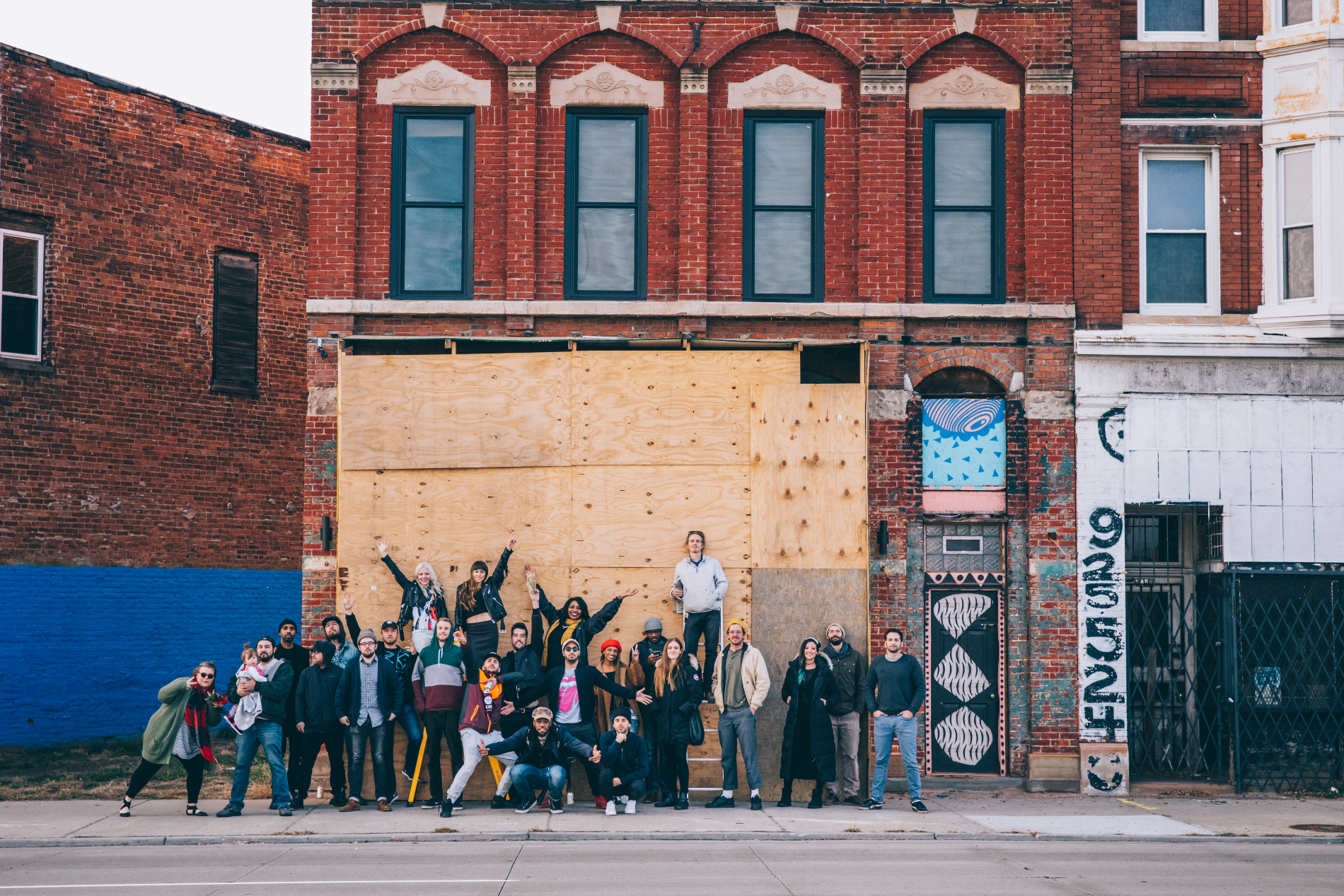
Kickstarter Campaign, Exterior of 2845 Gratiot Avenue, 2016, Image credit: Joe Gall.
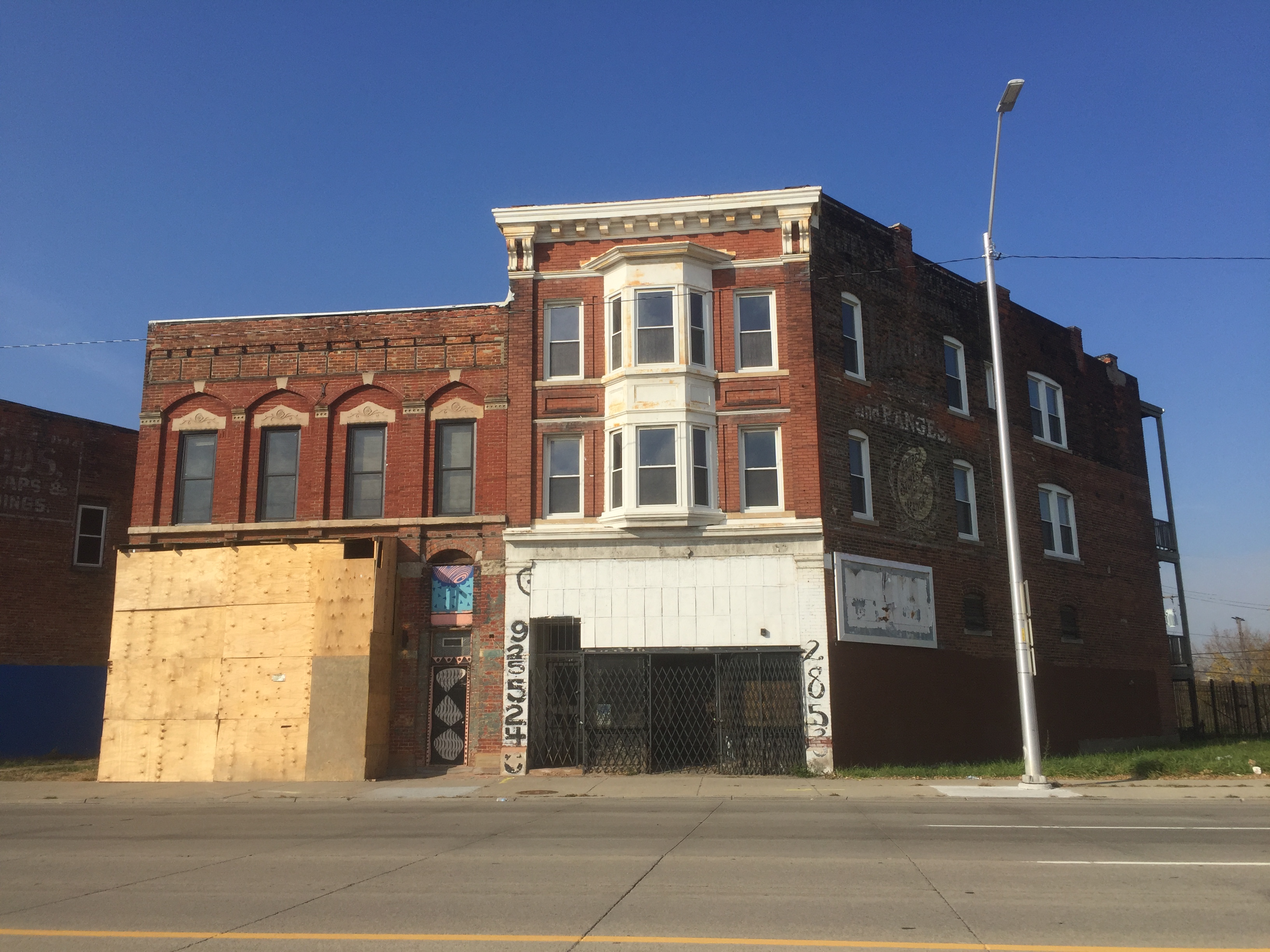
Exterior of 2845 Gratiot Avenue, 2016
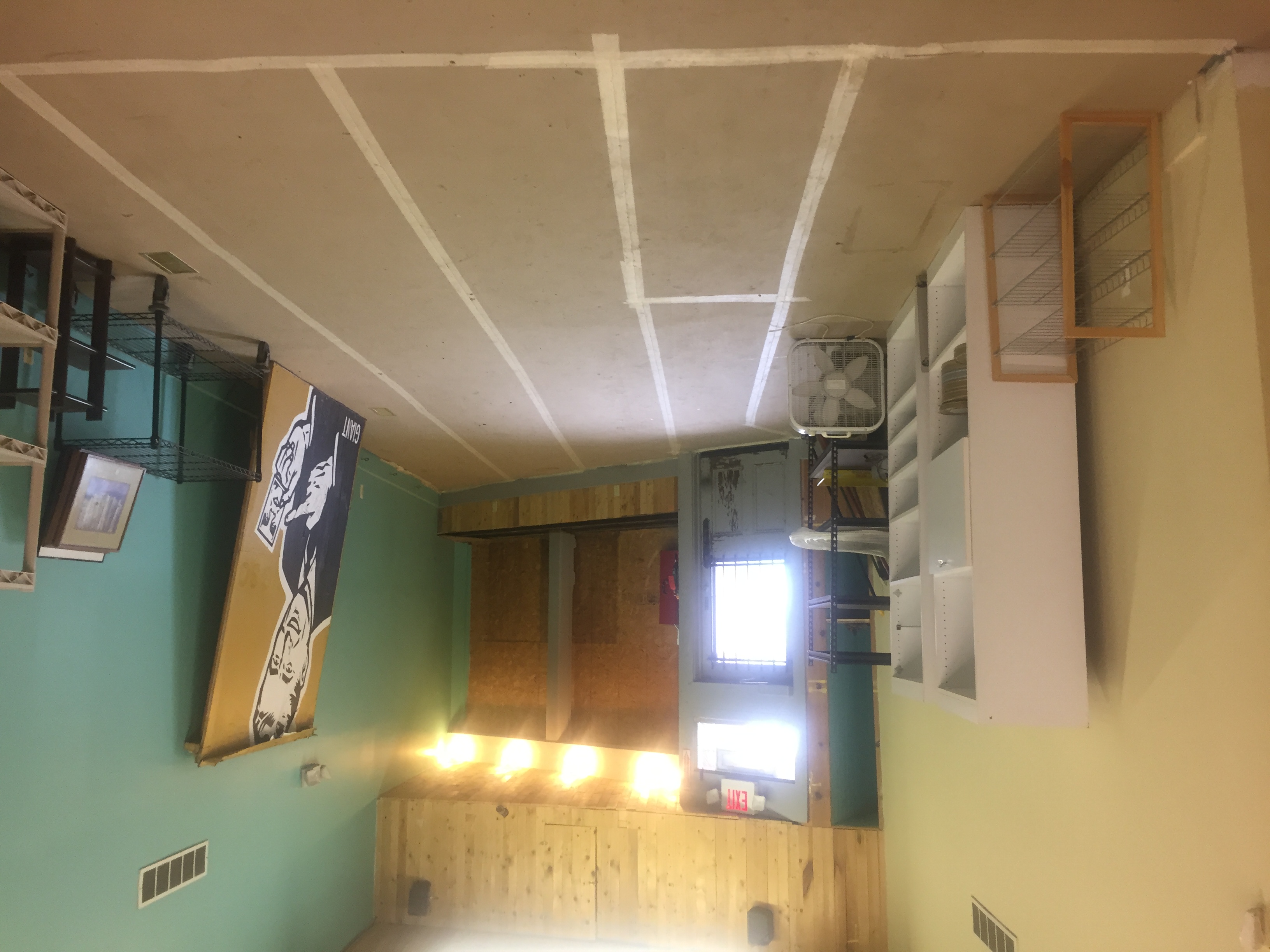
Interior of 2845 Gratiot Avenue, 2016
RM: Could you talk about your Emerging Artists Fellowship program?
PP: The Emerging Artist Fellowship provides financial support and professional mentorship for artists to develop their individual practices, to identify, elevate and promote Detroit-based artistic excellence. Artists will receive an exhibition and financial stipend to support them at a critical point in their career. Awardees that will be recognized are early-on in their careers, have ambitious goals and demonstrate artistic potential through creative risk-taking along with a clear vision of what they seek to produce and present, chosen based on artistic excellence and proposals through an open call selected by a professional arts jury. The goal of the Fellowship is to identify, celebrate and elevate emerging Detroit artistic excellence by providing much needed resources and support. It was launched in 2019 and is currently powered through foundation grants; we have granted $70,000 to over 20 artists.
RM: The art market on a global scale is a highly competitive business. You have worked in New York, a city that is considered an “art capital”, and you have worked in Detroit, which is definitely not considered an art capital. I am wondering if you could share insight on the life of an artist in NYC vs. Detroit. How does living inside, or outside, of an art capital affect an artist’s practice or career path?
PP: The energy and pace of NYC is inspiring. It’s fast-moving and there are major players in the ‘industry’ that can catapult an artist’s career. But it is so expensive to make a living to afford both an apartment and a studio space. If you have the financial and social means, the possibilities are endless. You never know which curator or editor will find your work or write an article. It tends to be too easy to get caught up in constant parties, social circles and nightlife circuits, resulting in less focus to actually create though.
Artists practicing outside of art capitals can have a deeper sense of connection to their peers and collaborators and are able explore their own desires freely. It’s not about which celebrity shows up at the opening, but more so it’s about true creative expression or the social impact in the community. PLAYGROUND seeks to provide artists that demonstrate both ‘grit’ and ‘talent’ with opportunities that they might not otherwise have because they seemingly exist outside the ‘art market.’
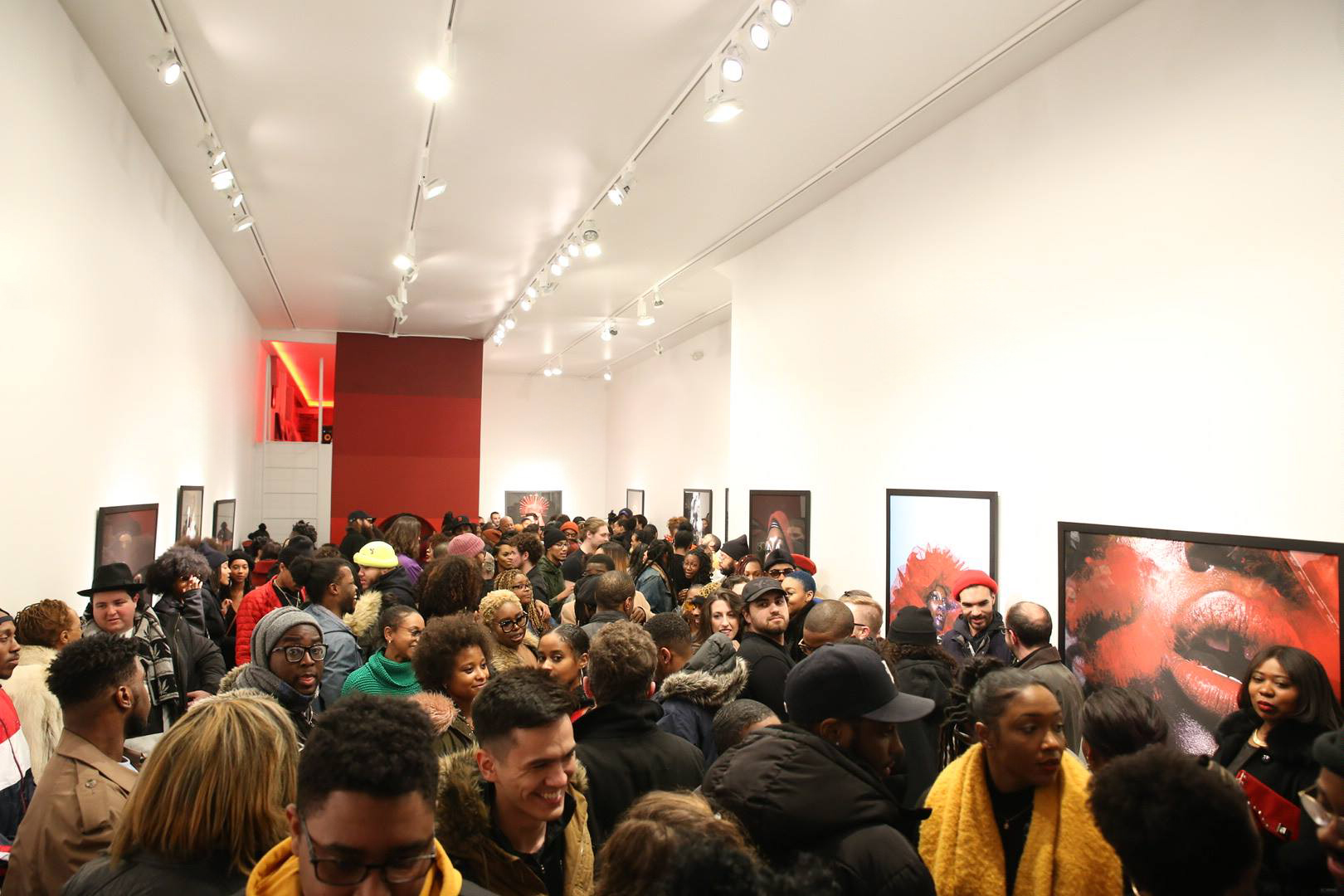
“Definition of Red,” Bre’Ann White Opening Reception, 2019, Image courtesy of gallery
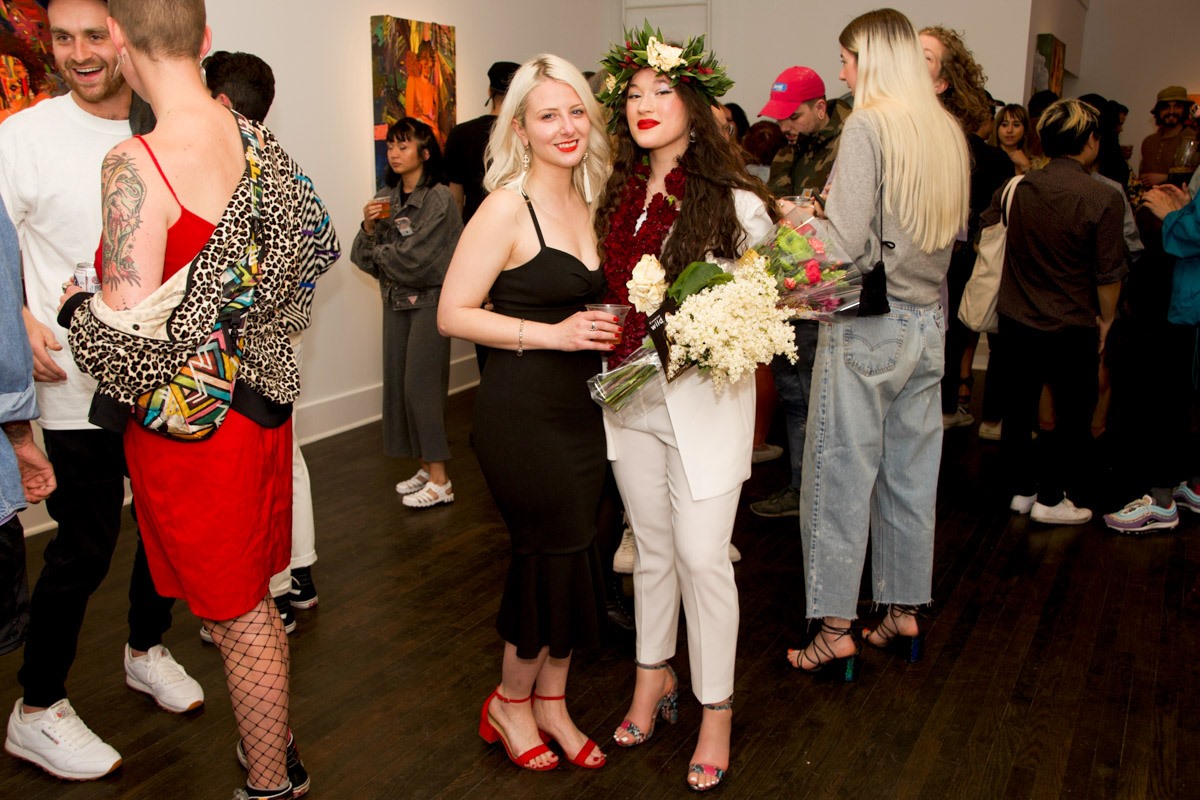
“Lush P(r)ose,” Gisela McDaniel Opening Reception, 2020
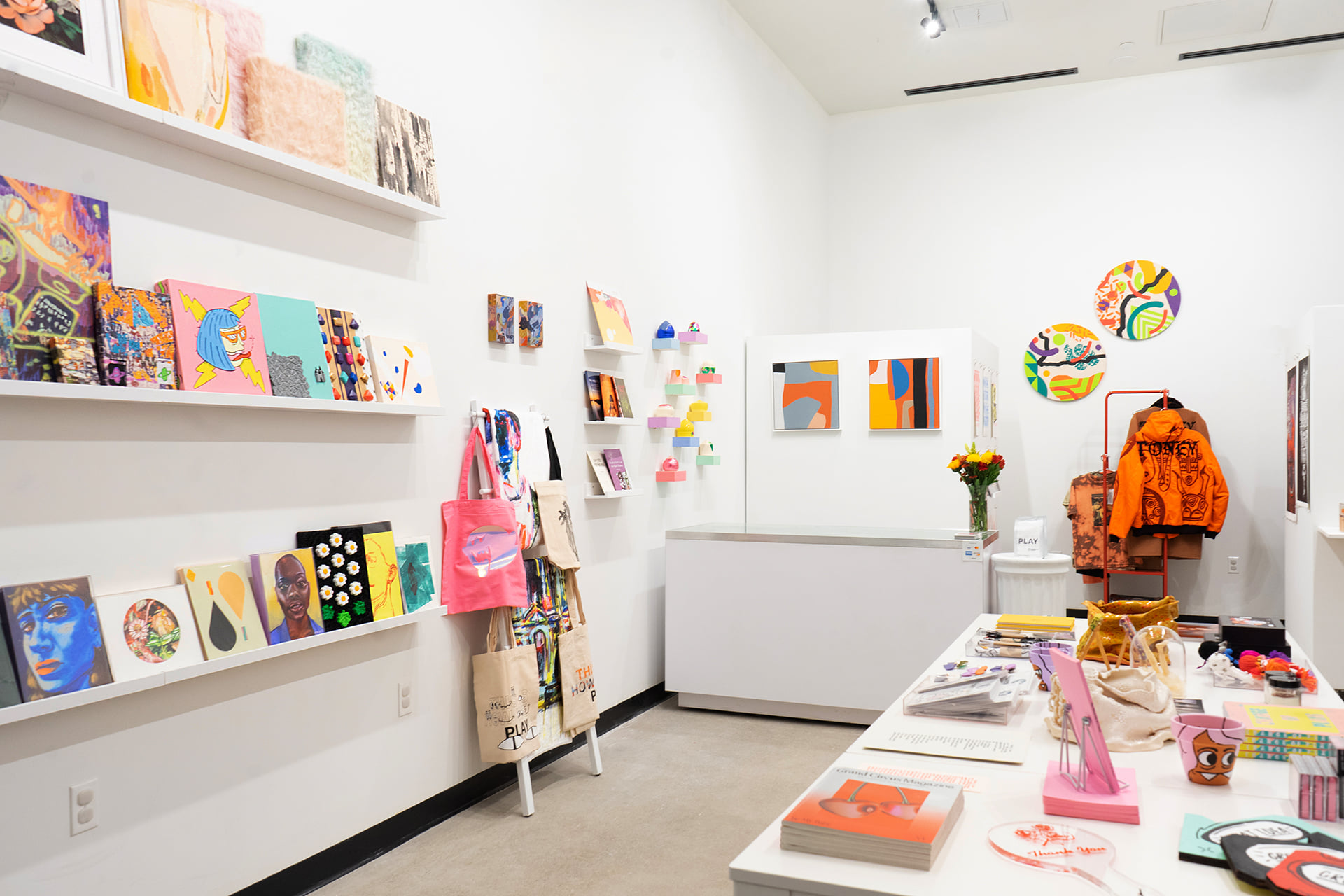
Interior of retail location, 1435 Farmer Street, 2020
RM: What attributes would you say make a place ripe to be (or become) an “art capital”? Is it about cultural infrastructure? Accessibility?
PP: Arts infrastructure is critical; Detroit has a lot of work to do. That means investing in art councils, boards, artist housing, live-work studios, arts policy, cultural tourism, planning, workspaces, promotion, funding and investment, procurement, education and partnerships. Art capitals also have to nurture and engage a new generation of art collectors, especially female collectors, and educate potential stewards about the importance of collecting new artists. Older generations of collectors are tapping out; their collections are full, and they lack interest in emerging artists.
RM: As a trained artist myself, I often feel disconnected to the art market, which seems more so to be about the exchange of goods rather than an embrace of creative expression. What are some of the biggest challenges you find working as a mediary between the world of the artist and the world of the collector?
PP: Thinking about artists like Basquiat, Warhol, Haring, Blondie, or Madonna from NYC’s lowest point, squatting in downtown areas like the Lower East Side, it was not about the collector. It was a lifestyle, it was about being able to live cheaply and having the freedom to make art. Now those artists are iconic, and most of their work is priceless. But they weren’t making for the market or appeasing collectors.
Some collectors may have a difficult time understanding, or more time needs to pass before it’s clear on its intrinsic value. A lot of work that excites me or I find to be culturally important, might not work in a personal residential collectors home. It’s not all commercially driven, but nonetheless it is important to exhibit, and that can be very challenging as a gallery. When I think about the artists I previously named, and can’t help feeling grateful for being able to work amongst living legends… if only the current local ‘art market’ truly understood this sentiment.
The dedicated collectors who are passionate about collecting with disposable income or financial means to buy and invest or support emerging artists, really benefit from having professional guidance from curators and gallerists. Educating new collectors is so important to sustain an arts ecosystem because artwork sales and commissions are integral to keeping the market thriving and growing.
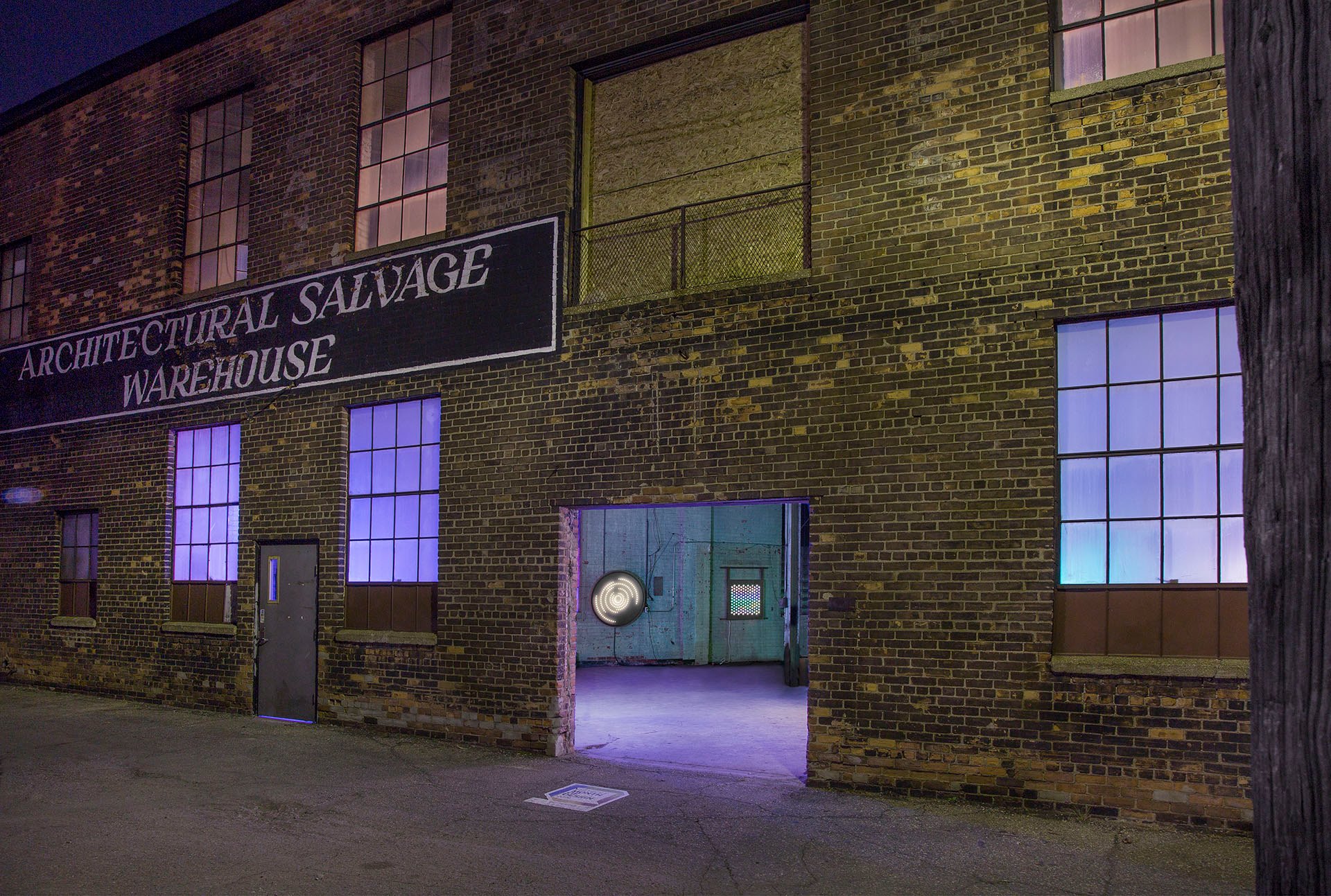
“Field Condition,” Patrick Ethen site-specific exhibition, Architectural Salvage Building, 2019
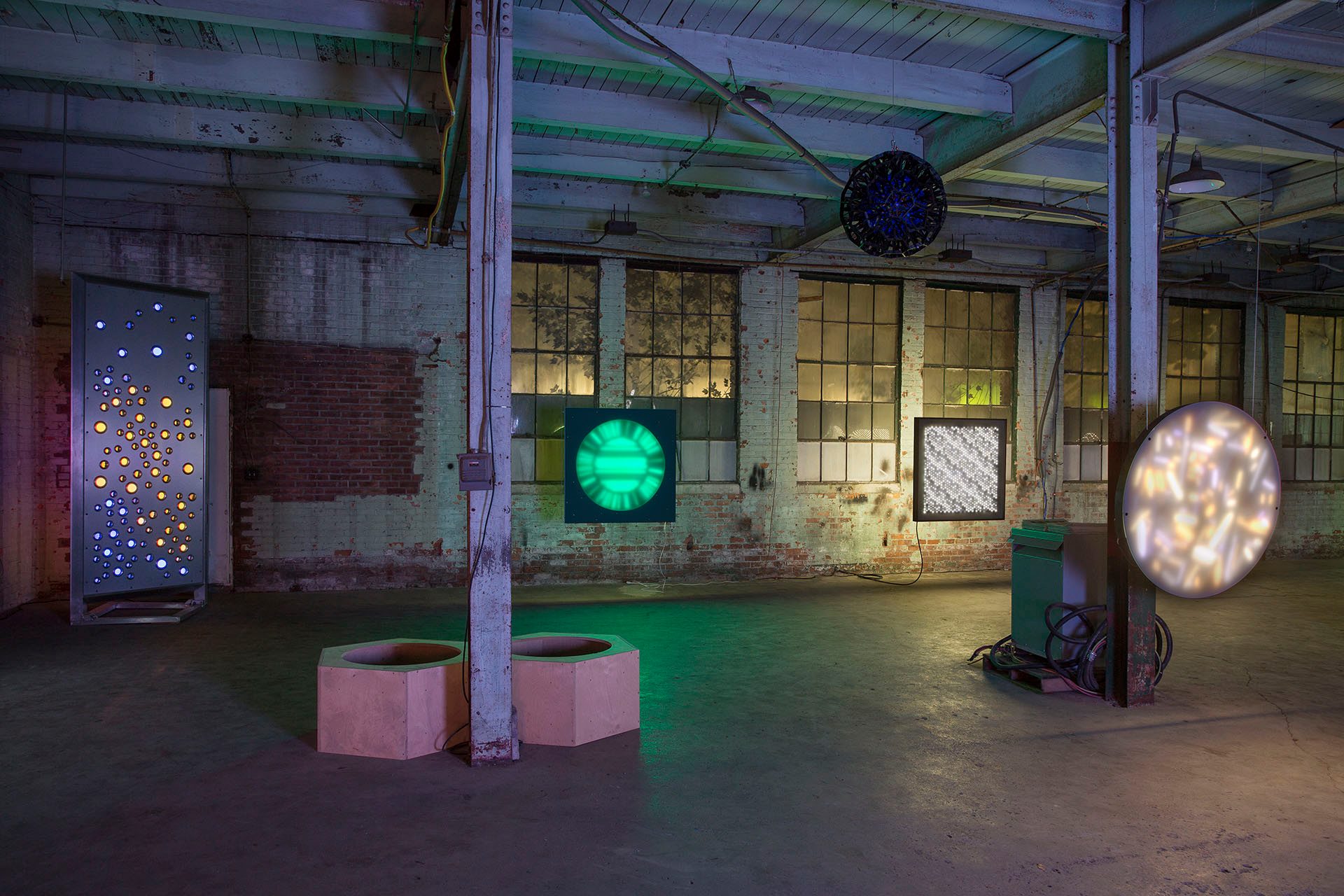
“Field Condition,” Patrick Ethen site-specific exhibition, Architectural Salvage Building, 2019
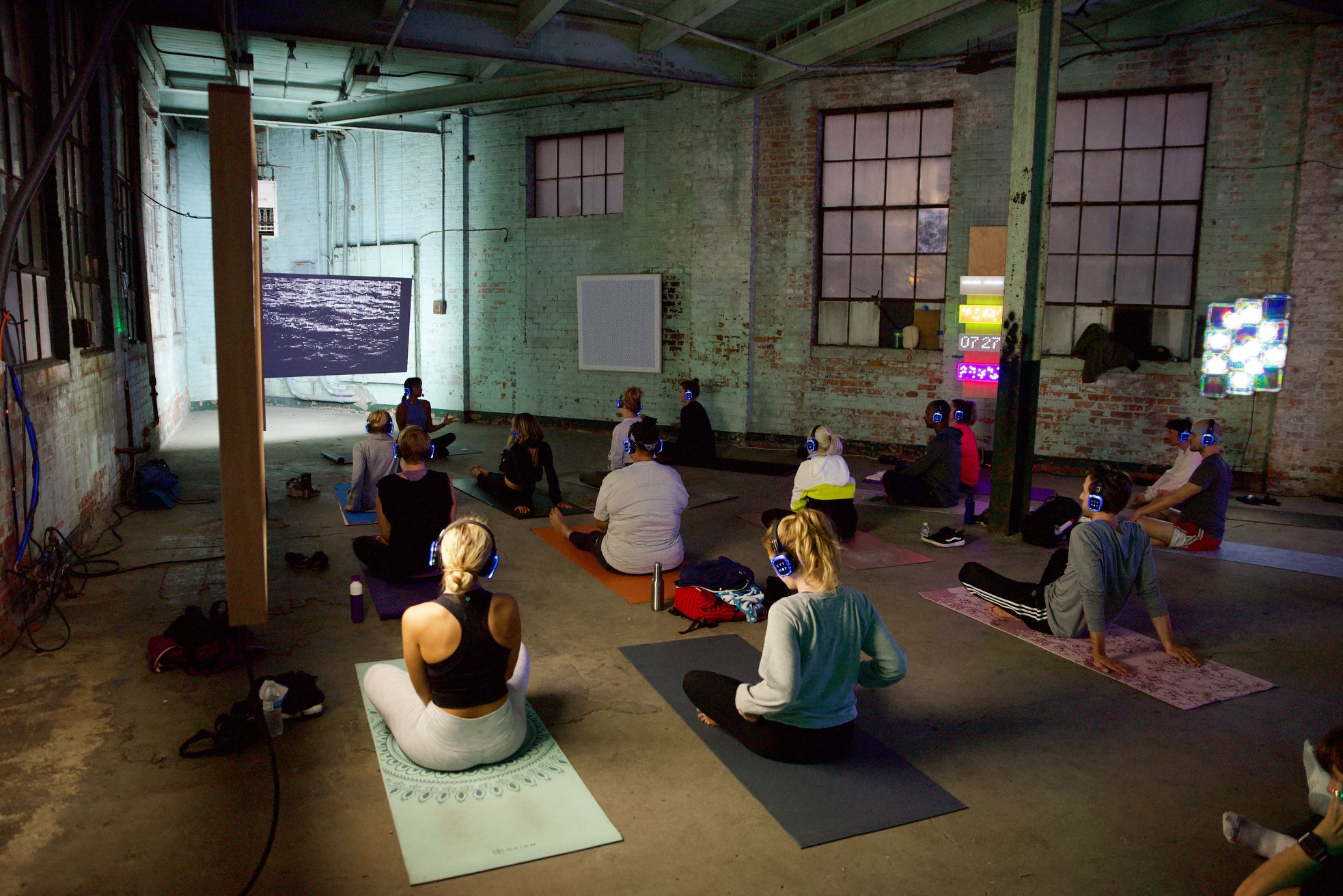
“Field Condition,” Patrick Ethen site-specific exhibition, Architectural Salvage Building, 2019
RM: What is your favorite thing about working as an arts professional in Detroit?
PP: I love my community of arts professionals and fellow cultural producers, curators, and friends. I am constantly inspired, amazed and encouraged by the sense of community and peer support that exists in Detroit. I love the ability to have real impact here. It’s definitely what motivates me.
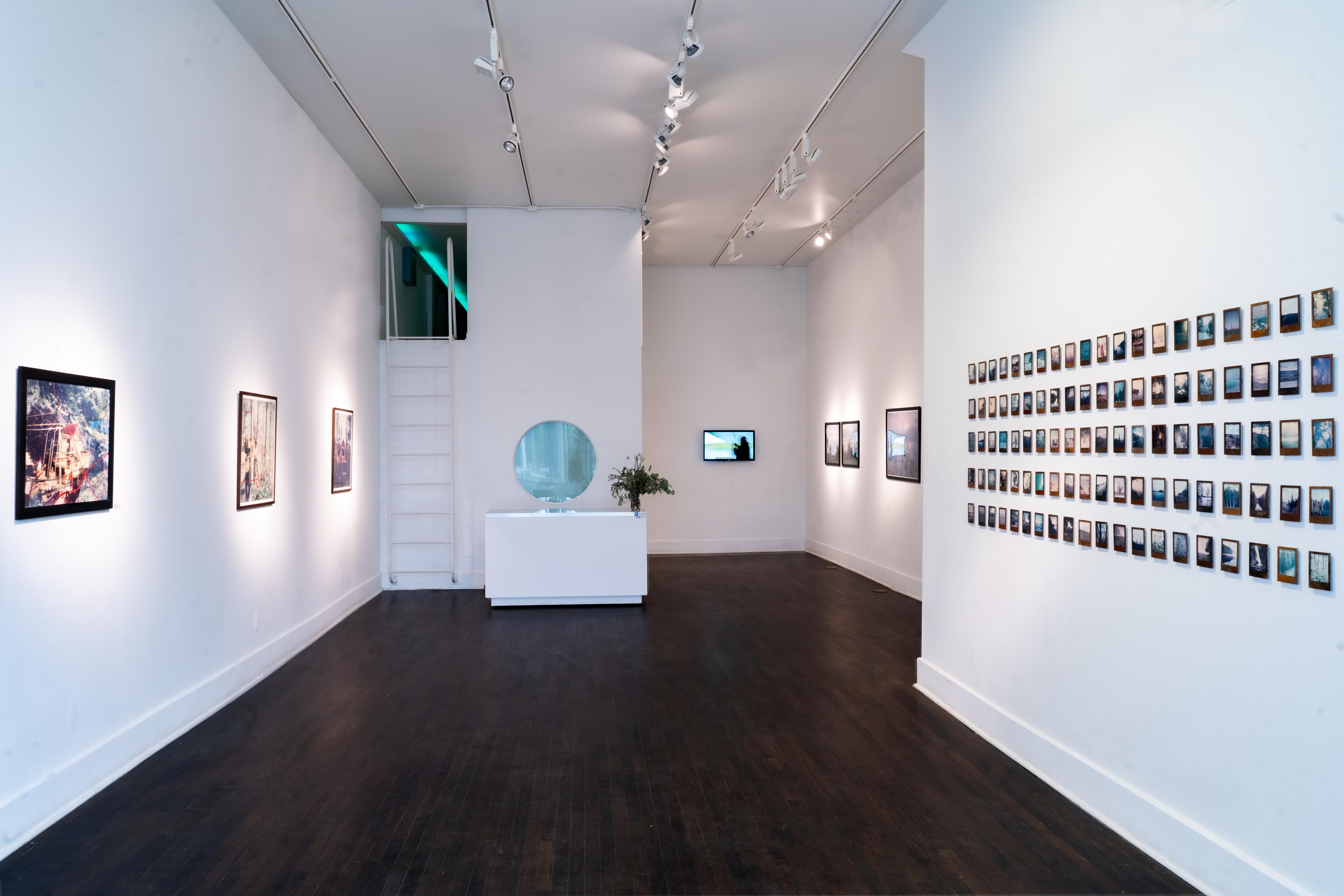
“City Wild,” Ian John Solomon solo exhibition, 2024
Services offered by PLAYGROUND DETROIT include artwork sales, private and corporate commissions, artist management and development, arts advocacy and special projects curation. Learn more at https://playgrounddetroit.com/
PLAYGROUND DETROIT
2845 Gratiot Ave, Detroit, MI