




An Interview with Al Holland of the J.W. Westcott Company
September 17, 2026
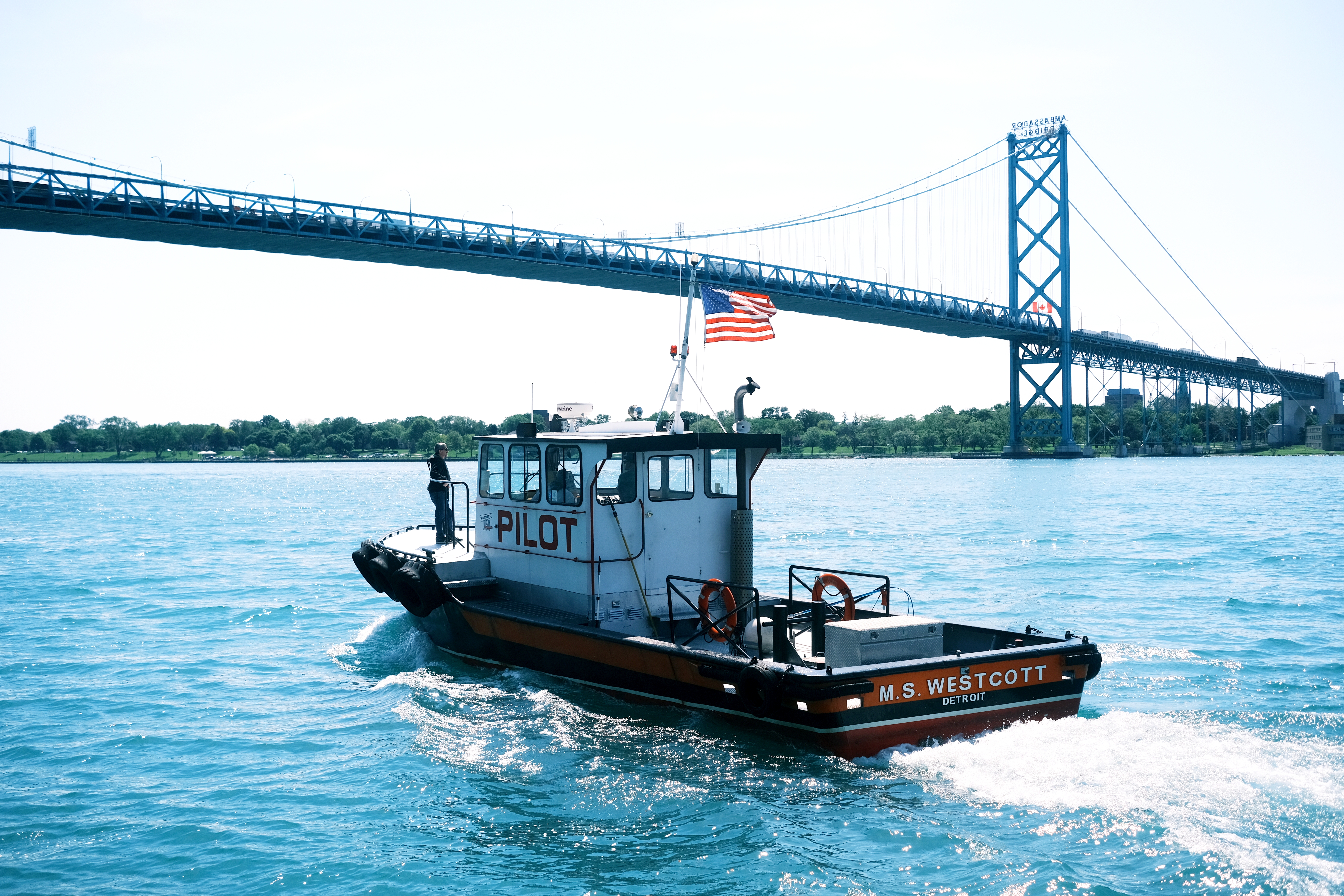
Al Holland and Captain James Hogan on the M.S. Westcott. Photo by Karpov
The Universal Service Obligation is a mandate dating back to the 1700s that requires the U.S. Postal Service to provide nationwide, trusted, and affordable postal services to all Americans regardless of how remote or costly the delivery route is.1 In order to fulfill this goal on the water, the U.S.P.S. hires the J.W. Westcott Company, the country’s only non-military floating zip code.
“Water Wonderland” is one of Michigan’s most renown monikers, inspired by the state’s thousands of inland lakes, and its shorelines spanning four of the five Great Lakes. Positioned in the heart of a region that comprises 20% of the world’s surface freshwater, the history of Michigan is deeply rooted in maritime culture, deriving much of its livelihood, traditions, and identity from fishing, sailing, and waterborne trade. Its largest waterway, the Detroit River, is a heavily travelled channel for lakes freighters and international watercraft, connecting the upper Great Lakes to Lake Erie, and facilitating the movement of heavy international cargo between the United States, Canada, and global ocean ports.
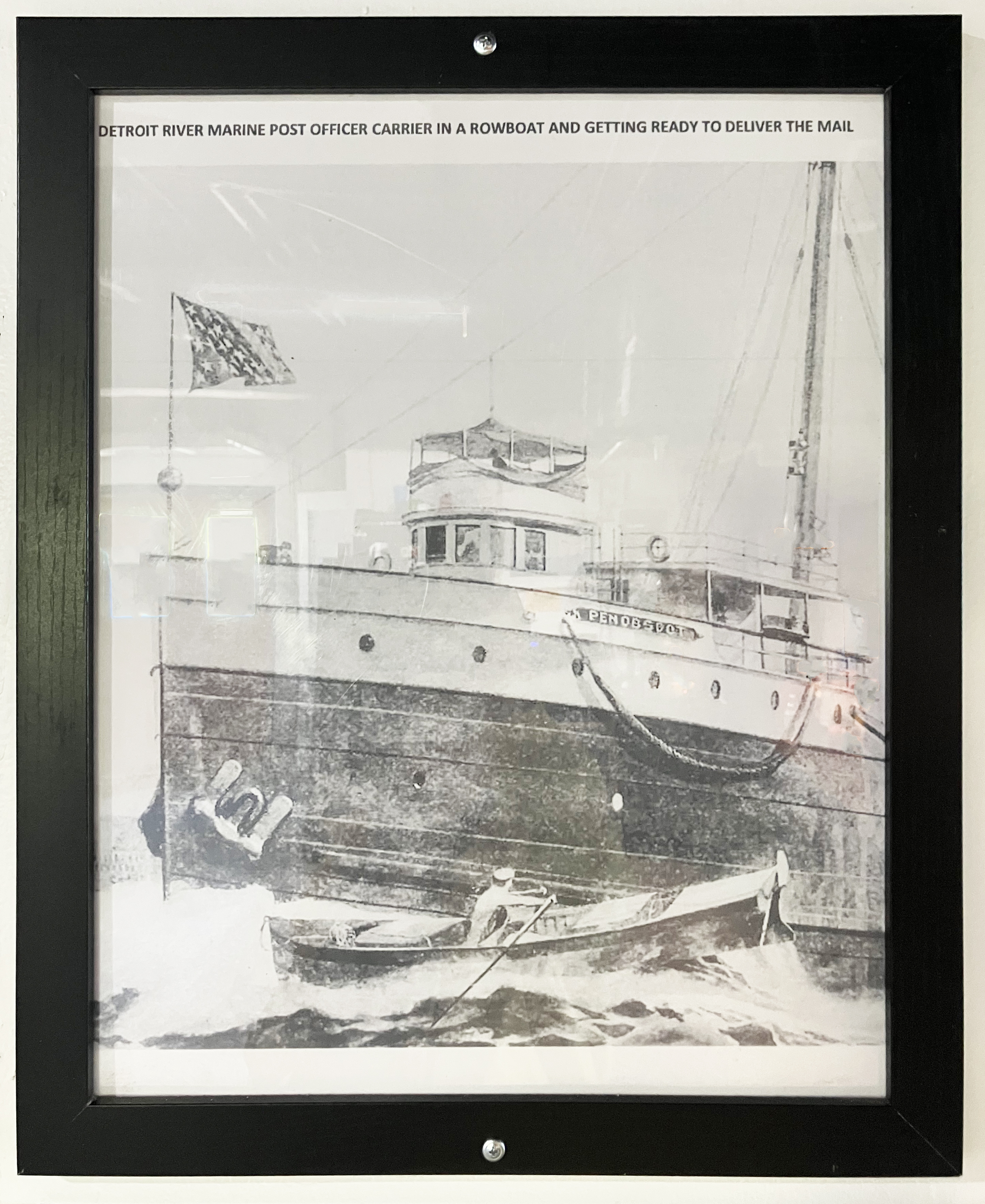
Archival material on view in the J.W. Westcott office. Photo by Ashley Cook
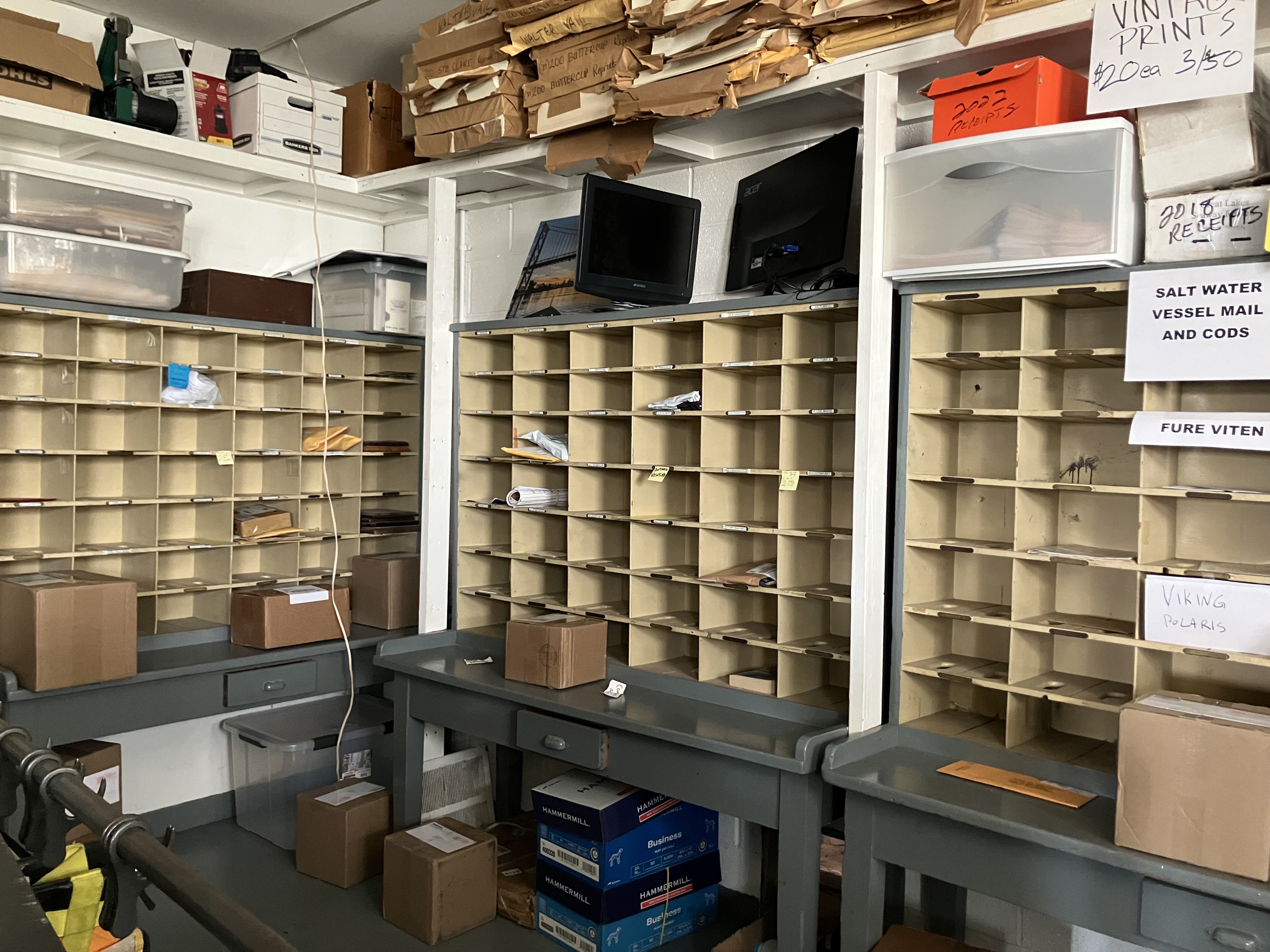
The J.W. Westcott mail storage room at 12 24th Street, Detroit, Mi 48222. Photo by Ashley Cook
The J.W. Westcott Company was founded in 1874 by Captain John Ward Westcott, who started—at the age of 21—delivering route instructions to passing ships in his rowboat. John’s confidence navigating the waters of Lake St. Clair and the Detroit River started early in life; his uncle, Eber Brock Ward, was a Detroit industrialist and shipowner known as the “Steamship King of the Great Lakes”2, and his father, David H. Westcott, was a fireman aboard the Ste. Huron, a vessel owned by the Ward Line of Steamers family company.3 John’s upbringing on the water formed his knowledge of advantages and limitations in maritime transport, and he quickly became keen to the lack of ship to shore communications, which inspired his initial entrepreneurial venture as a marine reporting agency stationed out of the Port of Detroit. Before 1948 when the company officially started to deliver mail, packages, and even passengers to passing ships, the J.W. Westcott delivered crucial destination and dock information by placing papers inside a bucket that was lowered over the side of the ship. This later came to be known as the “mail in the pail” method, and is still used today.
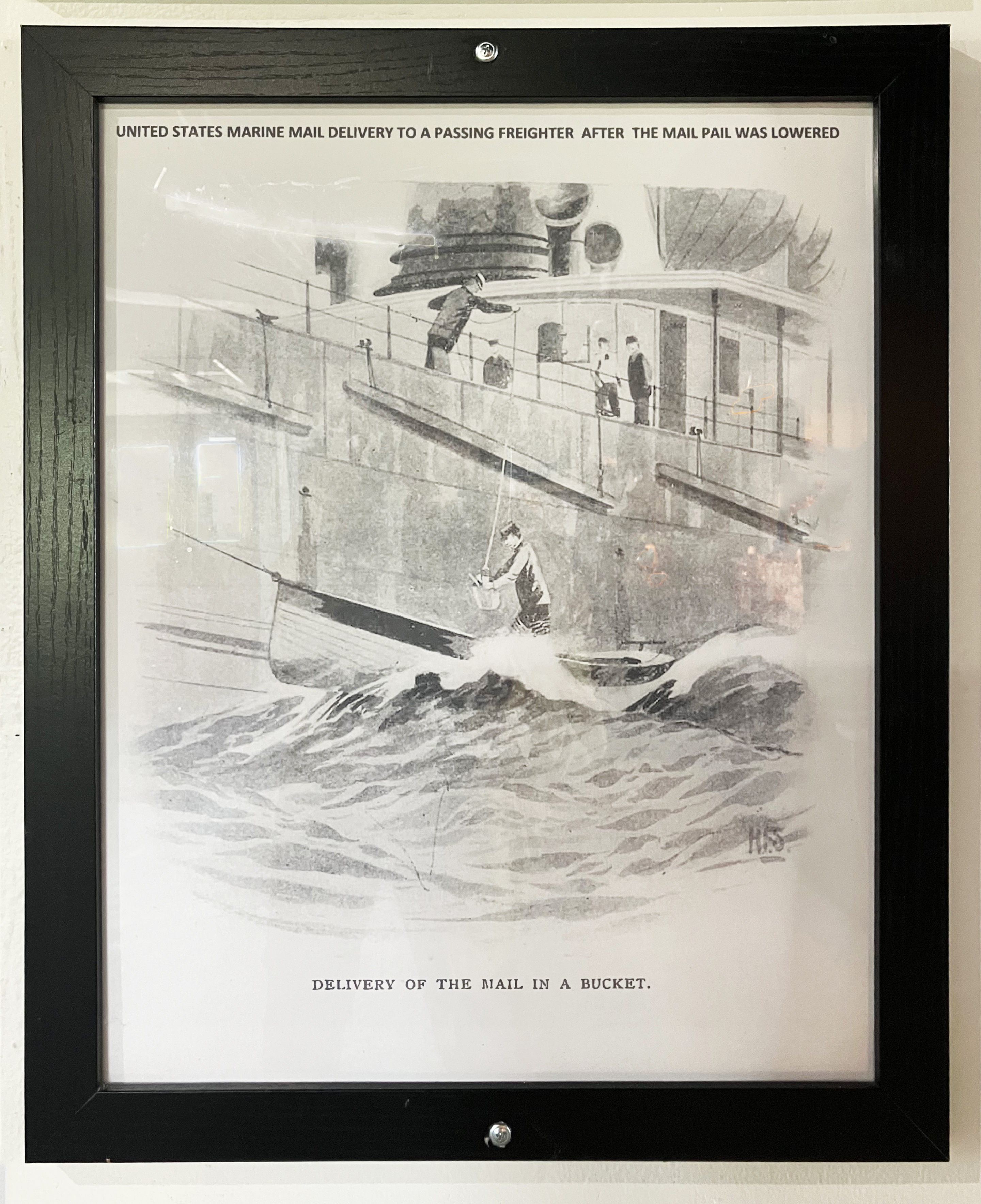
Archival material on view in the J.W. Westcott office. Photo by Ashley Cook
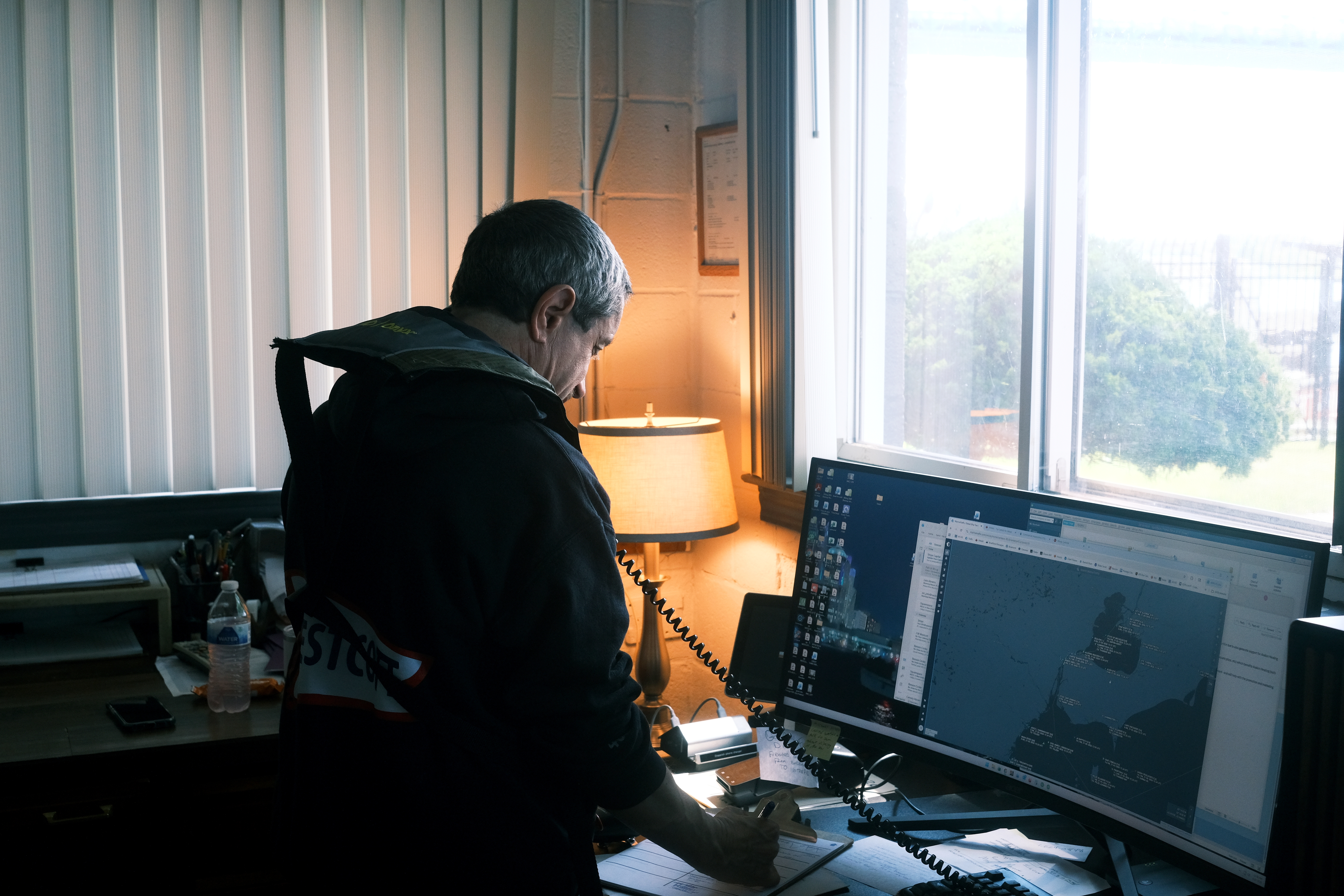
Al Holland in the J. W. Westcott office, planning for the daily deliveries. Photo by Karpov
Al Holland is a dispatcher and crewmember at the J.W. Westcott Company. He is in charge of on-water operations to ensure deliveries of communications, packages, groceries, mechanical equipment and parts, and even crew members make it to the correct vessels as they journey across the Great Lakes.
r: So Al, how did you get into this kind of work?
A: An old friend of mine is a captain of one of the freighters out there.
I worked for Kroger Pharmacy for 21 years before this, but when the pandemic started, I just couldn’t do it anymore. COVID-19 changed a lot of people’s perspectives on life, and it caused me to realize that I wanted to do something different. At first I was unsure about working for J.W. Westcott Company because I really didn’t know anything about boats, but here I am now in my sixth season as a dispatcher, so I guess I’ve really grown into it.
r: What does your typical day look like?
A: At the start of each day, I sit at a desk and coordinate a plan. I decide who’s going where and at what time, and then I pull packages for those trips. We can deliver almost anything to anybody, but our main source of work is through the U.S. Postal Service.
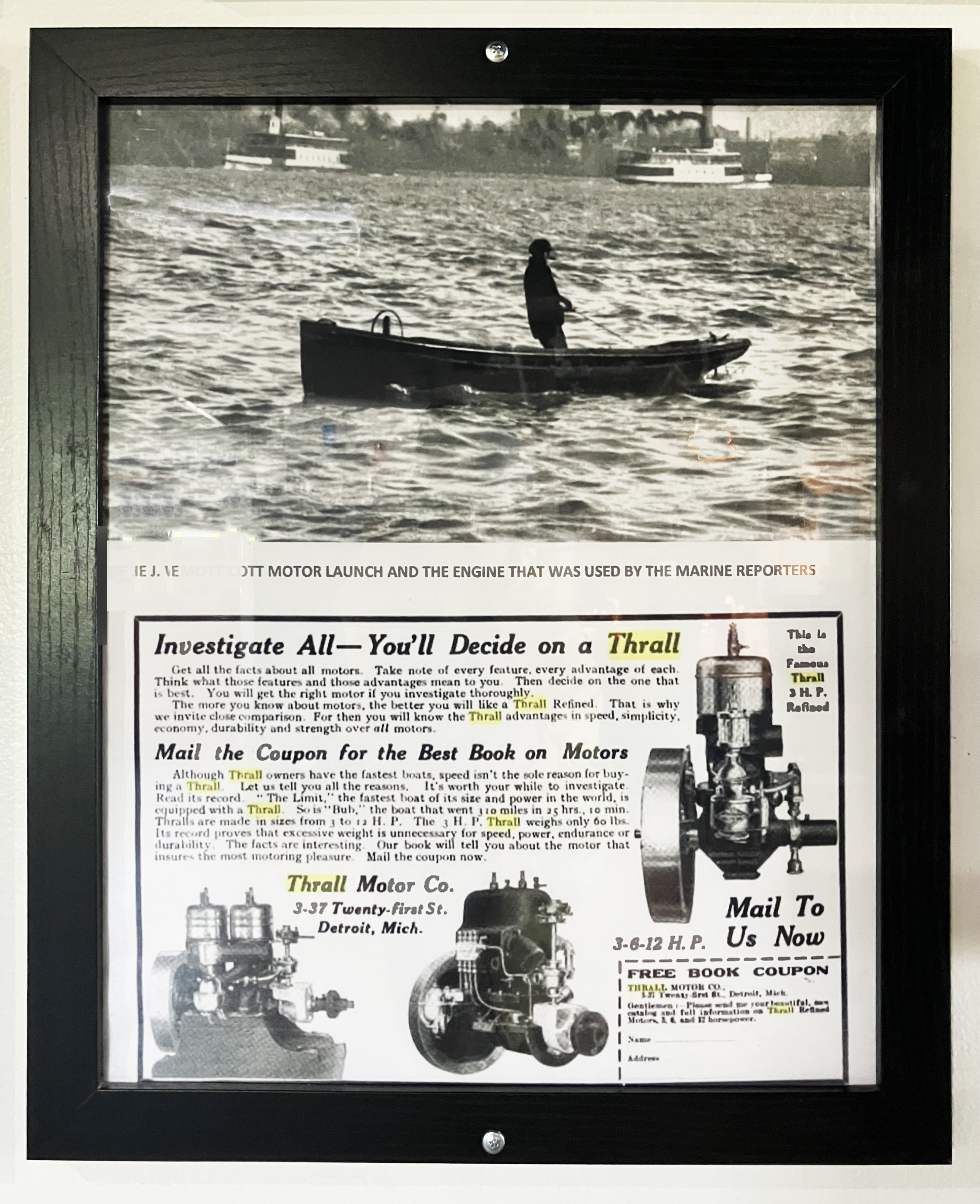
Archival material on view in the J.W. Westcott office. Photo by Ashley Cook
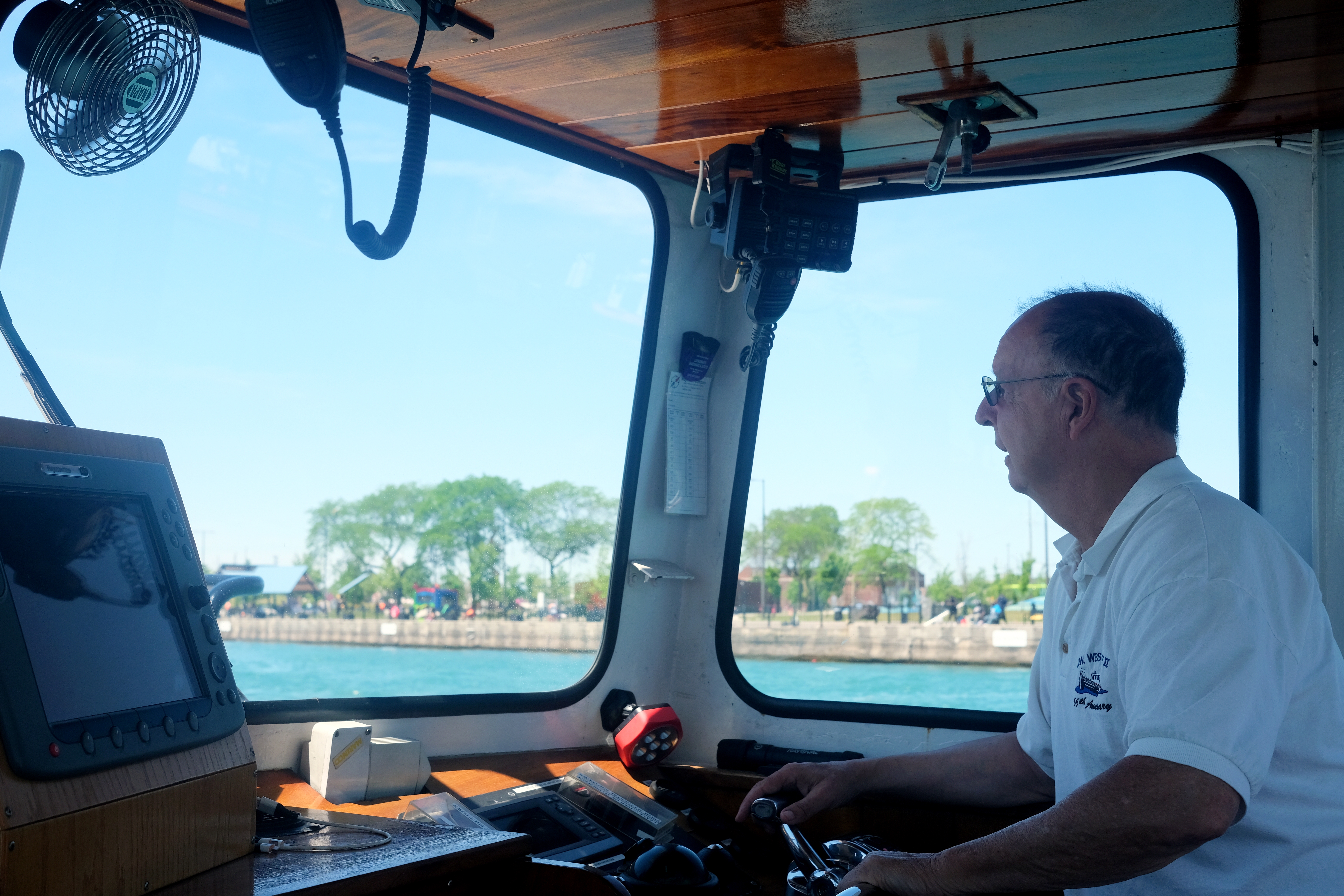
Bill Redding at the helm of the M.S. Westcott. Photo by Karpov
r: How do you locate the ships that you need to deliver to?
A: We have a list of ships that need us to deliver something—or someone—to. This list also includes information on when they will be passing by, so on that day, we find its coordinates and trajectory using this online application called Marine Traffic. It tells us when it will be close, which helps us plan when to head out to them.
r: And you communicate to the ships on the radio to let them know you’re heading their way?
A: Yes, we have a tower that reaches ships as far as an hour and a half east towards Lake Erie, and about an hour north of us.
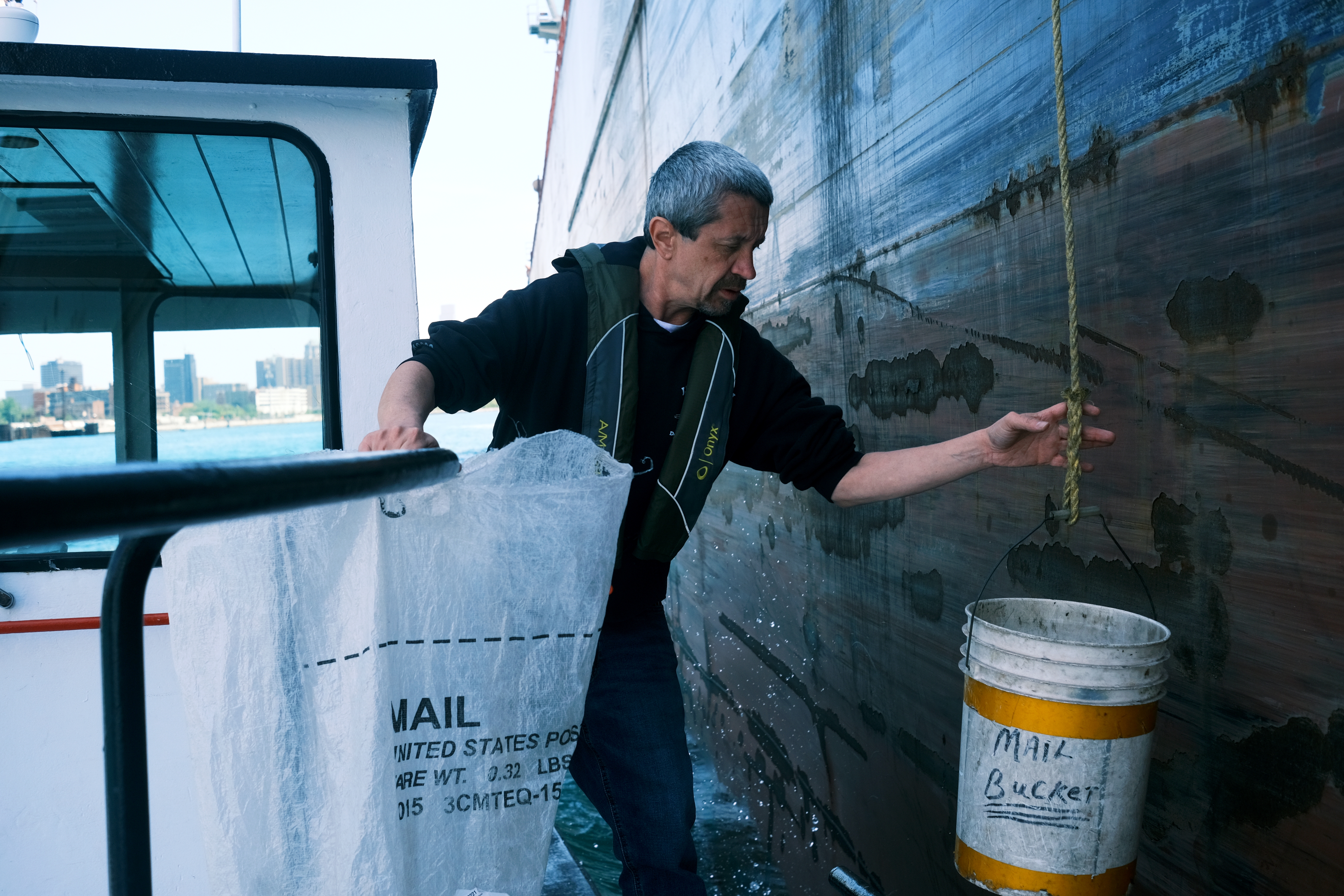
Al Holland delivering mail to a freighter on the Detroit River. Photo by Karpov
r: It seems like mailboats are not very prevalent in the United States, but there are obviously a lot of waterways, so how is mail delivered to boats and freighters in places other than the Detroit River?
A: J.W. Westcott is actually the only U.S.P.S. mailboat in the country that delivers to underway vessels from all over the world who use the Detroit River for trade and transportation.
There are the “lakers” and then there are “salties”. A salty is from a foreign country, the lakers don’t go anywhere else but the lakes. One of the “laker” companies has a warehouse in Toledo, so if a boat is going out into Lake Erie, they can always swing into that dock for a few hours and get loaded up with groceries or parts or whatnot. Our service is different because we can deliver to vessels while they are moving, so they don’t need to stop and dock to ship to receive communications or other things.
When we are tasked to assist with the transfer of a crew member to or from a vessel, a rope ladder is lowered from the ship to the Westcott, and the captain uses it to climb up or down. This is to either exchange crewmembers of “laker” ships for tours or shifts, or to bring pilots who are certified to navigate the Great Lakes to assist ocean-going ships through these waterways. The Great Lakes Pilotage Act of 1960 rules that every “salty” is required to sail with a certified American or Canadian pilot on board for the duration of their journey through the Great Lakes.
Because there are so few stations on the lakes that can fulfill this kind of request, we have become a primary source for waterbound U.S. mail and deliveries around here. A large number of freighters run through the Great Lakes, so we are at a great location to offer this service.
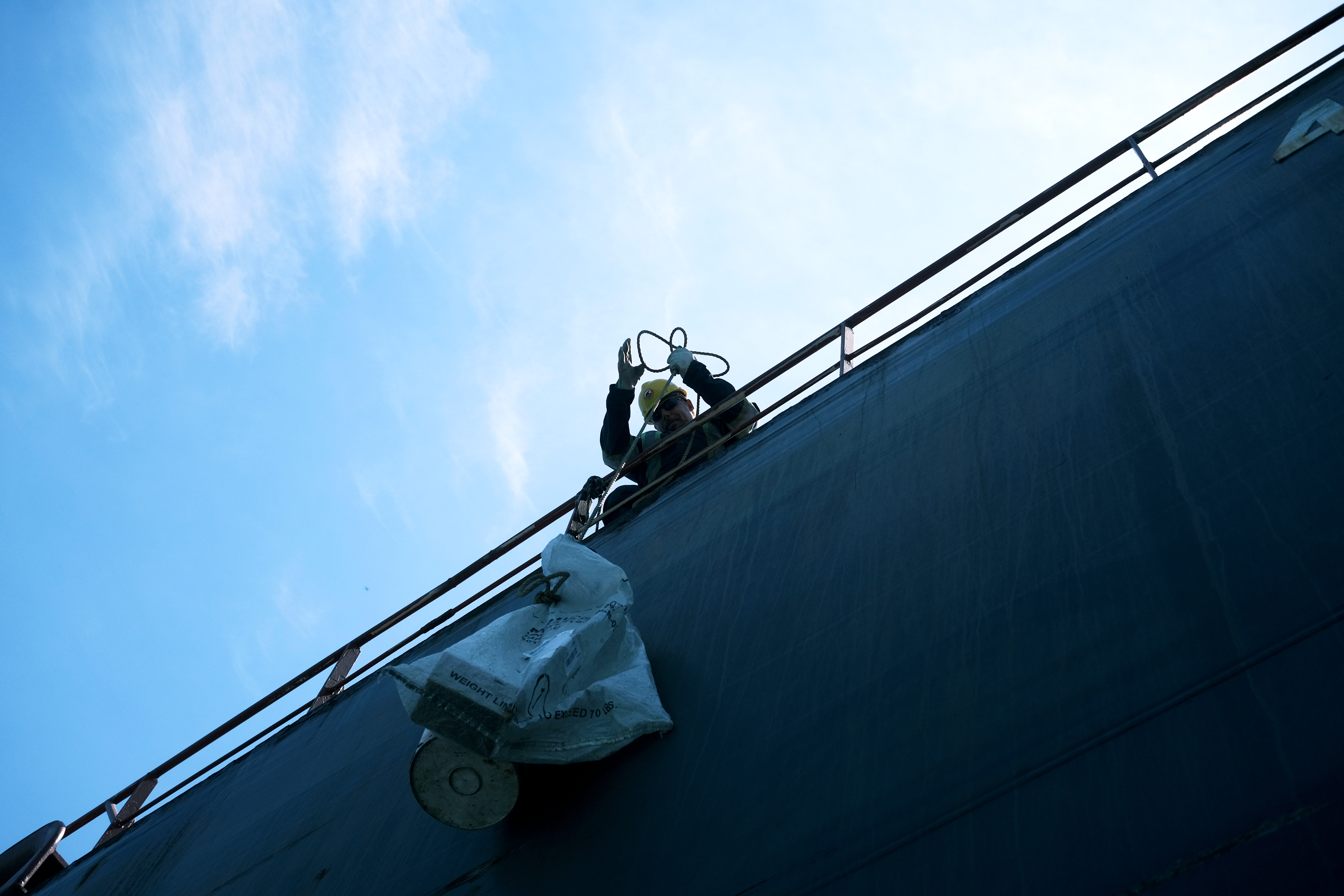
Sailor retrieving the J. W. Westcott delivery using the “mail in the pail” method. Photo by Karpov
r: Are there any weather restrictions for the J.W. Westcott?
A: Ice is really the only thing that prevents us from delivering mail to the boats and freighters.
We’ll pretty much go out in any other kind of weather. Lightning is a little bit more questionable. Sometimes a boat or freighter itself will deny our service even if it was ordered ahead of time. The captain always has a say if we’re coming out or not. If they’re in a big push to get to their next port, they may not want to slow down to receive our delivery.
r: This year is the 152nd year of the company, correct?
A: Yes! J.W.Westcott started on the river at the Foot of Joseph Campau in 1874 and worked from several locaations on the river until moving into the fire house next door to the current location in 1947, and then into this current building after it was done being built in 1948.
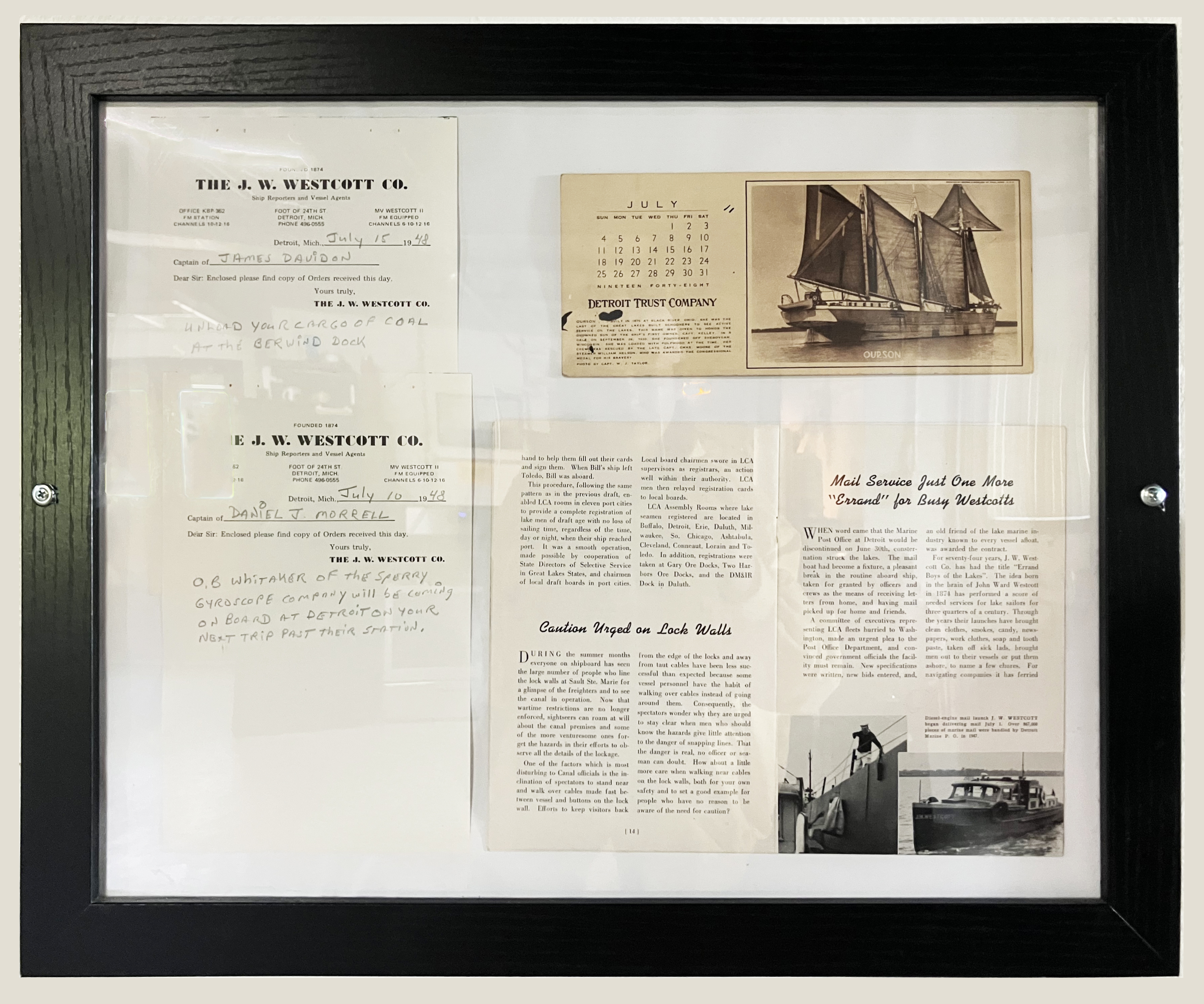
Archival material on view in the J.W. Westcott office. Photo by Ashley Cook
The J.W. Westcott headquarters at the foot of 24th Street in Southwest Detroit was built for purpose rather than decoration. It is a small, low-profile maritime office with rooms for sorting mail and packages, a small gift shop, and a display of archival material that tells the evolution of the company through artifacts, images, and newspaper clippings. Visitors have the opportunity to learn about the variety of boats used, from the unnamed rowboats to the original J.W.Westcott, the J.W.Westcott II, the Joseph J. Hogan, and the Mildred Simpson Westcott. They can read articles about several impromptu rescues that the team performed over the years, including jet-ski riders, river swimmers, and most recently, an ironworker who fell from the Ambassador Bridge during a routine maintenance assignment.
The company has always been family-owned and family-run, passed down from Captain John Ward Westcott to his wife Henrietta Crane Westcott in 1913. Their son John Ward Wesctott II took over the company in 1937, who then passed the company to his wife Mildred W. Simpson Westcott in 1958. Eventually, the grandson of the original Captain John Ward Westcott, John Ward Westcott Jr., managed the company, serving at the helm until his passing in 1969.4 Today, Jim Hogan, the great-great-grandson of the original Captain John Ward Westcott, works with his son Jimmy, to serve as the president and vice president of the company.
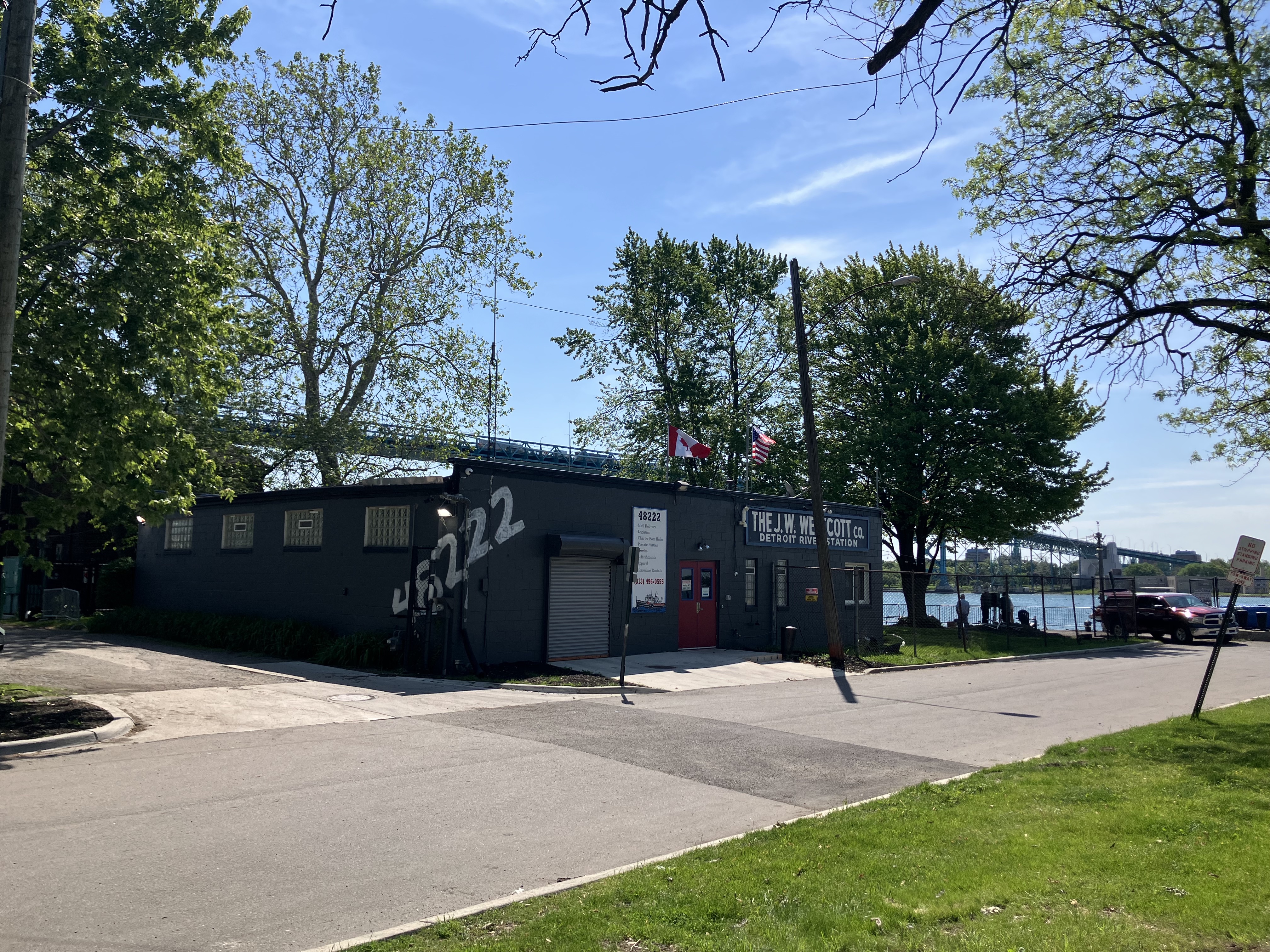
J. W. Westcott office at the foot of 24th Street in Detroit. Photo by Ashley Cook
Crewmembers aboard the freighters on the Great Lakes are on the water for long stretches of time without returning home. Anyone who wants to send a letter or package to someone traveling along the Detroit River can write to the name of the vessel, c/o the Marine Post Office, 12 Twenty-fourth St., Detroit, MI 48222, and the Westcott Co. crew will ensure it gets to the right sailor. The J. W. Westcott offers this delivery service 24 hours a day, seven days a week, from April to December each year.
You can learn more about the services and history of the J.W. Westcott Company
on their website at jwwestcott.com
J.W. Westcott Co.
12 24th Street, Detroit, Mi 48222
1. Service, United States Postal. “Universal Service.” Home - About.Usps.Com, Link. Accessed 29 Aug. 2026.
2. “Eber Brock Ward (1811-1875) - American Aristocracy.” American Aristocracy, Link. Accessed 29 Aug. 2026.
3. “J.W. Westcott History — 48222.” 48222, Link. Accessed 29 Aug. 2026.
4. “J.W. Westcott History— 48222.”